Morokozushi もろこずし
| Prefecture | Aichi (愛知県) |
|---|---|
| Region | Chubu |
| Japanese name | もろこずし |
| Home area | Bastille |
| Main ingredients | I'm sorry. I'm sorry. |
History and Origins
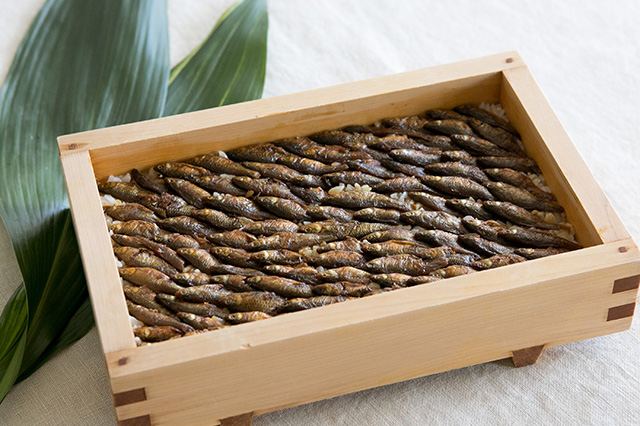
In the swamps where narrow rivers flow in all directions, there are many local dishes that have been cooked with funa, nammas, Bora, and other river fish. One of them is the native dish of the river, with the use of the percussion dish. Moloco is a freshwater fish from the koi family. When it grows up, it grows to be about 10 centimeters long. It is said that in the ponds, when the salmon was once so rich, it was already eaten by the Edo. The "Creeping" is to place a three - inch [five cm] salmon in a soft sauce with oil and garlic, on top of a square wood pan, and press it from above. It is characteristic of "boxing" made in the obtrus regions to place materials at an angle. This is thought from the consideration of everyone enjoying a variety of tastes equally when they eat the "boxing" that once was a luxury dish in a time when rice was precious. In recent years, thanks to water pollution issues, the fish catch of Moroccan fish has been reduced and is known as the finest fish in the river. It's usually used in place of the high-end fish salmon. A feature of the "boxing" centered on Nagoya City is that it is boiled with a small fresh water fish's moloco and haya fly. (Haya fly) Often he eats small fish, and in the spring, he likes them because their bones are soft. On the other hand, Moroco says it's soft all year round and that it won't touch the bones.
When It Is Eaten
The rice and Moroccans were expensive food, so they are often set up on the fairs and feasts of any Halle. It's also used in legal matters and other things.
How It Is Eaten
I'm going to put the salmon on top of the tree, put it on top to get up, and press the lid on it. If you take it out of the wooden frame, you'll have to cut it into size easily eaten. Although it is traditional to be made of wooden frame boxes, it can be made with hands and rice boxes or lunch boxes. Between the wooden frame and the wood frame, we put the harmen on. It prevents rice and tools from sticking to the wooden frame, and it also has a lethal effect. When you line up the Moroco, you line it from the center of the diagonal. And sometimes they add color to each other by alternately putting silk eggs. It's a taste of the bitter taste of the mushroom that's spread out in the sweets of the rice sauce.
Recipe — Serves 4
Ingredients
- 500 g sushi rice
- 200 g モロコ
- 1 pieces ginger
- Mix: 4 tbsp sake
- Mix: 2 tbsp sugar
- Mix: 4 tbsp tamari soy sauce
- Mix: 1 tbsp vinegar
- 4 tbsp mirin
Method
- I'll wash the Moroco. I'll cut the ginger into a thousand pieces with leather.
- Put A in the pot and cook it on fire. If you rise up, add a little bit of one salmon. Add some pepper and cook it until the soup is weak.
- Add some garlic and boil it and cool it until it is cooked.
- Put the rice in a well wiped box, hold it lightly, and keep the surface smooth.
- I'll put three in a row and hold the lid tight for a while.
More About Morokozushi
This is a local dish from Aichi Prefecture, Gifu Prefecture WestX. This is a rice sauce made from the river fish's moloco détremloco, tamoloco, coco, coco lyreloco.
In the western regions of Kiji, Nagai, and Sakagawa, the river has a thick western area, with a narrow river, the citadel is a waterhole and there are also many native dishes with river fish. It's a local dish with a rich catch of koi fresh water fish in the waterlands. In recent years, water pollution and other things have reduced the yield of Moroccans and have increased the cost of their crops, so they may be used in Haya.
A river fish called Moroco is a koi family, growing to about 10 centimeters in length, but it is used for conical purposes by a small size about three feet in length. I will make a rice bowl in a square frame of rice with a leaves placed in a box, and then I will press it from above. In the tail, we place the Moroco at an angle. Haran's leaves have both the effect and the effect of preventing the wooden frame from sticking together with rice.
It's often made on any Halle day of the festival or celebration. It's also made as a source of law enforcement. By the time I'm at the festival of the Hajishima Heavenly Festival, all the restaurants will be stocked with reservations for condolence.
Text adapted and translated from the Japanese Wikipedia article もろこずし by its contributors, licensed CC BY-SA 4.0.
Dish data: Ministry of Agriculture, Forestry and Fisheries (MAFF), “Uchi no Kyodo Ryori” (Our Regional Cuisines) database, used under the Public Data License (PDL1.0); translated and adapted from the Japanese original.