Home / Aomori / Mizutohoyanomizumono
Mizutohoyanomizumono ミズとホヤの水物
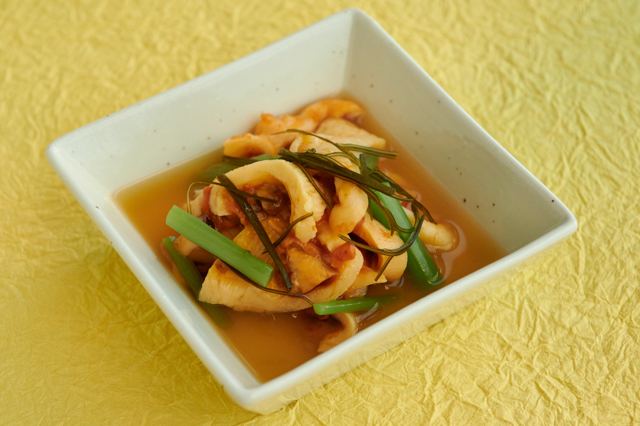
| Prefecture | Aomori (青森県) |
|---|---|
| Region | Tohoku |
| Japanese name | ミズとホヤの水物(みずとほやのみずもの) |
| Reading | Mizutohoyanomizumono |
| Home area | Tsugaru |
| Main ingredients | Oh, hoa. |
History and Origins
In the short summer of the Tsugaru district, native food that enjoys a precious season can be called "Hoyambus." The local language for "hoya" and "mew" is so common in the world, these two are both synonyms and substitute nouns for summer food. It's a simple dish that ends up in a bowl of woolen cloth, but the only way to eat life's hoya is to go to the local place. To the unique little smell of hoya and the crescendo of food, the freshness of the honey, the shakiness of the whole thing, the taste of the sauce that combines well together has a perfect effect.
When It Is Eaten
Family food is essential in summer. The taste of green freshness combined with the taste of the rich wafer that has all the bitter, salty, sweet, sour and tasty "five." It's not widely advertised as a local dish, but it's a dish that is easily prepared and eaten in every household. Aomori Prefecture has a high rate of natural water fishing and a traditional "spoken fishing" has been built. Natural matter is said to be excreted and sweet, and it is rich in glycogen, which is said to be effective in recovery from fatigue.
How It Is Eaten
Hoya is an orange-colored, curious-looking, clenched - clenched food that looks like "the pineapple of the sea." There's a trick in the way that you eat, and you put a knife in this outer shell with an Ibo, and you put out the water in it, and you eat it with a yellow body. The juice that flows has a good smell, so it shouldn't be thrown away. The dog is a mountain vegetable, common in the Tohoku region, and can be taken from spring to autumn.
Recipe — Serves 5
Ingredients
- 1 ミズ (うわばみ草)
- 5 sea squirt
- Broth: 3cm dashi kelp
- Broth: 600 ml water
- Broth: 1 tbsp salt
Method
- The dog takes leaves and peels off its skin, and folds it into the easy size of a three-inch cube. We boil water in the pot, dip salt into it, and shake the worm. When the color turns bright and green, I put it back in cold water. Then we'll have to drain it.
- Hoya removes the skin and the juice, remove the entrails, wash the salt, and cut it to size that is easy to eat.
- I'll cut the cloth into three-inch slices.
- I'll put a cloth in, make some juice, salt it and cool it.
- Add three to the combination of two and add three to the bowl and pour four bowls of juice.
Dish data: Ministry of Agriculture, Forestry and Fisheries (MAFF), “Uchi no Kyodo Ryori” (Our Regional Cuisines) database, used under the Public Data License (PDL1.0); translated and adapted from the Japanese original.