Nerikuri ねりくり
| Prefecture | Miyazaki (宮崎県) |
|---|---|
| Region | Kyushu & Okinawa |
| Japanese name | ねりくり/ねったぼ/芋もち(いももち) |
| Reading | Imomochi |
| Home area | City City |
| Main ingredients | (Sniffles) |
History and Origins
In Miyazaki Prefecture, "sitting" is usually eaten near Tokyo City. In some areas, they are also called "swinging," "striking," and "swinging." It's a kind of rice that has been made from the Edo era and combines citrus with steamed rice. In the past, when making New Year's bowls, I used to put the last bowl of rice in a bowl of boiling rice. Made from hard rice and water bowls over the New Year's, they are boiled with boiled rice and steamed rice. They are rolled up and eaten with the dough when they are eaten. It's said that the name "stitching" means "sucking" in the Miyazaki dialect, that it comes from the articulation of the art, and also from the place where it begins to form "swift." The "sweep" has been eaten as a staple food or as a food between farmers. In Japan, the Japanese word for haiku has come from the continent's Karachi, so it's used in the old city of Hijigi, and they call it the same.
When It Is Eaten
I have a custom of getting together and eating when I get a little chicken at the beginning of the year. They may also be eaten as snacks besides New Year's.
How It Is Eaten
I gently mix my arms with a bowl. I'll rip the dust out of the dust. It's not like I'm making a bean pot or putting it inside. It's good to put the commercial chops on top of the bowl on top of it while you're boiling them. When you get used to the whole thing, you'll tear it apart and eat it with a mixture of dust and sugar and a little salt. The ratio of the Japanese to Japanese is said to be about 3:1. Even at home, you can eat easily.
Recipe — Serves 40
Ingredients
- 3 kg() 甘藷 (かんしょ)
- 1(1.5 kg) glutinous rice
- 1 packets kinako (roasted soybean flour)
- Mix: 1 kg white sugar
- Mix: 1 tbsp salt
Method
- The rice is washed and soaked in water. Ten hours.
- The rice is peeled, cut, and soaked in water to remove the pot.
- I will soak each of the chopped rice and rice.
- We'll use the steamed rice as a board.
- When you get rice, put the steamed rice in.
- Put taste A in it and make it again.
- Put the dough in a mold that has been cut, cut to the size you like, and put the powder on top.
More About Nerikuri
Nerikuri (ねりくり) is a traditional local dish from Kyushu, particularly in Kagoshima and Miyazaki Prefectures, Japan. It is known by various names depending on the region, including nettabo(ねったぼ), nettaukuri(ねったくり), and karaimo nettabo (からいもねったぼ).
Overview
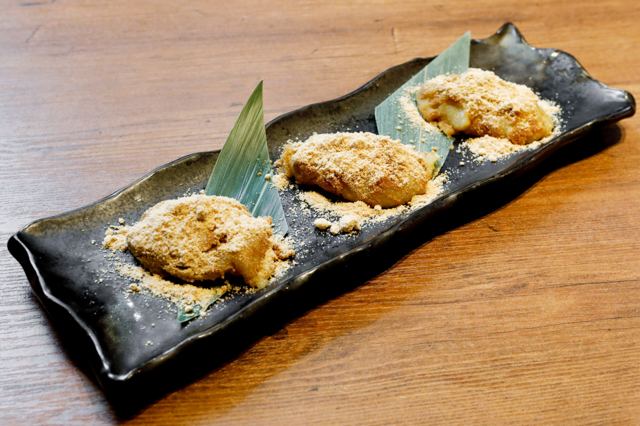
Nerikuri is believed to have been made since the Edo period and is a type of sweet potato mochi made by combining boiled mochi with steamed satsumaimo (sweet potatoes).
It is often prepared using leftover or hardened mochi from the New Year, or mizumochi, and is typically eaten coated with kinako (roasted soybean flour).
In Miyazaki Prefecture, it is mainly consumed in and around the city of Miyakonojo.
Manufacturing method
To prepare nerikuri, washed and peeled sweet potatoes are roughly chopped and placed in a pot with just enough water to cover them. The sweet potatoes are then boiled until they begin to soften.
Once softened, pieces of mochi are added to the pot. The mixture is boiled further until both the sweet potatoes and mochi become tender.
After boiling, the water is drained, and a small amount of salt is added. The mixture is then mashed and thoroughly combined using a suribachi (Japanese mortar and pestle) until it becomes uniform.
The mixture is then torn into bite-sized pieces and coated with kinako (roasted soybean flour) before being served.
In some versions, sweet red bean paste (anko) is prepared separately and used as a filling inside the mochi.
Text adapted from the English Wikipedia article Nerikuri by its contributors, licensed CC BY-SA 4.0.
Dish data: Ministry of Agriculture, Forestry and Fisheries (MAFF), “Uchi no Kyodo Ryori” (Our Regional Cuisines) database, used under the Public Data License (PDL1.0); translated and adapted from the Japanese original.