Nishin Sushi にしんすし
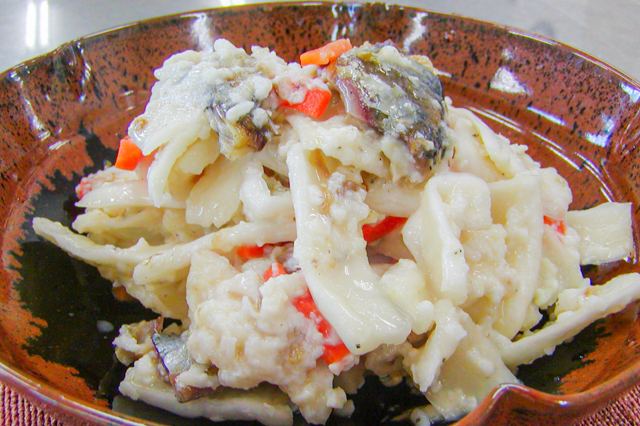
| Prefecture | Fukui (福井県) |
|---|---|
| Region | Chubu |
| Japanese name | にしんすし |
| Home area | Gongshan |
| Main ingredients | It's not just the animals. It's the animals. |
History and Origins
From Edo (in the middle 18th century) to Meiji's 30s, he called the ship that was used by the North Pacific during the west trip through the Japanese Sea, while trading in goods. Not only were they carrying their luggage, but they were buying and buying cheap goods in the ports that they could sell at high prices and sailing with great profits. Although 90 percent of the country's circulation comes from Hokkaido, it became the basis for the current Japanese diet by being transported by a north coast ship to western Japan and by the flow of the river. The Fukui Prefecture included the port of the northern port of ships, including three countries, river areas, and Tsuno, where food culture was introduced with prosperity. For anything that was brought from the north, cloth and herring were different. The food preserved by the herring is a kind of "sniff," a kind of "sniff." (The herring rice plant is used in the summer to meet the time of the fall, depending on the time it takes to eat it) but, of course, the juju is one of the most delicious dishes served as a food for winter protein. The radish is added by the large root breathing and matureing of the herring and herring.
When It Is Eaten
The herring bowl is not limited to winter. I've been using seasonal vegetables, such as rice and rice, to make "snacks" from summer to winter. The "sing" that we planted in the summer is the time to eat during the busy fall harvest. It's the wisdom of living to provide easy nutrition without cooking. In addition to the festival, it's also eaten on New Year's Eve.
How It Is Eaten
The salted root and water rice are soaked overnight, and the worn nicin is soft and then washed clean and used. I'll take the radish and carrots and pack them in with the flavors and seasonings and save them for about two weeks.
Recipe — Serves 4
Ingredients
- 2 daikon radish
- 2 carrot
- 500 g dried herring
- 300 g(500 g) koji
- 1/2 cups mirin
- 4 tsp soy sauce
- 1/2 cups sake
- as needed dried red chili
- as needed salt
Method
- Once the large roots are dry, they will be salted with 3% salt.
- I'll keep herring soft on it overnight.
- The herring is washed clean and cut into two pieces. The main root will be cut short by 10 centimeters long and 1 cm thick. Carrots are also cut in half and a half inches thick.
- I'm mixing herring with a big root (and carrots). And then we're going to have half of the base, half of the root, half of the root, and the next half of the base is going to be wrapped up like a big root on top of the neck, and if you add it up, you're going to have both the root and the herring eaten.
- If you put the radish and the herring in order, you'll have to put them together. Repeat four and five.
- After repeatedly placing it in, we keep the heavy stones tightly preserved.
- The main roots dry the finest parts until they are turned. When you feed her, she first transfers the juice to another container and then returns it back to the tub.
Dish data: Ministry of Agriculture, Forestry and Fisheries (MAFF), “Uchi no Kyodo Ryori” (Our Regional Cuisines) database, used under the Public Data License (PDL1.0); translated and adapted from the Japanese original.