Nousaba のうさば
| Prefecture | Fukuoka (福岡県) |
|---|---|
| Region | Kyushu & Okinawa |
| Japanese name | のうさば |
| Home area | Bertsaki District |
| Main ingredients | (BREAKS SCREAM) |
History and Origins
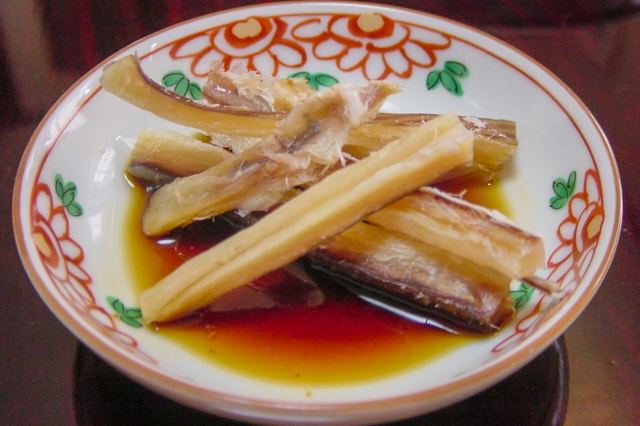
"Sun's Haji" is a local dish where a sun - dried shark is eaten in taste juice. White shark is a type of small shark found in many parts of Japan. The white spot on the back of the shark is characteristic of the star-like spot on the back, which is considered relatively dull in the shark. In Fukuoka Prefecture, the white shark is called a "snake." There are various sources of names, but the theory is that sharks caught in rope fishing is the dominant one. Yesterday is the common name of the needle used for fishing, and the accent of the word "dark" that is derived from the shark. The Belsaki area where the "Sun's Haji" is built is known as the largest water - raising port in the country in natural Surfugu. When the fugus were to be fried, sharks were to be eaten because they were to be caught together in nets. Once, when the number of children who were not available for New Year's food was not available, they soaked and eaten instead of the juice for a number of children, and were also known as "Sevesakis" and "Belsakis of the Sea."
When It Is Eaten
In New Year in the Hawasaki area, "Dai's Haji" is essential. To prepare for the end of the year, the sun - dry "sun" that you see all along the beach is a winter wind poem. We'll pack it up until about the day before New Year's Eve, and eat it with a cook in New Year's Eve. The time spent in flavoring and flavoring varies according to family tastes.
How It Is Eaten
The white shark, which opened and removed its entrails, was hung outside of the store on string, and then for several weeks fell in cold, dry winds to dry the sun. When the time for eating is near, the shark will dip in boiling water and soften itself. Then we expose them to the water and use metal saws to peel the hard skin. When the skin feels smooth, a knife or scissors will be used, easily cut, and soaked in liquids that match the flavor.
Recipe
Ingredients
- 干し小型サメ, to taste
- 200 ml soy sauce
- 45 ml mirin
- 30 ml sake
- 50–65 ml dashi stock
- 砂糖 少量
- chili pepper, to taste
Method
- A small dry shark should be placed in a hundred degrees Fahrenheit of hot water for about two minutes. When you get a little softer, you take it to water, and then you take the metal from the water, and you take the scales of the surface of the moth.
- Cut the paper into about three-inch lengths, cut the five-millimeter width and soak it in the taste juice.
More About Nousaba
Today, native dish of the Fukuoka Prefecture shrine district of Belzaki. It's a dish where a sun dried shark is eaten in a taste juice. The children of the number of Bersakis are also called as well as the children of the Shizua.
Overview
Baelusaki is a source of 50 percent of the natural trifugu fishing in the southern-morning market of ZX16XXZQ041X, Japan's only commercial market expert on sale. The white shark is the white shark that is caught in the rope together during the fishing of the traftfish.
The dried white shark is a tough, steamed shark, which is a talon of the skin of the shark on the surface, which is a short book cut from five to six centimeters of paper, and soaked into the taste juice. Cooking, flavoring and filling time vary from home to home.
About the name.
In Fukuoka Prefecture, sharks are also called "sunfish." The name "Daiji" comes from various sources, but the theory is that it is a shark caught in a rope fishing. Yesterday is the common name of the needle used for fishing, and the accent of the "dark" which is the name given to the shark.
The name "number of children" comes from eating the white shark instead of the number of children that were not available for cooking.
Use
Haji is an essential dish and food for New Year in the Belzaki region. To prepare for the end of the year, the sun-scrolling of yesterday's desert along the coast has become winter's windy poem. If you dip it up until about the day before New Year's Eve, you'll be eaten with the dishes as well.
It's called "the flavor of a dry palm and a sulme."
Text adapted and translated from the Japanese Wikipedia article のうさば by its contributors, licensed CC BY-SA 4.0.
Dish data: Ministry of Agriculture, Forestry and Fisheries (MAFF), “Uchi no Kyodo Ryori” (Our Regional Cuisines) database, used under the Public Data License (PDL1.0); translated and adapted from the Japanese original.