Sabazushi さばずし
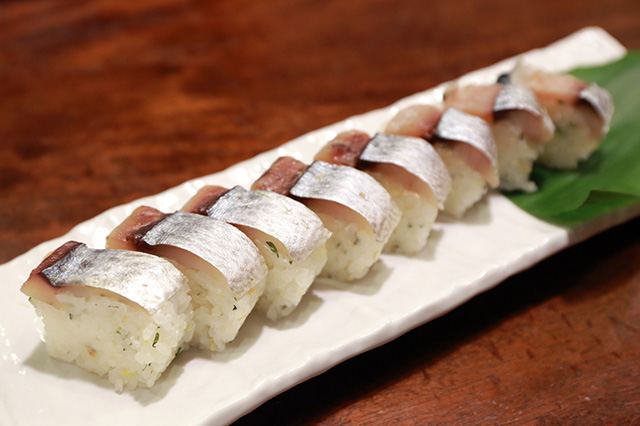
| Prefecture | Kyoto (京都府) |
|---|---|
| Region | Kinki |
| Japanese name | さばずし |
| Home area | The whole area. |
| Main ingredients | It's a very simple process. |
History and Origins
In the young bay, Saba was well-known for its long life and was known as the common fish. In the days when refrigerated technology was not developing, Saabbas may be fast-driven, and the carpenter thought of a long time to enjoy them. The dish that was born after the salting was added and added to it, was also a recipe that was produced by the carpenter for long taste of the Sheba, but it was also a way of saving it with vinegar and baking. They say that when carrying goods from Kyoto, from the small coastal beaches of the Gulf, they salted, soaked, and baked the seeds inland. That is why, around the city streets, various native dishes, such as "snack food" and "crazy" and "crazy," are told of the variety of native dishes that are used with the Sheba. One of them is said to have been born in the Edo age by "sniff." Once the mascot was salted and carried through the streets of the city, it became just right salt for two to three days before reaching the capital, Kyoto. Using this salted saber, a culture was created that would enjoy precious blue fish among the common people. Even now, when refrigerated technology is developed, many people are still familiar with it.
When It Is Eaten
I was eaten for Hare's day. Even now, there are ways to eat "snap" in the Kyoto's Three Great Festivals, the Festival of Festivals, and the fall festival in Kyoto Prefecture.
How It Is Eaten
I put three salts in three pieces, I cut through my blood, I washed them in vinegar water, and then I put them in a vinegar-sucking vinegar and then I swallowed them for about 30 minutes. I'm going to put the sabbatical on the side of the sabbatical taken out of the vinegar and put the rice in a stick. I'll wrap it around a wrap and wrap it around a bamboo skin and make it light. The next day, if you get used to the flavor, I'll take it. You can eat without wearing anything, but you can add soy sauce and eat it. There's also a range where you can mix with a sago and rice with a sauerkraut.
Recipe — Serves 8
Ingredients
- 1 salted mackerel
- 4 × 180 ml rice
- Mix: 80 ml vinegar
- Mix: 60 g sugar
- Mix: 2/3 tsp salt
- 2 bamboo sheath
- フキン
- roll
- 1() vinegar
Method
- I'll put the fresh rice in a bowl or bowl, then mix it all over with a mixture of apricot A so that it can pass through to the bow. When you're ready for sushi, I'll put a wet frickin on it and keep it cool.
- The salt sabbatical is placed on three sheets, except for the blood and the small bones, and washed in vinegar water, and then soaked in some 30 degrees. After that, they put their skin on top and gently hold themselves down and peel the skin from their heads.
- Put Saba's side on top of the stiff frickin. The thick parts are so thin that they are separated so that the tail of the tough saabbas is evenly thick.
- I'll double the rice, stick it in a stick, wrap it in a quintessence, wrap it in a quintessence, wrap it in a wrap, and put it in a shape.
- I wrap it in bamboo leather and string it around about five places. Light weight, such as a plate, will make it taste better the next day.
Dish data: Ministry of Agriculture, Forestry and Fisheries (MAFF), “Uchi no Kyodo Ryori” (Our Regional Cuisines) database, used under the Public Data License (PDL1.0); translated and adapted from the Japanese original.