Home / Miyazaki / Toukibi Meshi
Toukibi Meshi とうきびめし
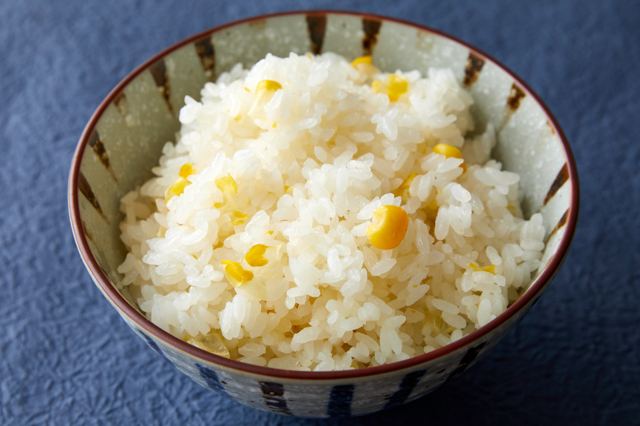
| Prefecture | Miyazaki (宮崎県) |
|---|---|
| Region | Kyushu & Okinawa |
| Japanese name | とうきびめし |
| Home area | (Singing) |
| Main ingredients | I'm sorry. I'm sorry. |
History and Origins
Long ago in this area, "stuttering" was a staple food that would become central to rice. In the summer, corn was sown in fields and fields, harvested in mid- fall, boiled and baked as snacks. When harvest is done, they are bound to hang the bamboo poles under the stable and dry them thoroughly. Then catch the cold winds that blow down the mountains and store the flavor. It is "sick" that has been mixed with the palm chips of the thorns when dried and worn with a scythe, and the taste of Hakoku's manners is similar to that of Takaho, Koce, and Shizue's. When rice was precious, "Drinkle" added to the rice frame and satisfied the people's belly. According to the history of Takaho Takaho, in the period of the Great Depression, 60 percent of the land was occupied with food and livestock. It's also called "Kinn's Food."
When It Is Eaten
In the past, in this local village, only rice per year sometimes got tired of it, and in some ways it didn't seem enough. At that time, the smell and color of "Creaky" satisfied my appetite. Since it was cooked and eaten as it was, it was not delicious when it was cold, so I left the day and the night to eat while it was hot, and I usually baked and ate in the fireplace.
How It Is Eaten
Hokkaido's "sniffer" includes butter, Miyazaki Prefecture's "sicker" mixs rice with 10 or 20 percent acne, making it a little more water and salt. If rice is cooked from the beginning, or if you have a pee and then add it to the rice from the start.
Recipe — Serves 1
Ingredients
- 20 g とうきび
- 160 g rice
Method
- A scribbler is made using a rough piece of ground. The smaller ones are washed with rice and cooked with normal water. )
- Oh, I'll boil the grinder until it's a little soft in advance.
- When it's soft, I cook it with rice. It would be better to add a little salt when you do.
Dish data: Ministry of Agriculture, Forestry and Fisheries (MAFF), “Uchi no Kyodo Ryori” (Our Regional Cuisines) database, used under the Public Data License (PDL1.0); translated and adapted from the Japanese original.