Nishime 煮しめ
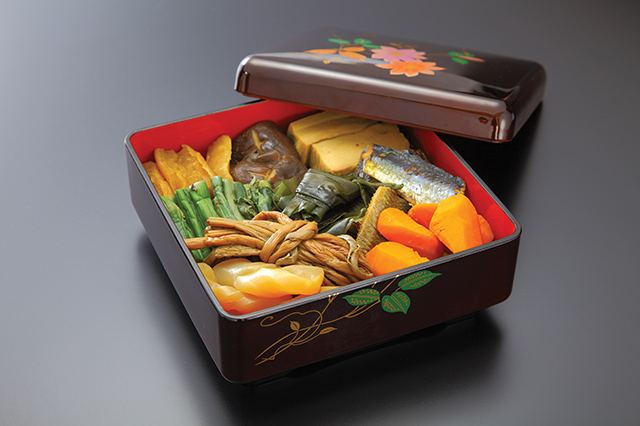
| Prefecture | Iwate (岩手県) |
|---|---|
| Region | Tohoku |
| Japanese name | 煮しめ(にしめ) |
| Reading | Nishime |
| Home area | All within the province. |
| Main ingredients | I'm not going to do that. I'm not going to do that. |
History and Origins
There is a tradition of boiling in the entire province and making it when people gather together for the ceremony, New Year's or Bons. The main tools are tofu, which are cooked tofu, carrots, lentils, sweets, freshly dried, and even chicken. Debacles were carried by the Edo, carried by the North Sea preship, and prized as valuable sources of inland protein. The cooking materials vary from region to region, and in the Hajiyama and Northeast regions, storage is increasingly used for food storage, such as salt reserves, dried mountain plants, frozen roots, frozen tofu tofu tofu. The spring is considered the best of the mountain vegetables, and the bowl is cooked without cutting. "A bowl of rice" was made during important events. There are also dry fish on the coast, such as sea cucumbers, dancos, inames, hamo anago) and ducks.
When It Is Eaten
These are made when people gather for the wedding feast, New Year, trays, and other phrases. It is often used as a catch-up dish. Some people now use "smelling" as an exercise meeting or as a waste of time.
How It Is Eaten
Cook baked tofu, carrots, lentils, mountain vegetables, and so on. Different areas and families use different tools and cuttings, and in the interior there may be deprivations, rencons, mitaques, salt-sharp himekes, and so on. In the coastal areas, sea cucumbers, daisies, sea cucumbers, and so forth, can be dried and stored as "sow fish" and can also be used to make unloadable abalones.
Recipe — Serves 10
Ingredients
- 30 g dried zenmai (dried bracken)
- 5–6 salted udo
- 50–70 g frozen daikon radish
- 5 frozen tofu (freeze-dried tofu (koya-dofu))
- 1 carrot
- 10 dried herring
- 10 fresh shiitake mushrooms
- 20 g quick-cooking kelp
- 1 konnyaku
- 15 g dashi kelp
- 10 g bonito flakes
- 150 ml soy sauce
- 100 ml mirin
- 100 ml sake
- 25 g sugar
- salt, to taste
Method
- The dry, preprocessed water is poured into the boiling water, the water is turned upside down on its way, and if it boils again, it is taken out of the water. We spread it out on a beetle and then turned the back of the head and dried it in the sun. If it breaks open, try to dry it again and again with your hands and again and again and again and again and again and again and again and again.
- We'll soak it in warm water for 15 minutes and loosen it up for the rest of our lives. If you change the water three times, it will come back to you.
- The spring is transferred to the pot and put it on fire. When you boil, put the pot down from the fire and leave it overnight.
- Put the roots together and bind them together, cut the roots by one centimeter.
- (The salt in the salt bowl is 30 percent of all weight.) By late July, you can save it for a long time if you remembly it.
- The copper pot is filled with water and salt bowls and put them on fire.
- When it is boiling, stop the fire and place it for 10 minutes.
- When the blues become bright, I will water them up and put them overnight.
- If you change the water and the salt is out, cut it five centimeters wide.
- The main roots that we stored in the ice-cold and front-processing pans are peeled and cut in half during cold weather. I'll go under the door through the string and stay in the cold weather for over a month. If you save the frozen root for a long time, use frozen storage.
- Wet water for ten minutes, put it back in your hands, squeeze water, and cut it into three sections in length, five centimeters, and two centimeters.
- I'll keep it in the soup of the pre-processed citrus for 30 minutes.
- Drop your head and cut one in half.
- The tofu to the tofu to the tofu to the tofu to be boiled in soft water or cut in half. Carrots cut off the axis when they're large, or when they're large. It's a tenth-class piece and then it's tied in the middle. Wash quick - boiled rice quickly, and tie it once it's dry.
- It's 10,000 cc water, and we're going to start with a cloth and a bar and add it to the flavor.
- I put in a spare candle and boiled it in a medium fire for five minutes and then took it out.
- I'll put in a lot of frozen tofu and raw meat and put carrots in the boiling place and burn it in the middle.
- If you boil it for about 20 minutes on the medium fire, or if you have a soft spot for carrots, taste it with salt, put it back in a damper, and cook it for about five minutes.
- We can turn off the fire and start the taste as it is.
More About Nishime
Cooking is one of the dishes of stew. It's also one of Japan's typical household dishes. I often call them the sweetly boiled root vegetables, potatoes, sweets, cucumbers, oils and so on.
And while the basic recipes are the same, the last finish is the recipe that is used to make the paste with the paste called "same".
Overview
It's a cooked dish that keeps vegetables and dry foods from breaking down. It's called boiling the cooking process that takes time to cook slowly so the soup doesn't leave.
There are some dishes that are cooked together like roast chicken, when they are cooked separately. On this point, there is a case in which a pot distinguishs much of the food from "roast chicken" or "preboiled chicken," while there is also an example in which a soup is about the same as a chicken.
It's regional, such as in the bowl of Niigata Prefecture, where the casserole is used in the soup and in the casserole.
Fads
It is said that the origin of traditional cooking began with a few boils. In the construction of the heavy-box, it makes up either the heavy-sized part or the three-sized part.
A local meal.
- It comes from cutting the ingredients small, and it's called yuzu soup and yuzu soy sauce. For example, the Fukui Prefecture and so on, there are activities related to Buddhist affairs. It is sometimes introduced as a stew in the local food of the city of Hikoku-Yamaguchi Prefecture. In Iwaji City, we call them "oo-ha-ha." And yet in Tochigi Prefecture, it's called "wow" and it's called "wow."
Yum.
The basic cooking process is the same, but the last finish with the paste is called "heavy." Yuuki is called "saki" or "saki" and, in particular, in the Edo era, there was the letter "intensibly" with the letter "smell."
Text adapted and translated from the Japanese Wikipedia article 煮しめ by its contributors, licensed CC BY-SA 4.0.
Dish data: Ministry of Agriculture, Forestry and Fisheries (MAFF), “Uchi no Kyodo Ryori” (Our Regional Cuisines) database, used under the Public Data License (PDL1.0); translated and adapted from the Japanese original.