Kahōdango 果報だんご
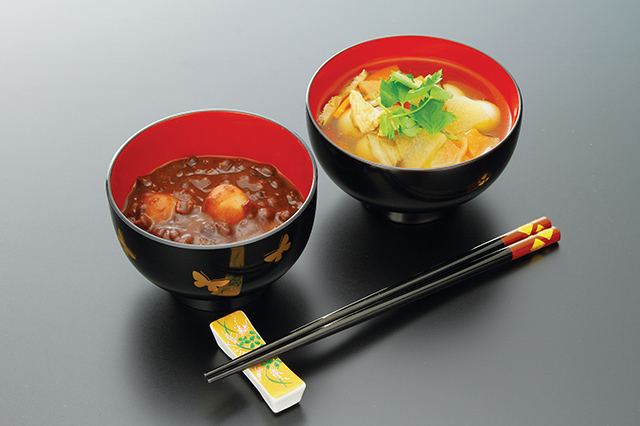
| Prefecture | Iwate (岩手県) |
|---|---|
| Region | Tohoku |
| Japanese name | 果報だんご(かほうだんご) |
| Reading | Kahōdango |
| Home area | Southwest |
| Main ingredients | And I'm going to show you how to do that. |
History and Origins
This is the first time I've ever heard of it. It's the first time I've heard it. In the past, when the jurist stayed with poor farmers, the family prepared a dumplings, and there were straws inside. It has been reported that the Great Master of the Law didn't get angry about it, but preached kindness and hospitality to others, and then the poor farmers were produced annually. The "Gee Tzu" made after it, put in some of the dumplings a piece of wood from the branches of the tree that they found in the Good News and placed it on the god shelf with a cane and a chopsticks made from the tree. They believed that if a wooded dumplings were hit by a piece of wood that they thought was a success, they would say, "Good News is Good Luck." And they would leave the good news on the god shelf and tell the children that the next morning it would turn into money. It was a fun treat. The beans were not only eaten on Hale Day but also valued as a food for winters.
When It Is Eaten
We're going to eat for the Great Teacher's Day, December 24th. Now I cook with my children at children's meetings and enjoy them as fun events.
How It Is Eaten
I eat rice dumplings in the rice and rice bowls. A part of the dumplings will put in a piece of wood that was designed for good news. There are also ways to make a dumplings in the soup of chicken, chicken, honey and so on. In some areas, it is not a dumplings but a dumplings.
Recipe — Serves 4
Ingredients
- Mix
- 320 g rice flour
- 200 ml hot water
- Mix
- 800 ml dashi stock
- 1,000 ml water
- 20cm kelp (konbu)
- 20 g bonito flakes
- 100 g daikon radish
- 30 g carrot
- 20 g burdock root
- 80 g chicken
- 20 g mitsuba
- 3 dried shiitake mushrooms
- 1.5–2 tbsp soy sauce
- 1 tbsp sake
- 1/3 tsp salt
- as needed 萩の枝
- Mix
- 150 g azuki beans
- 150 g sugar
- a pinch salt
- 600–700 ml water
Method
- I add a little hot water to the rice powder, but I'll roll 64 pieces of twigs into a softness, and I'll make it clean so that I don't know what they look like. I boil it, and when it floats, I cool it down and open it up to a monkey.
- I put water and cloth in the wood of the coral, put it on fire, and pull the cloth up just before boiling.
- I'm weak in the kitchen, I'm weak in the kitchen, I'm in the pot, I'm hot, I'm hot, I'm hot, I'm hot.
- Put the paper or ink on the monkey and apply three.
- I'm going to cut up the carrots and pick them up. The dried clay will be rehydrated and cut into thousands. I'll cut her to three centimeters. Chickens should be cut into easily eaten sizes and served with water.
- I'll put some carrots in the soup and boil the bowl. If you boil up, put in chicken meat, and the meat is cooked, then it will taste like rice, wine, and salt.
- If you put a piece of coral in and boil it up, it will stop the fire, stir it up, and add a pinch.
- I'm going to wash the coral grains, put them in a pot, put in enough water to make a little bean, and then boil the juice in the soup. Water is put in the pot again, boils it, boils it, and boils it.
- Put water and beans in the pan, and boil the fire until it is soft and soft.
- Place the sugar in two bowls and boil it so it doesn't burn. When the boiling or water is gone, add salt and stop the fire.
- The beans are citrus beans. Put the garlic in the citrus, put it on fire, add water, and melt it to the desired thickness.
- Just put in the coral, boil it, and stop the fire.
Dish data: Ministry of Agriculture, Forestry and Fisheries (MAFF), “Uchi no Kyodo Ryori” (Our Regional Cuisines) database, used under the Public Data License (PDL1.0); translated and adapted from the Japanese original.