Mameshitogi 豆しとぎ
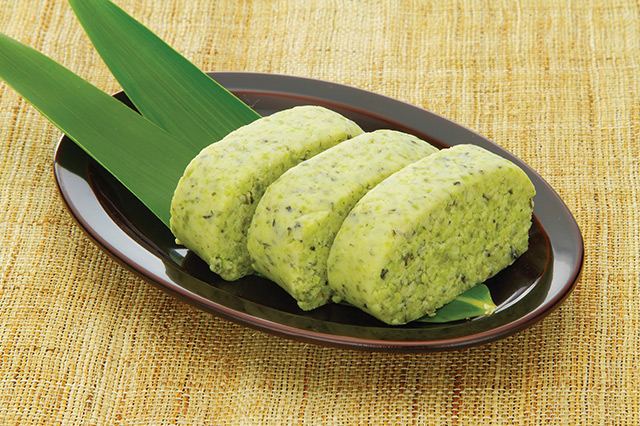
| Prefecture | Iwate (岩手県) |
|---|---|
| Region | Tohoku |
| Japanese name | 豆しとぎ(まめしとぎ) |
| Reading | Mameshitogi |
| Home area | Northern District |
| Main ingredients | I've got blue beans, rice, sugar, salt. |
History and Origins
The "toy fairy" is a raw sweet with boiling blue beans and rice flour and sugar in it, and the "single" means "to grind" and the food that is usually made of rice flour. The "Toy Fairy" used it for beans. It's called "toy fairy." North Iwate Prefecture is a cool east wind. The cold weather was severe, and at one time, low rice paddies were valuable. So beans, rice, rice, and so on were grown and eaten well as a complement to the main diet. It's also thought that the "Eyed fairy" is made up of rice flour with blue beans. Unlike the beans that grow in color, blue beans remain blue in their skin and insides when they mature. The "Singing Book" was often made in the homes from the fall to the winter when the beans were harvested, but there was a custom of giving it to the gods of the mountains, especially the Black Sun. It was also made by calling in a chair before spring. It's made up of such activities as "The Gardening Fall," which is grateful for the year's hard work.
When It Is Eaten
It used to be made in December of the old year, for the Black and the Mountain gods, for the horse god, or for the chair to be called before spring. Now, beans are harvested mainly in the fall and winter, and are eaten by the farmer's business. Some homes still have customs to offer.
How It Is Eaten
Bring back the blue beans in water, add a pinch of salt, and boil them thoroughly. I'll mix rice powder, sugar and salt with the grounded ones and cut them into sticks. Sugar will be modest in order to survive the sweetness of material. Black beans and other non-geo beans can also be made. Those that have lost their flavor after a while are delicious when they are lightly fried or baked in fried pans or oven toasters. It's possible to keep it frozen.
Recipe — Serves 10
Ingredients
- 200 g green soybeans
- 50 g soybeans
- 380 g rice flour (生粉)
- 180 g sugar
- 3 g salt
- 1,500 ml water
Method
- (Sunday summers are 12 hours)
- When the water is boiling, add a pinch of salt, a pea, and boil it in a strong fire.
- When the water is boiling and the beans are running, the summertime is about 15 minutes when you take the pot and boil it in a strong fire. When you see the hardness of the beans and you lose the sense of the peas, quickly pour boiling water on the monkeys.
- The bowl of water is filled with water, and the monkey with three soybeans is soaked in water for about five seconds.
- I'll lift the monkey out of the water and cool it down until it's dry and human.
- I'll mix the powder with sugar and salt in the bowl.
- It's cold. I'll take the beans and I'll put them in six bowls and I'll mix them well with my hands.
- I'm going to put these on the bean machine again.
- It's harder and harder and harder until it's stuck up.
- It's called a g-separation.
More About Mameshitogi
The bean fairy comes from the southern region of Aomori Prefecture, the northern regions, the northern regions, the northern regions, the northern parts of Iwate Prefecture, and the southern part of the southern part of the country.
Overview
The word "scarlet" is literally the food that is used to crush and roll rice with water, and then point to food that is like dumplings.
This is made from beans, made from beans, eaten from the Edo era of Yadoji period, and prepared as a Hale meal on Hale's day to the mountain god and farmer. In areas where rice cannot be harvested as a similar food, fairy tales were sometimes made.
According to The Hearer's Meal, it's the "Stretch" because it's a gift of the age of the Iwate Prefecture in the north of the Iwate Prefecture, besides the Blackness of December 9th, the before - December 19th - and the offering of 12 on the evening of the mountain god's annual evening. In the case of a gift, it's called "a fairy" in honor of it, and it's also called "a fairy" in the language of beans or simply "a fairy." I liked him as a snack.
Even in the southern part of Aomori Prefecture, we gave a bean-symmetric fairy at various annual events following December.
In addition, in the Aomori PrefectureXXZX157X, there is a "feeding," which is a plain native sweet with a stick in the bowl of rice powder, and it is quite different. This difference is thought to have been due to the effect that the relatively crop of rice in the Tsugaru region and the cool east wind had on the situation of the small rice harvest in the area of 380.
It is common to use blue beans mainly in the fall when harvesting soybeans, but sometimes they are used in black, tea beans, and so on.
It used to be made in the cold months from December to March, but now it is possible to buy it as a souvenir in the year.
How?
Although different details vary from community and family to family, there are generally reports of how to make them:
I'll put the soybeans in the water overnight and boil them. If the beans are too hard, they leave a bluish smell, and if they are cooked too much, they lose their teeth and their flavor, so they adjust to a softness.
It's cold. We ground the beans with a mill, mix the juice sugar of rice powder and beans, and then we make them into this shape.
They like to eat the cuts as they are, as well as to burn or burn them. It used to be made in cold weather to keep the sun out and to make it with fresh beans again. Because it's raw candy, you need to be careful if you want to save it.
Text adapted and translated from the Japanese Wikipedia article 豆しとぎ by its contributors, licensed CC BY-SA 4.0.
Dish data: Ministry of Agriculture, Forestry and Fisheries (MAFF), “Uchi no Kyodo Ryori” (Our Regional Cuisines) database, used under the Public Data License (PDL1.0); translated and adapted from the Japanese original.