Home / Akita / Tenkoazukinosekihan
Tenkoazukinosekihan てんこ小豆の赤飯
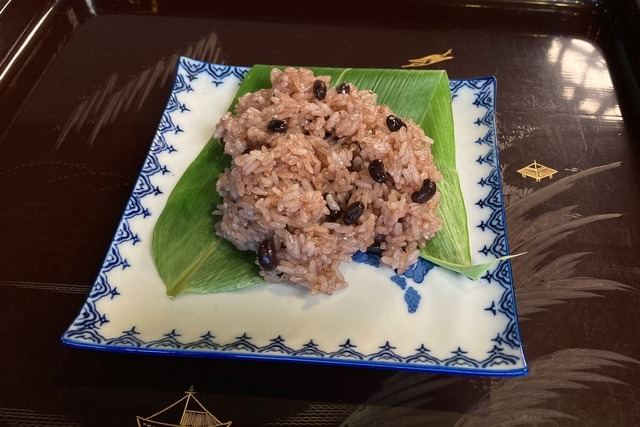
| Prefecture | Akita (秋田県) |
|---|---|
| Region | Tohoku |
| Japanese name | てんこ小豆の赤飯(てんこあずきのせきはん) |
| Reading | Tenkoazukinosekihan |
| Home area | I'm going to show you how to do this. |
| Main ingredients | I'll give you a couple of examples. |
History and Origins
Akita's red food. Japanese red rice culture has characteristics of regionality and food culture and is an indispensable dish for happy days and celebrations. It is also said that red rice comes from the origin of ancient rice, a native of the Americas that was near red, and that it is due to the absence of red in order to pay off its ills. Until the time of Edo, ancient rice was common, but improved species by technological development have changed into what we now are. However, since the custom of eating red rice with a gift to God remained strong, during the middle of Edo, it was spread as red rice. Akita has some beans that are known as "krieg beans" and they are used in red food. It's also a characteristic of sugar, unlike common red food. I didn't want to have any broken beans in my mouth, so I used a hardy, hard-to-breast black offering. The color of a little purple red rice made from a cob-chip beans, in Akita, in Akita. In the New Year's Eve, there is always red rice on the anniversary of the wedding feast, and in the celebration of the great vacation for the one who has completed his life, there is a custom of eating what we call "black rice."
When It Is Eaten
I've inherited it through celebration and Buddhist things. Also, since I've celebrated the festival on November 23th, I'm still eaten by the festival.
How It Is Eaten
Wash rice and dip it in water overnight and give it to monkeys. Then add enough water and boil it, twice along the way, and wipe off the wrinkle. We transfer rice and boiled, boiled beans to a large container and then soak them in boiling soup for half an hour and then steam them with a steamer. I'll cut the water and keep the juice of the conch. When it is steamed, you can go to the ball and mix salt, sugar and wine with the juice of the creamy beans and then resuscitate it for about 20 minutes.
Recipe
Ingredients
- 1.5 kg glutinous rice
- 80 g azuki beans
- a pinch salt
- 40 g sugar (加減する)
- 30 ml sake
Method
- The rice is washed and soaked overnight into the water and put it on the monkey.
- The cob beans are cooked with enough water. I'll water him twice along the way and make a wrinkle.
- The rice is transferred to a large container, the rice is poured into a soup, dip it in for half an hour, and then water is cut off and steamed with a steamer. I'll cut the water and keep the juice of the conch.
- After 40 minutes, when it is steamed up, we move it to balls and mix it with salt, sugar, and wine, and mix it with a mixture of 300 ccs of cobly beans. Sugar is sweetened by taste, but you don't have to put it in at all.
- If you resuscitate the paper for about 20 minutes again, it will be finished.
Dish data: Ministry of Agriculture, Forestry and Fisheries (MAFF), “Uchi no Kyodo Ryori” (Our Regional Cuisines) database, used under the Public Data License (PDL1.0); translated and adapted from the Japanese original.