Kanrobai 甘露梅
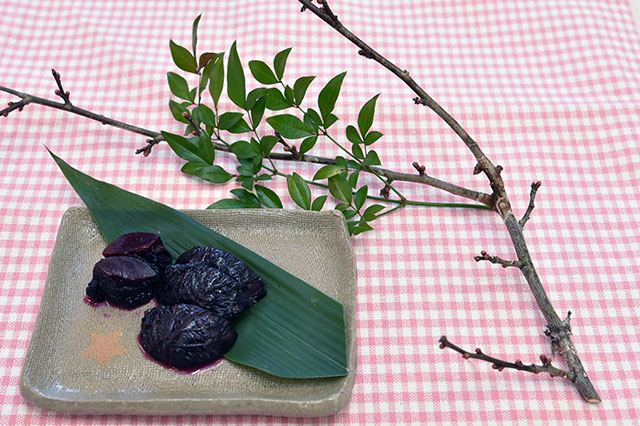
| Prefecture | Saitama (埼玉県) |
|---|---|
| Region | Kanto |
| Japanese name | 甘露梅(かんろばい) |
| Reading | Kanrobai |
| Home area | It's the Nintendo. |
| Main ingredients | Ume. |
History and Origins
It's a Saitama Prefecture. There is a Niemia forest called one of the Kanto3 coniferous forests, which grows around which are about 20,000 plums. The history of this land, known as the village of Ume from ancient times, is reported to have been planted, cultivated, and planted from Kyushu Greatgon during the Civil War. The pulp becomes a reputation for a thick, good plum, and especially for the Japanese brand's "peum" when the surface is fully ripe and the surface becomes red. Of course, salt-sucked plums, one of the traditional Ume's dishes is "smellia."
When It Is Eaten
About the beginning of June, when the plums are harvesting, they can be formed in a period of hard hardness.
How It Is Eaten
The blue plums are soaked in water for long periods of time. Cut the moisture well, then cut the seeds and soak them in the refrigerator. Washed and cut leaves of red phosphorous leaves into vinegar. Afterward, they wrap their plums in a water-screw red wine, and they are soaked in sugar and plum syrup, and then in a refrigerator for about a month. The syrup that comes out of the plum can be thinned with water and used as juice.
Recipe
Ingredients
- 1 kg ume plum (とれたてのもの)
- 800 g–1 kg sugar
- 赤ジソの葉, to taste
- plum vinegar, to taste
Method
- Aolymia soaks in water full of water for about five hours, and pulls it out.
- Wash well, remove garbage and stuff, clean well the water in the monkey, cut with a knife, cut in four.
- Put four times as much lemon and sugar in a lid container or bottle, keep it warm until the water comes out, and then put it in the refrigerator.
- I'll wash the leaves of a red zygote and soak them in a day's sleep. * If you soak too much, you'll lose color, so be careful.
- Cut down the water from the leaves of the red zuso, place three plums in a container, shake the remaining sugar in the container, and save it in a refrigerator. You'll be able to eat in about a month or so.
More About Kanrobai
The sweet-smellia is the sweets of the New Yoshihara masterpiece when it was back in the Edo and when it was sugared with the green plums wrapped in cyso leaves.
Overview
In Toku's 20th chapter, we read: "The sweet sweet lemur of my wife is in the sun." In Toshihara, "Nuharaya" is made by a guard from Matsumoto, and the roll is made by a nearby bay and a power guard, and the haiku is made by Taji. "This three is a masterpiece of the knife inside, and now it's no longer distributed from the Japanese tea shop." The national encyclopedia is a red moat or a following - encyclopædia, which says: "The recipe or raw material is taken away from the nuts of the plums and the nuts of the plums, cuts the meat in pieces, wraps it in purple leaves, dips it in lemon juice, and makes it sweet. It's like a nuclear purple resuscitation plum. The plums are soft and hard to clean, the sweets are dry when they last, and the pieces are left in this product." Each year, in mid-May, they were made, and they were given to customers for years to come.
Mountain-shaped sweets.
There's nothing to say. There's sweets from Yamagata Prefecture with sweets. It's like Umejim and Seung Jo's, made from a hundred lemons, a hundred white sugars and five honeys, and it's less acidic. It's a beautiful color. It's sweet and sour and delicious.
A footnote and a bibliography
Text adapted and translated from the Japanese Wikipedia article 甘露梅 by its contributors, licensed CC BY-SA 4.0.
Dish data: Ministry of Agriculture, Forestry and Fisheries (MAFF), “Uchi no Kyodo Ryori” (Our Regional Cuisines) database, used under the Public Data License (PDL1.0); translated and adapted from the Japanese original.