Shōtenzushi 聖天ずし
| Prefecture | Saitama (埼玉県) |
|---|---|
| Region | Kanto |
| Japanese name | 聖天ずし(しょうてんずし) |
| Reading | Shōtenzushi |
| Home area | Kumani City, wife of Numa. |
| Main ingredients | Dinner. |
History and Origins
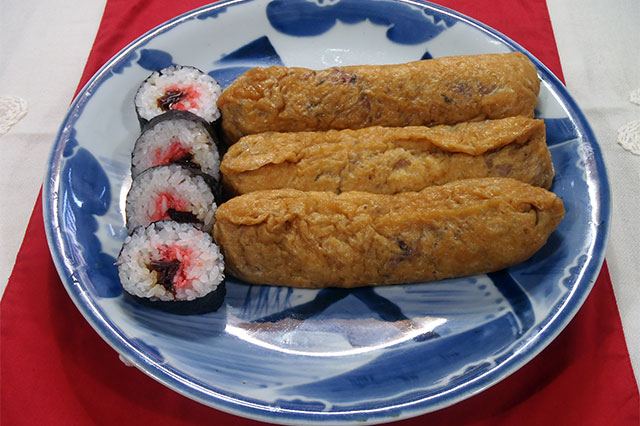
In the Kumaji City area, during the Edo, the water supply of the Tokugawa River flourished, and rice and wild peas were grown in the fertile fields of rice and fields. The sacred Japan with its precious rice and expensive oil raise, was served on Halle's day on the festival and on the day of the wedding. The Holy Lord of the swamps, as it is called in front of the gate, has been eaten in the same way as the ancient taste of Edo. The Holy Heaven is a rice-loaded, three bound, four pieces of bread, one person in size, and one of the reasons why people liked it. And my wife, the Shizuoka Mountain Regiment, who is well acquainted with the community as a holy lord, has not been created by great names or merchants, but has been built by local donations, and has also spread throughout the region as a meal by Harre when he makes his lecture on his wife, Hara Mountain.
When It Is Eaten
By the mid-30s, local farmers had put rice in heavy boxes and taken it to a store in front of the Lady's gate and had it replaced for the Holy Heaven. It was what we now call a "takeout" holiday. Even now, celebrations such as March's peaches, May's estuary, and the annual festival of the Holy Spirit of Spring and fall are eaten by the sun and are used as gifts to visitors on his shores and trays.
How It Is Eaten
The shipment is now reported to be large, about 12 inches long, and Edo. As a recipe, pack the rice into a large oily boil that is steamed with soy sauce and sugar. The oil raised in the cook's kitchen will be rolled up and reinforced. In the roll-rolling tool, used to use carrots and seams that had been steamed with sugar and steam, but now they are used with a little pepper.
Recipe — Serves 4
Ingredients
- 3 × 180 ml(450 g) rice
- 450 ml water
- Vinegar: 60 g vinegar
- Vinegar: 20 g sugar
- Vinegar: 2 g salt
- Aburaage (fried tofu): 12(480 g) aburaage (fried tofu pouch)
- Aburaage (fried tofu): 70 g soy sauce
- Aburaage (fried tofu): 30 g sugar
- Aburaage (fried tofu): 20 g mirin
- Aburaage (fried tofu): 20 g sake
- Aburaage (fried tofu): 300 ml water
- Mix: 40 g kanpyo (dried gourd strips)
- Mix: 200 ml kelp (konbu)
- Mix: 10 g sugar
- Mix: 10 g soy sauce
- Mix: 10 g mirin
- 2 roasted nori
- 20 g denbu (sweet fish flakes)
Method
- The rice is ground, watered, placed for over 30 minutes, and cooked in rice rice-snap mode.
- Put the paste in the pot and boil it.
- A cooked meal is served with two pairs of vinegar and mix it quickly.
- The oil is opened in a pouch of length and then poured into boiling water and then removed the oil.
- Add sugar, lentils, wine, water to the cooking, boil it when it is boiling, add broth and boil it until the soup is gone.
- The cane is back in the water and has a salt problem, and after washing well, boils from a large amount of water, and boils the juice.
- I'll put sugar in the sugar, soy sauce, soy sauce, soup, soup, soup, and stir it. When you boil it, I'll cook it in the middle, add some soy sauce, and cook it until the soup is gone. When it's cold, I'll cut six pieces to match the width of the roast.
- Pack your rice and shape it.
- I'll cook a piece of rice, spread it out 150 grams of rice, put three in front of me with a cherry and wrap it in "The Letter" from the end.
Dish data: Ministry of Agriculture, Forestry and Fisheries (MAFF), “Uchi no Kyodo Ryori” (Our Regional Cuisines) database, used under the Public Data License (PDL1.0); translated and adapted from the Japanese original.