34 16 のしこみうどん
| Prefecture | Tokyo (東京都) |
|---|---|
| Region | Kanto |
| Japanese name | のしこみうどん |
| Home area | Invert Tama area and its wide range. |
| Main ingredients | I'm going to start with a couple of things. |
History and Origins
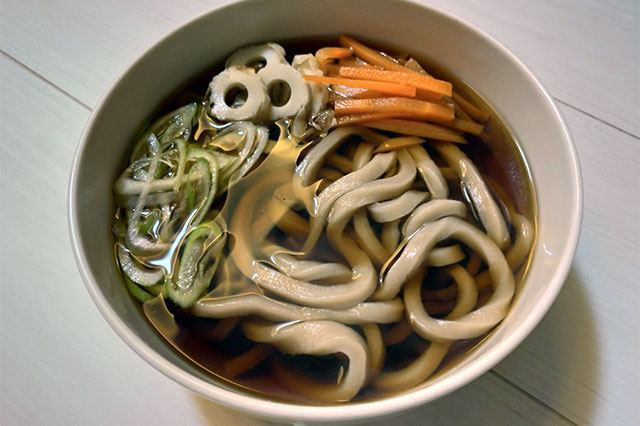
The rice bowl is boiled with boiling water, but it's cooked with wine, salt and soy sauce, and rice sauce and other ingredients. In the Edo, the whole city of Tama was in the mountains that were the direct jurisdiction of the Confederation, and in Tokyo, the highest mountain was steep, and most of the city was forest. Because of the poor land on the rice paddies, the main crop of wheat and mustard was grown, and the powder culture that ate mustard and rice in the background was established. In addition, the mountains from late fall to winter are cold. Since men have finished their mountain work one day and have come home hungry in the cold, they have been able to make them warm up quickly, so the duplicating has been made in their homes. It's because of the fact that after the punch, "extremely" is "extended," but there are areas in which it is called "stretch" from being pulled out of the pot and eaten. The width of the rice palm is characteristic of the spread of the noodles, and it is made into pans, boiled, boiled, crushed, seasoned vegetables, and boiled to a boil and served with heat. It's a delicious dish that is soaked in sweets of vegetables and warmed up. Until about the year 50 of the Showa festival, we also included wild deer and chickens that were caught in hunting and carried by families.
When It Is Eaten
We often eat from autumn to winter cold days.
How It Is Eaten
Cut the rice into a wide spread, fill the pot with water, boil it down, cook it out, taste it with flavored vegetables, and boil it. They eat hot food.
Recipe — Serves 5
Ingredients
- Udon noodles: 500 g all-purpose flour
- Udon noodles: 15 g salt
- Udon noodles: 250 ml water
- 50 g green onion
- 50 g carrot
- 2 chikuwa (fish cake tube)
- 10 niboshi (dried sardines)
- 20 g shiitake mushrooms
- 2 tbsp soy sauce
- as needed sake
- as needed salt
Method
- I'll make you a udon. Add medium - force powder and salt to the bowl, water down, and then fold it.
- When the fabric is assembled, put it in a plastic bag and lean down often.
- I shake the powder on the counter and stretch it out with a noodle stick.
- Break the fabric in half and cut it.
- Put water in the pan, boil it and clean it.
- I'll cook it with wine and salt, add four citrus and boil it.
- I'm going to put a bowl of carrots in the bowl, and when the fire passes, I'm going to taste it with soy sauce and let it boil.
More About 34 16
Tokyo, deep-cut Sasai, native dish.
It's a dish made from boiling and steamed soup, seasoned with wine, salt, and soy sauce, and boiled with cereals for the season.
Today, in the Yamanashi Prefecture era, the city of Saito was the home of the Edo Order, but most of it was forest, and the mountains were steep and the rice fields were steep, and the rice and rice fields were the main sources. That is why the culture of powdered foods in the remote Sassi region has become established. Also, in the late fall and winter, the climate of the mountains is cold, and mountain workers finish their work, and can make fast heat when they come home, and the cinder has been made and eaten by each family.
Until about 1975, we would also include wild deer, deer, and chickens that were caught in the hunt in our homes.
Even today, homes with elderly people are being built and eaten at home, but there is no serving at the restaurant.
The word "pang" is derived from the word "pierced" or "pierced out" by striking the citrus. In some areas it's called "snap" because it's taken out of the pot and eaten. The conch is broad and resembles the Yamanashi Prefecture bar.
Text adapted and translated from the Japanese Wikipedia article のしこみうどん by its contributors, licensed CC BY-SA 4.0.
Dish data: Ministry of Agriculture, Forestry and Fisheries (MAFF), “Uchi no Kyodo Ryori” (Our Regional Cuisines) database, used under the Public Data License (PDL1.0); translated and adapted from the Japanese original.