34 5 おでん
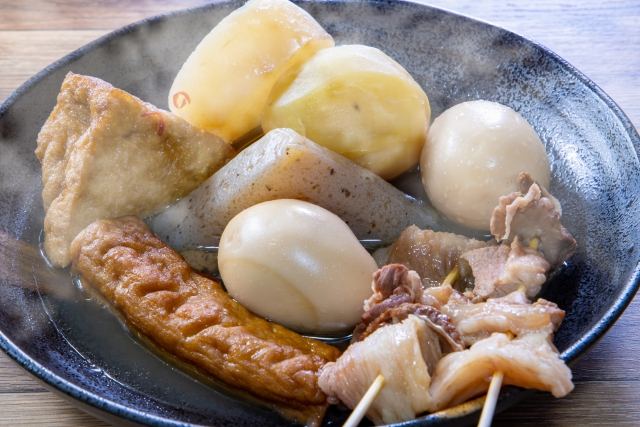
| Prefecture | Tokyo (東京都) |
|---|---|
| Region | Kanto |
| Japanese name | おでん |
| Home area | All over the city. |
| Main ingredients | And some of the recipes are: dithers, fabrics, radish, potatoes, eggs, eggs, eggs, eggs, garlic, oil, pepper, and cancer. |
History and Origins
The dishes you took with the bowl and the cloth were cooked with a mixture of various ingredients, such as tinkkins, radish, tassels, and so forth, and so on. It is thought that the root of the tofu can be made from the rice that you burned with a bamboo knife. You are told that you have become a "n" in the wife's language used by your wife to support the temple by putting "da" on "da" and "n" on it. This name was derived from the original prayer of Tajik, that of a dance that was played to the rhythm of the whistle and the drum, and that of a tofu cut into the shape of a zizgi tree, and similar to a Tofu. In the area of Tsukiji, Tsunaka Matsumoto, there is still a culture of dance. During the Edo, tofu and pepper were used to make rice and rice, while the rice and rice were used to make rice. After modern times, boiling gums are spreading. In Kansai, they distinguish the boiling pot from the original dish by the name of Kanto. Today, it is popular as winter's cucumbers, such as easy crafts, large roots, and cloths, and there is a widespread spread of wood in various regions. The Tokyo feature is that you can hold your balls.
When It Is Eaten
Since it's cooked, it's often eaten from fall to winter. Tokyo has an old barn and provides it in the year before.
How It Is Eaten
Even though it's taken with stilts and cloths, I put dozens of different kinds of tools in it, boil it, and cook it with mustard as I like.
Recipe — Serves 2
Ingredients
- 1,000 ml dashi stock
- Broth: 4 water
- Broth: 1 dashi kelp
- Broth: bonito flakes, to taste
- Broth: 2 tbsp sake
- Broth: 2 tbsp mirin
- Broth: 2 tbsp dark soy sauce
- 1/4 daikon radish
- 1/2 blocks konnyaku
- 1/2 packets shirataki noodles
- 2–3 がんも
- 2–3 ちくわぶ
- 2 hanpen (fish cake)
- 4 egg
- 2 potato
Method
- The large root peels thickly, wide and wide, and loosely cut into triangles. Put a hidden knife in the surface so that it will taste easily, and place a large root and fold each in about 20 minutes. The eggs will be boiled in a soup for about ten minutes in winter, and in summer, eight minutes in the summer.
- The dung is cut to size, easily eaten at an angle, and the potatoes are cut to one quarter. Cut the paste into triangles.
- I'll make some soup. Put a cloth in the water and light it. When it is boiling, take out the cloth and put in the bars, turn off the fire, and wait two minutes. Then I take out the bar and put in a wine, a thick soy sauce and put it on the fire again.
- It's in a deep pot, and it's boiled for about 30 minutes with soup and tools.
- If you stop the fire and taste enough, you'll finish it. If the temperature goes down, I'll heat it with a weak fire before eating.
More About 34 5
Your mother is a kind of Japanese dish of stew. It's also classified as pot food. Taste the citrus and citrus sauce and boil it for a long time with various tools called seeds. As a seed, there are soy sauce, peppers, baked rice, rice, rice, rice, potatoes, carrots, eggs, and so on. The seeds and the variety of any species vary from region to family.
After Meiji,
Even in the Tokyo of the Meiji period, "Kinji" stands were popular, but they suffered great damage during the Kanto earthquake of the time of the Great War (1923). This allows part of the present Tokyo grocer shop to taste the taste of a thin Kansai. The 1943 edition of The Encyclopedia of Common Society called it "the name of the rice paddies and the bowl of stew" and it seems to have been of some importance at that time.
In the black market after World War II, selling "snocks, kasttris" is described in Japanese Food History.
No birth.
I've taken the sesame to keep the lily potatoes, namie-nummel from leaving, but I've put it in the soup, and I'll serve it in a separate pot. If you have a potato, it often doesn't. - Skin and cut whole or small. There are a lot of May Queens that are hard to boil. When potatoes come in, they often don't. - Strong localities and peculiar species. Vegetables - they are used for delicately cut carrots, lentils, peas, onions, and so on, and there are only a few of the ingredients and mixtures. There's a flat and an indefinite tear. I'm sorry. Use a sliced convex. Akiki - a figure of a rectangle made from the skin of a large fish in other regions. The squid - a sticklike hook with the squid as its core. The shrimp roll - a stick in which the sea age with the shell of the shell is stuck as a core. There are heads and no heads. - The eggs of chickens and quails are fried. - We fried them with egg white and mountain potatoes. Similarly, some sea creatures use squid, cucumbers, and sailing as substitutes for sea animals. - The branding was wrapped in white fish. - A stick-like hook into which the conch is placed. We're in Kanto and Tohoku and we're in Fukuoka far away. The birth of a Tokyo's shrine is also said by Akigawa's shop. - A dumplings-like dough with chicken eggs and starch and so on. Roll cabbages - inside tools use the mink of chicken or pork. We used the bark of old wood and bamboo to bind them up, but now we often use kangis and slatakis that can be eaten.
It's soup and soup.
I put water and nail cloth in the pot, put it on fire, and boiled it up. This soup is made of wine, lentils, soy sauce, soy sauce, salt and so on, and so on.
In general, with Kanto, you can use citrus oil to extract citrus and lye and taste from the taste and wine. On the other hand, in Kansai, you can use a sieve soy sauce, and you can use a sauerkraut and a sieve to make soup and taste it with salt.
The "heavy" with the Japanese wine is a favorite additive of the lye that has become famous for the Japanese red wing of Tokyo.
Shizuoka Prefecture
Shizuoka City has a black soup that is made from citrus oil in meat - such as beef and chicken and pigs. For example, in the close Tsu City or something like that, you may add a sieve or something like that. In a restaurant like this one, you will have a long-term inheritance, and many of the juices are so black that you can't see the bottom at all. The popular "Pinji" is a black pepper made in various parts of the Shizuoka Prefecture centered around the cooking pot. If you stick a stick in all seeds, you will often eat with an eagle's grinder, a bar, and a blue seaweed called a powder. This is called "Saoka's Sun," and the pronunciation is "Saoka" according to the way you read "Saoka" around Shizuoka City. There are many shops and books that have made this call a sales point. It's been taken from a TV commercial of the Kirin beer, which Satoshi Suto made, and it's been noticed nationwide and has led to a kind of boom. In 2007, the organization "Saokazan's party" came to the third and third place at B-1 Glumuri.
In Shizuoka City, there are two restaurant districts, called "The Blue-Tree Street," and "The Blue-Tree-Tree," and they are making taste and equipment in each store. There are few stores now that are sold in the right sense of being candy retailers, and if you are introduced to a liquor store or a candy shop, you often treat private stores that sell candy, including non-baric stores, as well as candy stores. It is said that Shizuoka Sun is eaten every season, that it is sold, for example, in summer pools and that some stores sell more than in winter. This is how the Shizuoka City area is eaten extensively as a food for fish and wine.
And once a year, in 2010, I'm going from Shizuoka's Festival to Shizuoka's Fair. We've introduced many Japanese plants, such as Koreans and Taiwan, these days, as well as Japanese food and rice and rice and rice and rice and rice and rice and rice and rice and rice and rice and rice and rice and rice and rice and rice and rice and rice and rice and rice and rice and rice and rice and rice and rice and rice and rice and so on.
In addition, there is a growing number of places where sedation can be eaten, not only within Shizuoka Prefecture, but also within Tokyo and Bangkok, where stores can be opened.
Although Seung Jo was mainly eaten by Shizuoka City, which includes the old fresh water, and around it, his reputation and awareness were low in the out-of-the-class districts of East Izu and faraway states, he began to be known by the national fame increase, such as the above - mentioned TV commercial.
It is also called Aichi Prefecture in faraway states, but it is not called a Kanto stew (and it is not called a Kanto).
Text adapted and translated from the Japanese Wikipedia article おでん by its contributors, licensed CC BY-SA 4.0.
Dish data: Ministry of Agriculture, Forestry and Fisheries (MAFF), “Uchi no Kyodo Ryori” (Our Regional Cuisines) database, used under the Public Data License (PDL1.0); translated and adapted from the Japanese original.