34 2 にぎりずし
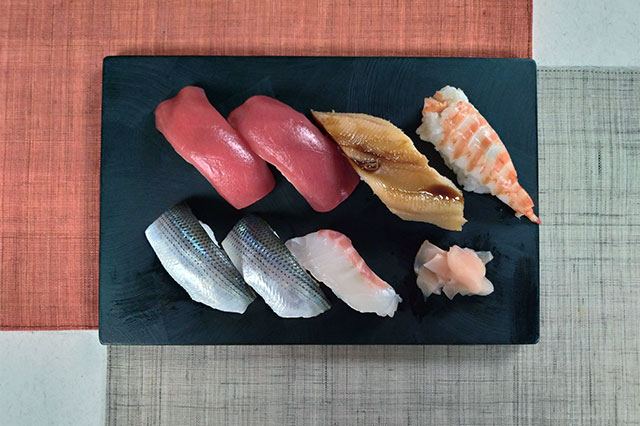
| Prefecture | Tokyo (東京都) |
|---|---|
| Region | Kanto |
| Japanese name | にぎりずし |
| Home area | Tokyo Bay, all around the city. |
| Main ingredients | And I'm going to show you some of them. |
History and Origins
The rice bowl is one of the Japanese dishes that stands for the rice with the ingredients on top of the rice. During the peaceful period, salt fish were cooked in cooked food and the sourly flavored dough that the rice had produced was eaten as "matured and unsuspected." In the days of Edo, this unspoiled age changed appearance, quickly pressed, pressed, and pushed. Handwinding is becoming popular now, and it is spreading all over the world. In the days of Edo, it gained its popularity as a food for the poor, but it was developed by a man of luxury and a master of hand-repair. In the face of a peaceful age, it is possible to be followed and eaten today, such as in the past, in the past, in the past, and in the past. It is famous for the unspoken life of a man. In Edo we are told that the EdoIX is Edo, the EdoIG's "Sweepering the Hair" of the Matsusaki Right Gate, the Chinese Warden's "Sazisusu" and Kosuke Koro, the "Saiji" of the Warden Guard, has contributed greatly to the spread. Edo Presomi is a subject of red vinegar rice, of rice, of honey, of honey, of sauerkraut, of boiling, boiling, boiling, boiling, and so forth, of eggs, of course, of casserole, of sponges, and so forth.
When It Is Eaten
In the late Edo, civilians were able to stand in the stands easily in the town of Edo. Some of them come from luxury stores that taste the materials and ingredients. It was established that you would serve at the counter, even though you set up a store on a well-known stand from the Edo age. Edo's rice bowls were three times as large as the present one, and they served more food than any other item, but they now put more emphasis on the food than on the food. With today's depreciated rotational life, with the diversity of sales of sushi stores such as dupa, supermarkets and convenience stores, they tend to be eaten daily as well as in Hare's days.
How It Is Eaten
In vinegar food, add the raw stuff, make it light, and eat with the wax and the soy sauce.
Recipe — Serves 4
Ingredients
- 2 × 180 ml rice
- 2 tbsp sake
- 10–15cm kelp (konbu)
- Sushi vinegar: 4 tbsp vinegar (なければ普通の酢でもOK)
- Sushi vinegar: 1/2 tsp sugar
- Sushi vinegar: 1 tsp salt
- 1 まぐろの赤身 (刺身用)
- 2 tbsp dark soy sauce
- 2 tsp mirin
Method
- If you don't want to boil rice, I'll drain it for about five minutes or so.
- Lightly wipe the cloth and cut it with scissors.
- Put 1 in the bowl, put less water, drink, and 2 in the second serving, and cook.
- I'll wait until I have all the ingredients for the fire.
- When the rice is ready, remove the cloth, move it to the tub while it's hot, fold it four times, and mix it quickly. If you mix it easily, I'll cool it down in my stomach with a cucumber. I'll water them down until they hold.
- If you put a can of garlic in a pot and you skip alcohol, you'll add a thick soy sauce and cool it.
- A cut-and-cut skull red skin can be soaked for about ten minutes in six minutes and draw water.
- I'll put 7 and 5 lightly rolled 5 near the second joint of my fingers in order and then rotate them to the side and make it look light.
More About 34 2
The sushi is a sushi caught in a small bowl of chalice rice, and is a form of early labor. It's called a fist, Edo Presusomi, Edo, and so on.
Cooking.
"To make a sushi" is called "to make a sushi," and the kitchen is called "to put on" in the kitchen. This is considered a legacy of the time when sushi was an fertilizing food.
Take the rice with one hand and make a shansel, and if necessary, make a chicken or a fly, and hold the seed on top of it. What's left of it is called the "Sweeting." Seeds are not just living things, but there are many jobs, such as vinegar, glue, stew, and baking. There are techniques, such as rolling with sea cucumbers and palm trees and changing the way seeds are cut and griping, to prevent the separation of species from the chrysanthemum.
Grab a hand.
The way a sushi is held is where the skills of a sushi maker are most used, and there are various techniques.
Hand it back, hand it back, hand it back, thumb it back
In addition to this, there is a fist shape, a shape, a shape, a shape, a shape, a shape, a shape, a shape, a shape, a shape.
It is often held in size enough to be eaten in one bite, but in the past, it was the standard size of two to four times what it is today. In some cases, such large sushi is left behind as tradition in some stores and districts.
A fist that seems to have been too large and low on the shari is called "Yuzu" and is considered a bad name. Some stores call it a big thing, and sell it.
Since 1981, when the cili's auto-chops robot and shanjidion machine was developed, machine holds have spread around chain stores. If you put rice in a tank-like device, it will be made into sushi by means of a machine that narrows it down. Some of them are done automatically to the point where they wear walnuts or wrap around the sea basins. There are also machines that look like bowls, and when you look at them from the seat, it looks like a sushi worker is taking the rice out of the tub and holding it. A wooden or polyethylene capped sashimi is also sold as a business and household cooking item.
The Way to Send
Depending on how you order and how you seat it.
The rule is what is called the set menu, selected by customers from the side, above, above, and above, from the pine or the bamboo or the plum. "Your leave" will be provided by the owner with the confidence of choosing one of the seeds that he is packing today. Your favorite style is to declare the seeds you want to eat and have them hold each time you want them. It is a two-step rule. The same is true of sushi.
In order to do the "Crime" order, even at the front desk, we often offer one person on sushi, sushi, dishes, and so on.
In contrast with this, in the counter seat, or in the front seat, the manufacturer puts the freshly picked sushi directly in front of the customer.
To have two copies of your "likes" order coupled with the following theories:
The theory is that the original idea of a large mass of rice is divided into two pieces so that it's easy to eat. One theory says that it was presented in two pairs to be unsatisfying. The theory is that if you eat both of these things, you don't know how to taste them, and if you don't eat two, you're going to have to reduce the number of additions on account of your account.
(There's a "stab" in the helper word counting sushi, but how to count one sushi as "strimming one," or how to count two pairs as "strimming one") and so on.)
The style of feeding in a tub is the name given in a bucket that many people in the Meiji period were so violent that they could be served on a plate and broken in a bucket that was not forced to break.
The sushi maker.
It is said that to become a person, you must have at least a decade of training.
The skill required is to recognize the sushi species, to cook, to have customers, and to have a knowledge of management. Especially because of a need for taste, some cooks who have been eating Japanese food for many years are not good at sushi. The sushi maker, Eyumi Gyumi, says, "One thing is easy for anyone to do about sushi technology. "But it's hard to do everything thoroughly."
Since sushi cooking doesn't require special qualifications, there are no entrance barriers, and there are examples of taking home, delivery, and spinning shops, leaving their grips to arm-to-hand workers, part-time workers and sushi robots. The silver strip was successful at home sushi through the industrializing of education and work at the training center.
In addition to the ten-year period of training, there has been a "Sweeth School" where old professors have been breaking old rules, such as "steal with the eye" and having long-term stacking before they can get a hold of sushi, and teaching only necessary skills.
How to Eat
It's the way traditional sushi is supposed to be eaten. The manners of eating with your hands are to wipe your hands off each guest. Of course, some people eat with chopsticks, and they recommend them as "because when they eat with bare hands, they leave their fingers with the fat of the sushi that they ate earlier, and they break the flavor of the sushi after that."
A sushi is something that has been seasoned and is eaten by adding soy sauce to it. The former include foods that are originally seasoned with food, such as fish, or such as the peppers that are soaked in soy sauce, or such things as "Small-based liquid flavors called "sing" are applied on the seeds, or salt that is salted in some way. The latter is prepared with a small plate of soy sauce and then put the soy sauce in proper place to eat. (In some areas it is not eaten on small plates, and in others it is used by customers to paint the soy sauce and boiling.)
Instead of adding soy sauce to the sushi, some add soy sauce to the rice, others add soy sauce to the rice, but if you put it on the rice side, the food will collapse or the rice will fall on the pan.
What order should we start eating and finish eating? There used to be a trend in the past when the shopmaker asked for a baked egg and looked at his arms, but now many stores are not standard because they are serving him. Also, some recommend that you start eating white fish and other clean things, move on to light objects, such as cohadas, and tie them with a thick - flavored tanne, such as tuna trot and anago, while many sushis recommend that you "take the order you want to eat" in which you want them. When you eat a tapet that leaves fat on your tongue and try to swallow the next part, it's agreed that you should re-mouth it with raw rice and tea.
Sushi.
The fish and other fish used for sushi are called sushi seeds. The sushi species is called "seed" or "tane." [The "Tanne" is the word for a workman's covert, the word "tane" that's reverse.]
The sushi species are classified as organic, as oysters, lights, stews, and so on.
Life
(Customs, cacti, cicadas, twitter, twitter, twirl, twirl, twir, twir, twirth, twirth)
Even if you say "living things," many jobs are done, such as light vinegar, stylus, frost, boiling water, salt, and so on.
Shells.
There's green goats, red shells, giant clams, northern snails, silverfish, trigs, sea turtles, sea otters, oysters, and so on.
The clams, the auricles, and the abalone are classified as stews. In addition to oysters and oysters, they can be boiled, and the clams and the trirex are often served with cucumbers.
Light
A lot of them are served with vinegar.
(Cooper) And so on.
Cooking.
I'll include some steam and steam. Many seeds are served with sweet boiling.
I'm going to show you some of the things that we've been doing.
Other
It's the original shape of a sweet finish with egg-burn - or with lawn-sea shakes and so forth - but in recent years sometimes roll eggs are used. It's easy to break into smaller shapes, so it is often put out in a warship. I've been working on this for a long time.
In particular, in sushi and sushi restaurants outside Japan, we use cooked foods such as mini-Hungberg, baked meats, okonas, fried fried, sea chicken, sea chicken, chicken and so forth, as sushi, and in addition to raw vegetable salads, more and more products are imitating the odd style of traditional sushi. There is a view of these that looks down on them as "a different species beyond the borders of sushi," but there is a view that views them as one of the previous mechanics.
History
It's the birth of a sushi.
Sushi is said to be shallow in history in sushi, invented during the Edo and written year.
The first book of Khetosuke is called "The Cult of Magic." The idea of Kojiko was to be called "The Guard Guard" and to be called "The Order of the Guard."
And that's what I'm going to talk about.
I'm sorry. By this time, sushi is already established, and at a time when Edo, end of the year, and the new footsteps are still being heard, finally, the modern popular sushi has come up in full. In those days, a sushi was as big as a duck, and it was not so much a meal as it was his location.
Proliferation
Thanks to commercialized ice from around the '30s (1897s) arising from about the '60s, it becomes easier to obtain ice in a sushi shop, and then some stores have an electric refrigerator as well. The fishing methods and distribution of nearby fisheries have improved greatly the environment in which fresh fish are treated. In Edo pre-mix, the materials that have been fertilized, oiled, or cooked are increasingly treated as raw. It's a time when there were more kinds, when the big fists were getting smaller and smaller, and they began to change into modern grab-shoes and nearer shapes.
It is said that the Kanto earthquake in 1923 brought devastation from the Tokyo, dispersal of sushi, and spread Edo throughout Japan.
Control
The sushi shop was out of business in the middle of severe food control shortly after World War II. In Tokyo, a union of sushi stores were able to negotiate, and they were forced to accept their sales officially as a trust-making agreement to exchange one rice with 10 captivated sushi. Since it was introduced throughout the country, sushi shops across the country have become uniform in color before Edo. Ten capped sushis are quite large, and the size of a Edo era and the early Xiing. A craftsman who knew the time said, "I have prepared a bag of rice for the dummies, put it on the top of the store, and worked out of the bar."
Sushi and adverbs
Hutchi often counts one as "one" and then points to the letter "strimming." However, this call appears in books since the 1970s, and there are no examples of counting the "kn" in the following old documents, and each of them has two or two special arguments.
Edo's End of the Age of the War. (In addition to the one-on-one sushi from the war, however, the Japanese sushi from the day before the war, five capped sushis and two three-sniffed sea cucumbers were referred to as "five bowls of chimps" (in addition to the book "Sunga" in 1970).)
The first recruitment of a dictionary in a language is "The Fifth Edition of the Third Kingdom Dictionary" in the edition of the book (13th century 2001). It's said that it was used in general during the boom in the late Showa period. It's never been standardized to give a fist sushi in two.
The two knives that spread after the war didn't cut them, but they were held in two from the start. It is said that the size of a supposed "sun-sized" changed to the size of the present. It is said that it was between the middle of the Meiji period and the middle of the war and the middle of the Shoichi. It is said that sushi was fed one by one until mid-sun. On the other hand, there are people who count at one on two, but their origin is poor.
The word "khe" is not a theory, but it comes from counting one of them, such as sea cucumbers and pussies. There are theories of a shift from the "screw" to the "screw" of the Edo period, which took 50 pieces of money through a hole in a coin and tied them together.
Set
Here are the main terms used at the sushi shop. And I'm going to show you some examples of these.
Text adapted and translated from the Japanese Wikipedia article 握り寿司 by its contributors, licensed CC BY-SA 4.0.
Dish data: Ministry of Agriculture, Forestry and Fisheries (MAFF), “Uchi no Kyodo Ryori” (Our Regional Cuisines) database, used under the Public Data License (PDL1.0); translated and adapted from the Japanese original.