Zōni お雑煮
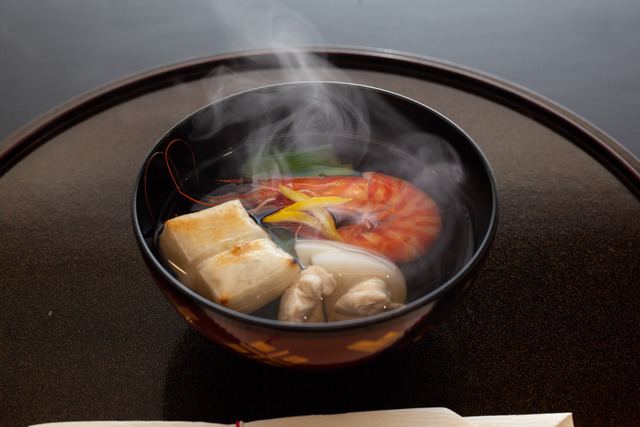
| Prefecture | Tokyo (東京都) |
|---|---|
| Region | Kanto |
| Japanese name | お雑煮(おぞうに) |
| Reading | Ozōni |
| Home area | All over the city. |
| Main ingredients | Soy sauce, chicken, chicken, chicken, green vegetables, rice, rice, rice, rice, rice, rice, rice, rice, chicken, chicken, chicken, chicken, chicken, chicken, chicken, chicken. |
History and Origins
The broth is a New Year's dish with boiled chicken and green vegetables and cooked rice. In room town, Kyoto, houses were served with sieves and sauerkraut stew, and high-ranking warriors were served as a welcome dish, as well as food for the New Year's. It is reported from the time Edo that the citrus has been eaten on New Year's celebration regardless of its status. In the cultural exchanges, the citrus will spread throughout the country. At first, Edo was also eaten by tastey soup, but in the year since the production of soy sauce in the lower part of the country and the lower part of the country, it will be easier to produce soy sauce with the lower part of the country and the lower part of the country. In this way the Edo sauerkraut has been added to the soup using the present citrus oil. Also, turquoise is characterized by citrus, while Western Japan is fundamental and Eastern Japan uses citrus. There are various theories about the origin of the horn, such as the warrior's idea of "cut it off" as "cut the enemy down," but there is a way to cut the wood that has been stretched out flatly, and because it is more convenient, it is thought that the horn has been set up in Japan. A series of tasks that were used to pump the first water a year and make juice from a pot with a clean fire continued to be eaten in New Year's season as a food to sustain humans. Edo crayon is characterized by adding sieves and sultry juice to the broth that has been baked with the fragrance. The materials in the area are a little different from those in the case of the okuana being a spinach or a pumpkin.
When It Is Eaten
New Year's food is essential to New Year's cooking.
How It Is Eaten
Cut the ingredients into smaller pieces that are easy to eat, and cook the rice with oven toasters and so on. I'll pour a bowl of rice, boiled materials and cucumbers, and soup. We eat with yuzu skin and honey.
Recipe — Serves 2
Ingredients
- 100 g secrecy
- 1/2 komatsuna
- 4 kamaboko (fish cake)
- a few mitsuba
- a pinch yuzu
- 2 mochi
- 600 ml dashi stock
- 2/3 tsp light soy sauce
- 2/3 tsp salt
Method
- The cloth gently removes the stain, puts it in a pot with a quantity of water, and burns it in the middle. Take out the cloth before boiling, boil it once, and stop the fire.
- Put in a sharpen bar and mix it in, and leave it for one minute.
- Put the cloth on top of the bowl and then add two.
- Pack up the cloth, hold it with chopsticks, and squeeze it quickly while you twist the cloth.
- The green pines are served with hot water mixed with salt until the axis is soft. It's very cool, so you can wrap it around the walnuts, and you can water it and cut it into two-inch lengths.
- I'll cut the mushrooms in half. Three leaves are cut to the length of two centimeters.
- I'll take the weight of the scissors and cut it to a small size. I'll use salt to spread it light, put it in boiling water in a pot, and then remove it when it's white.
- After cutting the rice in half, it is baked with toasters and so on.
- If you put the oven in the pot and you boil it lightly, add a soft - mouthed oil or salt and taste it, add five minutes to cook it.
- I'm going to make sure that you've got some food. I'm going to make sure that you're all right. Finally, it was made with the skin of a sashimi.
More About Zōni
Zōni (雑煮 or ぞうに), often with the honorific "o-" as o-zōni, is a Japanese soup containing mochi rice cakes. The dish is strongly associated with the Japanese New Year and its tradition of osechi ceremonial foods. The preparation of zōni varies both by household and region.
Etymology
Zōni is written in the Japanese language using two kanji characters. Since the first, 雑 means "miscellaneous" or "mixed", and the second, 煮, means "simmer" or "boil", it is thought that the word is derived from the fact that zōni consists of many miscellaneous items of food (such as mochi, vegetables and seafood) being boiled together. Formerly, amongst samurai society, the dish was referred to as "烹雑" (hōzō) with 烹 also being an archaic term for "to simmer" or "to boil".
Origin
It is said that zōni finds its roots in samurai society cuisine. It is thought to be a meal that was cooked on field during battles, boiled together with mochi, vegetables and dried foods, among other ingredients. It is also generally believed that this original meal, at first exclusive to samurai, eventually became a staple food of the common people. Zōni was first served as part of a full-course dinner (honzen ryōri), and thus is thought to have been a considerably important meal to samurai.
The tradition of eating zōni on New Year's Day dates to the end of the Muromachi period (1336–1573). The dish was offered to the gods in a ceremony on New Year's Eve.
Variations
Stock
Zōni has numerous regional variations in Japan. In many regions including the Kantō region, zōni consists of a clear soup called sumashi-jiru which is flavoured with dashi, a stock made from soy sauce, flakes of dried bonito, and/or kombu. In the Kansai region and eastern Shikoku, zōni is made with a stock of white miso, while zōni in the part of Fukui Prefecture is made with a stock of red miso. In the Tottori-Izumo region, a variety of red bean soup is used for zōni.
Mochi
The preparation of the mochi for the dish also varies by region. In the Kantō region and Tōhoku region, the mochi are cut into squares and grilled before being added to the stock. In the Kansai region and the Chūgoku region, a round, boiled mochi is generally preferred. In most of the Kyushu region, a round mochi is popular, but grill-boil difference changes depending on area. In some areas taro or tofu is used instead of mochi. This type of zōni is found on some islands or mountainous areas where rice is not grown to a large extent.
Additions
Common additions to the soup include chicken, fish or meatballs; leafy vegetables such as komatsuna or spinach; mitsuba (a Japanese herb similar to parsley); kamaboko such as naruto and carrot flakes for colour; and flakes of yuzu peel for its citrus fragrance. Regional specialties are often added. A sprinkle of seven-spice chili flakes (shichimi) is sometimes added at the table.
Text adapted from the English Wikipedia article Zōni by its contributors, licensed CC BY-SA 4.0.
Dish data: Ministry of Agriculture, Forestry and Fisheries (MAFF), “Uchi no Kyodo Ryori” (Our Regional Cuisines) database, used under the Public Data License (PDL1.0); translated and adapted from the Japanese original.