Udonosumisoae うどの酢味噌和え
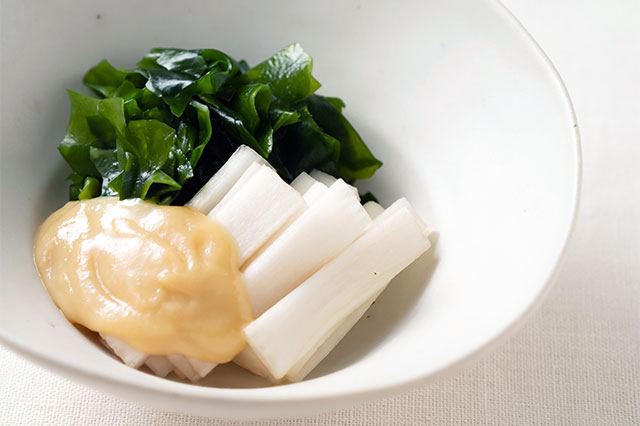
| Prefecture | Tokyo (東京都) |
|---|---|
| Region | Kanto |
| Japanese name | うどの酢味噌和え(うどのすみそあえ) |
| Reading | Udonosumisoae |
| Home area | North Tama district |
| Main ingredients | Hmm. |
History and Origins
When it comes to cooking with one of Japan's few vegetables, "Which Way to Go?" stands for it. Growing up in a hole called a hole about four meters deep, white fibers may be soft, but they are distinctive of their own flavor and texture. The entrance to this room is such a small space that it can be allowed to enter one person, a vegetable that has been difficult to plant from plant to harvest in its narrowness. From the late 1830's, after Edo, any growth began around Yanojigigi. This area was more agricultural than it was in the days of Edo as Yoshimura, in the old Saito County village. The solid layers and temperature and humidity of the KantoRAM layer are suitable for any growth, and production is growing in this region. From 1948 to 1948, there was no study of the softening of the jaw in the pit, and after that any softening process spread across the North Sata district.
When It Is Eaten
Where do you go from the middle of December to the middle of March? It is said that growth began in the Edo period when Edo was one of the first foods to be enjoyed by the Edos at that time.
How It Is Eaten
Put the skin on a thick layer of vinegar, cut short pieces and let the hot water cool. I mix sugar and candy well, add vinegar and garlic, and I'll make some vinegar. Since colors change easily, we put them on the vinegar water early. The vinegar is often used with whites, but sometimes with reds and matchers. It's nice to see the flowers of Nanaka and the fireflies and so on. Skin can be used by the far end of the sea.
Recipe — Serves 2
Ingredients
- 1/4 udo
- 40 g wakame seaweed (戻したもの)
- Seasonings: 2 tbsp white miso
- Seasonings: 1 tbsp rice vinegar
- Seasonings: 1/2 tbsp sugar
- as needed Japanese mustard
Method
- I'll mix the vinegar seasonings well and make vinegar juice.
- Cut the gills to the length of four centimeters. Cut the skin in thick strips, cut it in short volumes, put it in vinegar, chop it out and cut it out.
- The fractions are very hot and cut to size for water.
- I'll cover the vessel with a tear and put some vinegar on it.
Dish data: Ministry of Agriculture, Forestry and Fisheries (MAFF), “Uchi no Kyodo Ryori” (Our Regional Cuisines) database, used under the Public Data License (PDL1.0); translated and adapted from the Japanese original.