35 11 にごみうどん
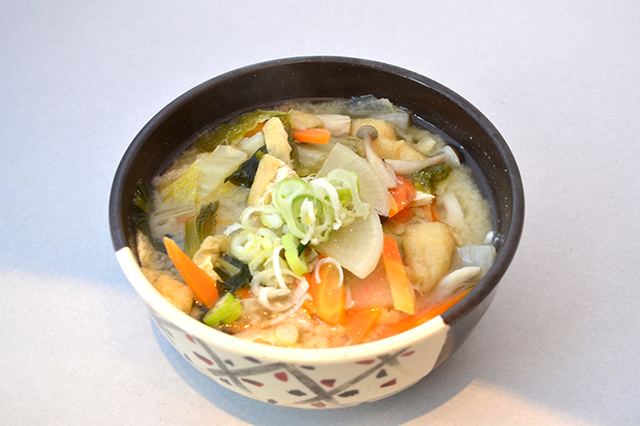
| Prefecture | Kanagawa (神奈川県) |
|---|---|
| Region | Kanto |
| Japanese name | にごみうどん |
| Home area | Saitohara, Szekiishima. |
| Main ingredients | It's like, you know, you've got a lot of rice, you've got dried noodles, you've got radishes, you've got carrots, you've got peas, you've got peas, you've got cabbages, you've got milk, you've got oil, you've got a long time |
History and Origins
I boiled rice directly with the juice made from vegetables, native dishes from the Sushiishima area. In the community there are special flavors for flavoring, such as taste and oil, both in the area. The name "twice" comes from the soup's "contaminated" and is also said to have been boiled. Since the area was not suitable for rice farming, old wheat, barley, and so forth, wheat and so forth, has been grown and ground with flour that has been beaten with flour, as it were, every day. Noodles were made by each family, and so in the 20th century, when the noodles came in, it seems that they brought flour to local noodles and made them. Until about the year 40 of the Showa festival, the rice that was flooded with everyday household food was often on the table. However, changing diets have greatly reduced the opportunity to be eaten at home in recent years. So the local trading party has put forth great effort to retain the traditional taste, and now it's also available in the local eating and drinking shops.
When It Is Eaten
I've been eaten often in winter. The rest of the season is made from vegetables grown in the fields at that time.
How It Is Eaten
I'll make rice and cut vegetables and other ingredients. Cut vegetables and put them in the soup and cook until they are soft. There you will find the rice, and you will put the dried noodles in it while you loosen it. When the rice is boiled, you can taste it with your favorite taste, such as steam or salt. If you boil a little bit with a cut-off onions, it will be served on the bowl.
Recipe — Serves 4
Ingredients
- Fresh udon noodles: 300 g all-purpose flour
- Fresh udon noodles: 120–140 ml water
- Fresh udon noodles: 2–2.5 g(1/2 tsp) salt
- 250 g 乾麺 (津久井産麺)
- 1000–1200 ml dashi stock (bonito flakes)
- 100 g daikon radish
- 50 g carrot
- 1/3–1/2 komatsuna
- 1/2–2 shimeji mushrooms
- 200–300 g Chinese cabbage
- 1 aburaage (fried tofu pouch)
- 1/3–1/2 long green onion
- 30–50 g、30–40 ml 味噌または醤油 味噌は
- salt, to taste
- pepper, to taste
- dashi stock
Method
- I'll make you some rice. I add 300 grams of medium energy to 120 ml of salt water plus 1/2 teaspoons of salt, and then mix it with water. I'll put the fabric together so that it mixes well with water. If you put it all together, I'll come back to you. When the fabric becomes uniform, put it in a plastic bag and put it on your feet for about five minutes. We ground the dough with a noodle stick, fold it, and cut it evenly from the edge.
- Cut the vegetables. The radish is cut, the carrots are cut, and the cabbage is cut right into fibers one and a half centimeters wide. Omikabes are three centimeters long and combs are divided into cells. Oiling is oiled and cut into pieces. Cut the long sleeves into small slices.
- I'll cook the radish, palm, and oil in two.
- I'll put some rice in it and boil it. I'll let you in with some raw rice dried noodles.
- Once the rice is boiled, you can taste it once and then taste it with your favorite taste, either with a sauce or with a sauce plus salt. Finally, add a little bite to the knot and boil it up, and add it to the vessel, to the bowl, and to the cucumbers.
Dish data: Ministry of Agriculture, Forestry and Fisheries (MAFF), “Uchi no Kyodo Ryori” (Our Regional Cuisines) database, used under the Public Data License (PDL1.0); translated and adapted from the Japanese original.