Home / Kanagawa / Wakasaginokanroni
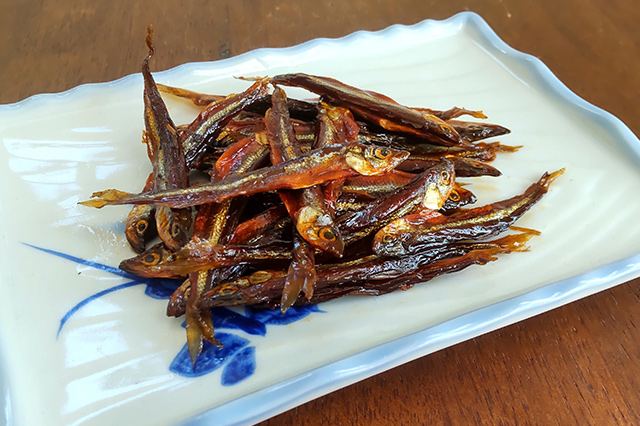
Wakasaginokanroni ワカサギの甘露煮
| Prefecture | Kanagawa (神奈川県) |
|---|---|
| Region | Kanto |
| Japanese name | ワカサギの甘露煮(わかさぎのかんろに) |
| Reading | Wakasaginokanroni |
| Home area | Hakhara. |
| Main ingredients | Oyster. |
History and Origins
It's a sweet, strong flavor, and it's kept in the sun and is valued for saving. Lake Caino is Lake Carella, born of volcanic activity at an altitude of 724 meters and at the base of the volcano. It's known as a fine spot to look at the rich man on the other side, and it's been successful in fishing from old age. The breeding business has been going on for over a hundred years since the fishing began. A fanfish, grown in the fresh waters of Lake Chingo, is highly prized for its taste and is a special product of the boxroots, known not only to the local people but also to the tourists. At Lake Shangno, the bee-nuts are banned from fishing on October 1st of every year. On that day, local fishermen set sail, and the first catch caught on that day will be dedicated to the Miyagi Agency after being prayed at the Hakhara shrine. There are many different methods of cooking, such as fried and boiled in the south. Among other things, sweet sauce is an old-fashioned dish in this area, and on New Year's Day, it will be served as a regular dish.
When It Is Eaten
It has the image of a fish in winter, but it can be caught in Lake Shangno since about August, and it has the best fishing period in December (in the middle of December). During the fishing season, local resorts, restaurants, and restaurants provide a variety of dish-water dishes, including sweets.
How It Is Eaten
I'll put the baked daisies in a pot, put them in a cup, and cook them for a day in a low-fire. Add the flavors of soy sauce, sugar, garlic, and so on, and cook it for another day. We add a toilet for the last time.
Recipe — Serves 5
Ingredients
- wakasagi smelt (fish), to taste
- 180–240 ml soy sauce
- sake, to taste
- 60–100 ml mirin
- 300–350 g sand-colored sugar
- seasonings, to taste
- 80–100 g mizuame syrup
- bancha tea, to taste
Method
- The well-washed pines are baked, they are arranged on the bottom of the pot, and they are covered with lids, and they are made with tea. I'll cook it a lot day and night with a mild fire.
- I'll boil it slowly all day. Finally, add water to the sink.
- It's so cold that I take it from the pot to keep it from breaking.
Dish data: Ministry of Agriculture, Forestry and Fisheries (MAFF), “Uchi no Kyodo Ryori” (Our Regional Cuisines) database, used under the Public Data License (PDL1.0); translated and adapted from the Japanese original.