42 14 きなこむすび
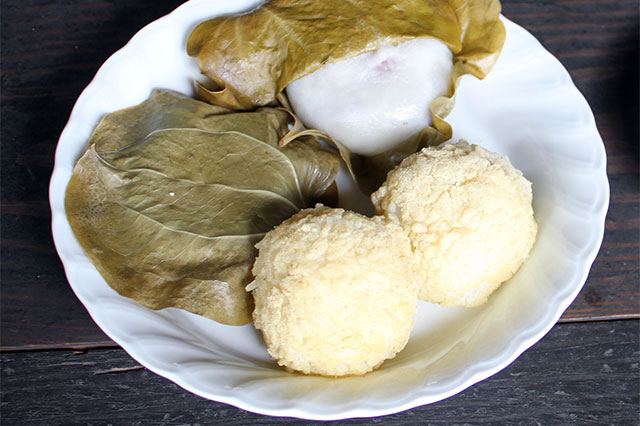
| Prefecture | Hiroshima (広島県) |
|---|---|
| Region | Chugoku |
| Japanese name | きなこむすび |
| Home area | Northern Hiroshima City |
| Main ingredients | I've got rice, mushrooms, plums, boiled beans, salt shakers. |
History and Origins
The "knit-knit" is a round bowl filled with plums and finely cut salt sprays, and then it's covered with a bowl. When I was in the middle of the field work, or at the end of the work, I was treated like "Look, I'm going away" in the language of Hiroshima, and I was treated with "I'm going to go to Japan." It is said that the seed that was planted held in a round hold with a wish that it would be full in the fall. In a the Chugoku region area, there are occasions when a lot of people plant rice while they are playing drums and whistles and singing rice songs, and they are called "Seda" and "Seda" and so on. The medieval tradition of the rice festival was a rice ritual dedicated to the festival of the "The God of the Field" and was at the same time the toil of those who worked in the hard fields, and was a major event that had a few elements of entertainment in the rurals at that time. The "Yeda" in any of these words is because it is so colorful when she puts a gorgeous flowerpot on the cows she attends or when the early maidens, dressed to the sounds of drums and whistles, are so colorful. In this event, the "initiation" is still practiced today, and sometimes it's called "sit" and "snack meal." To say "hi" means to be a leader of palm trees and to be a god of Tata.
When It Is Eaten
They are eaten during the "restorational" period and when it means the end of the work. The end of May at the plant-planting season.
How It Is Eaten
I put plums and finely cut salt spray on the rice bowl and put them in the rice bowl. The shape is general. Even the "Seda of New China" is offered a broom for the purpose of cultural tradition, but this is a black bean mixed with it. To make it easier to eat during the field work, it's best to hold on tight.
Recipe
Ingredients
- 3 × 180 ml white rice
- 140–150 g(1 packets) kinako (roasted soybean flour)
- 90–105 g( ) sugar
- a pinch –2/3 tsp() salt
Method
- White rice is cooked with normal water.
- I mix large dishes with rice, sugar, and salt.
- I'll take the freshly cooked white rice into bowls and bowls and turn it into a little cold, or a sphere.
- Place the cube in two and roll it over the whole thing.
Dish data: Ministry of Agriculture, Forestry and Fisheries (MAFF), “Uchi no Kyodo Ryori” (Our Regional Cuisines) database, used under the Public Data License (PDL1.0); translated and adapted from the Japanese original.