Kakuzushi 角寿司
| Prefecture | Hiroshima (広島県) |
|---|---|
| Region | Chugoku |
| Japanese name | 角寿司(かくずし) |
| Reading | Kakuzushi |
| Home area | I'm going to show you some of the places you're going to go. |
| Main ingredients | I've got a lot of things to do: rice, lentils, eggs, eggs, eggs, eggs. |
History and Origins
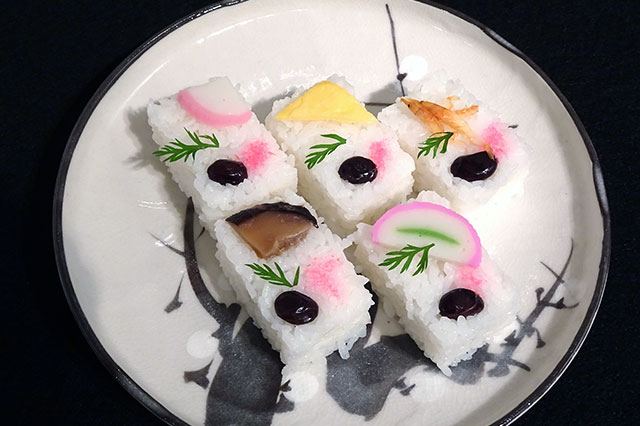
It's a kind of sushi made out of rice and stuff in a square wooden frame, eaten in the northern and northern X1X area. When pushed out of the wooden frame, six linoleums of the same size were produced simultaneously, and they were square, so they were called horn sushi. Sometimes it's called "Smushi Sushi." The materials can be changed to seasons and regions, and the materials that will be used to adorn the top of the table, called "top" and the material that will be put into the rice bowl. The "top" is made of crushed eggs, ground eggs, baked eggs, citrus, citrus, citrus leaves, carrots leaves, green, dried fur, dark green, yellow materials, and a "middle" that can't be seen from the outside. When you eat sushi, suddenly the thick taste of the stew spreads. Also, you can taste the vegetables that are used to make them taste, and fish food can be cooked and eaten delicious after a long time. In the 1930s, it was common for families to have a type of a kanji tree, and since the traditional Japanese sushi style has been used to be used by guests for celebration parties, guests, and so on. There was a custom of making lots of it and serving it in the wooden boxes in the neighborhood.
When It Is Eaten
I was treated as a welcome meal for the festival and guests. When we went to our home for New Year's Day, to see flowers, bonsai, fall festival, and other things like wedding funerals, we were also eaten at the Memorial. I still have things to do at home, but opportunities are decreasing.
How It Is Eaten
A square wooden frame with rice and utensils. I cook carrots, beans, beans, and so on with a thick flavor. On top of it, they are lined with colorful things such as tassels, ground eggs, okon eggs, oko, yakis, incense, yaki leaves, carrots leaves, dried hay, and garlic. If you push it out of the wooden frame, six sushis in the same square form will be made up of six.
Recipe — Serves 4
Ingredients
- 3 cups rice
- Vinegar: 4 tbsp vinegar
- Vinegar: 2 tbsp sugar
- Vinegar: 1 tsp salt
- しめさば, to taste
- egg, to taste
- kamaboko (fish cake), to taste
- shiitake mushrooms, to taste
- chestnuts, to taste
- matsuhiko, to taste
- 煮豆, to taste
- denbu (sweet fish flakes), to taste
- carrot, to taste
Method
- The cooked rice is put in the rice bowl and mixed with all the rice.
- I'll put all the leaves of carrots on top of a sushi bowl and put them in a pot and put them on a sushi. You may add some of the boiled or boiled beans that are mixed in the pot.
More About Kakuzushi
The Japanese Japanese Japanese are also known as "snap" and "swallow" (susten") in local food prepared in the region from Hiroshima PrefectureXXXXXXXZZXXQX1X11015X and from the city of Tajita Mountain County and Fukutata.
Overview
Different from area to area, but usually they are given to a crowd of guests, including the law, the banquet, the festival, and so forth. It's a type of sushi made by filling and pressing rice on a square tree with rice and tools.
How?
The vinegar rice is made with vinegar, sugar and salt, and mixed with a conch. On a separate piece, I'll cut into a half inch [about 1 cm] of citrus, citrus eggs, and citrus, which are sweetly boiled. If you put on a bowl of green leaves, or some of the rose-screws, they will add color and taste. Put the rice in the wooden mold, color the top and place it in a good place and push it out.
Other
In some local supermarkets, there are shops that make and sell masturbo as a lunch lunch in their own company, and even grocery stores sell it from there. It's a favorite dish for anyone from the Satsawa and the Show North region. There are shops that sell with sushi, such as udon.
Text adapted and translated from the Japanese Wikipedia article 角寿司 by its contributors, licensed CC BY-SA 4.0.
Dish data: Ministry of Agriculture, Forestry and Fisheries (MAFF), “Uchi no Kyodo Ryori” (Our Regional Cuisines) database, used under the Public Data License (PDL1.0); translated and adapted from the Japanese original.