Kakizōni かき雑煮
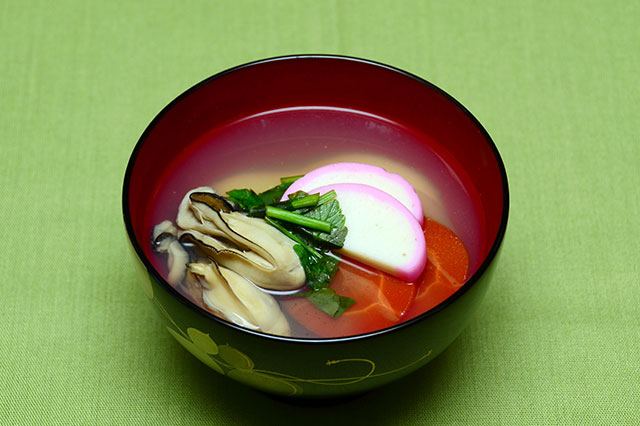
| Prefecture | Hiroshima (広島県) |
|---|---|
| Region | Chugoku |
| Japanese name | かき雑煮(かきぞうに) |
| Reading | Kakizōni |
| Home area | Etashima City. |
| Main ingredients | I'm going to have to do it again. |
History and Origins
Cooking is cooked, boiled, boiled, boiled, boiled, and cooked, boiled, boiled, and cooked with vegetables. There's also a taste-in-the-box. In order to keep the fat in the sun, it was the custom to put it on the ground at the end of the year and to boil the rest of it. On the coast of Hiroshima, without salting, we put in cavelings and oysters from the Inland Sea. Koki was the founder of "Grabiko" and "Curse and rip up the well." Depending on the area and the home, the tools vary, and sometimes you can add seams, broms, and smudges. It is known by the shell that the Japanese eat the rice in Hiroshima has a long history, and that the old man was eating the coconut from the time he was born. And it was thought that breeding began in the 1500s, and now that Hiroshima Prefecture is a 60-percent water source in the whole country, ZZQ01010X is the number of years in fishing and growing.) The bay around here has a quiet wave but with a moderate current. Also, by the flow of the river in the bay, from the rainy season to the summer, there will be a thin layer of salt in the seawater, and it will be a favorite environment. Also, there are good conditions for growing a brush, such as the nutrients that flow from the mountains of China, and the island of Hiroshima is characterized by a large, rich taste. Not only the flavor, but the county has its own food health precedents, and the high safety is also the reason why it's popular.
When It Is Eaten
It's eaten as a New Year's dinner.
How It Is Eaten
I'll boil it in boiling, boiling cloth, and raw rice, with a cut of radish, carrots, and a dish of soap. Put the pan in and cook gently, and put in a cooky wipe. If you make them with tastey flavor, you can add a chicken, a chicken, or a pan, and so on, there are different materials for different areas and homes.
Recipe — Serves 4
Ingredients
- 12 oysters
- 8 丸もち
- 4cm daikon radish
- 2cm carrot
- 8 seri (Japanese parsley)
- 5mm 8 slices kamaboko (fish cake)
- 1000 ml dashi stock
- 1 tsp soy sauce
- 1 tsp salt
Method
- Wash the soap in salt water and remove the dirt.
- The carrots are cut into five-millimeter slices.
- Cut the lines into three centimeters long.
- Put the top in the pot, put two in the pot, and cook until it's soft.
- I'll brush the pot and put it through the fire. You can boil it until it's soft enough to add a lump and taste it with rich lye oil and salt.
- The finishing touches include a red-white paste.
More About Kakizōni
Snacked rice is Hiroshima Prefecture Latice and native food from Etashima. It's a sultry soup with oysters added to the equipment. Although it's widely recognized as "Hiroshima Prefecture crumbs," it's a dish that can be found in the area of Hiroshima Bay, where oysters are easily available.
It's a dish made of boiled, boiled, boiled, boiled, and made of rice with casserole, oysters, bile, and vegetables. Sometimes it's made into a tastey sauce, and in this case it's made into a clam, a roast, or a fugu. The conch is used without burning.
The oysters write "Grave" and "steal the happiness" and "cure up" and the Anago means "perpetual" and Bry is a representative fish, and both are eaten as a product.
The Hiroshima Prefecture is also eaten in the city of Tohara, such as in the Magpie region. "Enough" is a local dialect, meaning "heavy island."
Text adapted and translated from the Japanese Wikipedia article かき雑煮 by its contributors, licensed CC BY-SA 4.0.
Dish data: Ministry of Agriculture, Forestry and Fisheries (MAFF), “Uchi no Kyodo Ryori” (Our Regional Cuisines) database, used under the Public Data License (PDL1.0); translated and adapted from the Japanese original.