Anagomeshi あなご飯
| Prefecture | Hiroshima (広島県) |
|---|---|
| Region | Chugoku |
| Japanese name | あなご飯(あなごめし) |
| Reading | Anagomeshi |
| Main ingredients | I'm sorry. |
History and Origins
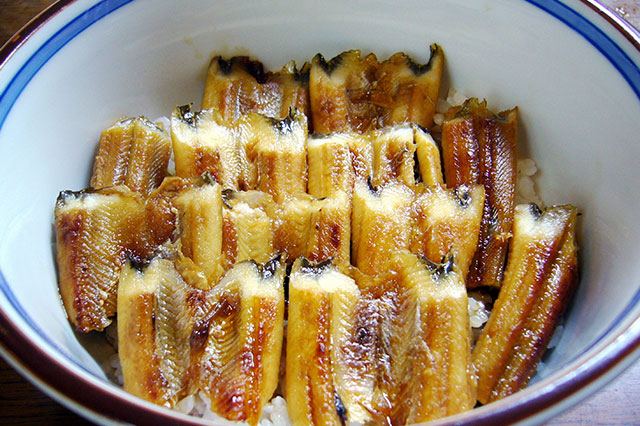
The dishes that were made from the palm were cut into pieces and spread out on cooked rice. Sometimes you can steam your eggs. At Miyashima and Hiroshima City, the palm has been eaten from old age. There is a description of the "Amaterasu" magazine, which is written during the Edo period, by Yoichishima, Japan. The currents are fast around Onono Onoshima, and the gyres in this area are excellent in fat, flavor and softness and are called "Esedo's" and are called "Sedo's" It's less fat than a eel, and it contains more vitamin A, so it's better for summer protection and fatigue, and it's been popular in a wide range of dishes in the province. As the name suggests, during the day it hides between holes and rocks and starts to work out of holes when it's dark, but it's a nightly fish that doesn't know where to lay eggs and eggs and so on, and hasn't been able to reproduce yet. The birth of "Saki" began four years after the opening of the Yamanashi Ra Line, in the year 34 Akishima, near Miyashima Station, the entrance to Miyashima. In the '30s, tourism and school trips began to visit Miyashima with dozens of buses and became famous as the "basin." Then there is an increase in the number of stores that provide "saki" around Miyashima. Now it is widely known throughout the country as a masterpiece of Miyashima and as a food and souvenir for the guests.
When It Is Eaten
They are eaten throughout the year, but they are considered delicious in July to August or November with fat. Although originally a station valve, it is now eaten as a masterpiece of Hiroshima's Miyashima shrine and as a gift from the sun.
How It Is Eaten
They take the entrails and the metacarpals, soy sauce, lentils, and wine while they are being baked and cut, and then they are spread on a cooked meal. If you like, you can pick up a piece of stone. They are eaten by a wide range of other dishes, such as sushi, sushi, roasting, roasting, roasting, roasting, boiling, boiling, boiling, steaming, and so forth. In some places, they're embroidered.
Recipe — Serves 4
Ingredients
- 480 g(3 cups) rice
- 10cm dashi kelp
- 4 conger eel
- 40 g sweet-pickled ginger
- a pinch shredded nori
- Mix: 1 tbsp soy sauce
- Mix: 1 tbsp sake
- Mix: 1/2 tsp salt
- Mix: 3 tbsp soy sauce
- Mix: 3 tbsp sake
- Mix: 3 tbsp mirin
Method
- The rice has wiped away the fairy and dirt, but add a cloth and a seasoning A, and it will be a common dish.
- Aoi takes the entrails and the metacarpals and bakes them with a additive B.
- Put the rice in a bowl, cut two palms into three-inch slices, place them in a three-inch slice, and multiply the remaining two fingers.
- I'll add you to the ice cream on top.
More About Anagomeshi
The rice is a native dish that is born from Hiroshima Prefecture. This is a representative of this place.
History
In the sea around Miyashima, the palm has been picked up well and eaten from old age. The rapid tide in the Inland Sea around Miyashima was so popular with the taste, soft and fat that it was considered "Engo in Seto." There is a description that says, "Even in the book "Againsago" in the magazine of Rikushima, a magazine published by Edo, it is said that "they will all be born and tasted" with Mebar and kiss. Iseshima, who was selling rice and rice in Miyashima, opened a tea shop in the Predo-Tsuo at the entrance to Miyashima. To give us a hint of the "sniff," which was eaten mainly by local fishermen, we invented a "snack-sniffed rice-snap-snacked dish" that earned our reputation for having a reputation for having a moss. From the fact that the station opened in 1897, Kiichi thought of selling a station lunch at the Miyagi Station, so he put a hole in a bowl of oil and placed it in a bowl. This is the beginning of the dinner. In the '30s, dozens of tourists and school - travel buses came to Miyashima and became famous as the Bassama. In those days, NHK witnessed the packing of lunches on buses and the following year, when it was broadcast, he began selling rice from other stores around Miyashima, and became famous as a famous island. Today, it is widely known throughout the country as a masterpiece of Miyashima and as a food and souvenir for those who visit Miyashima. In 2017, as of 2017, there are four stores in Miyashima and 12 in Miyashima, and each one has different tastes. The locusts are caught by long-term fishing and fishing.
In the original language, the original language is known for not increasing the type of station valves but for doing business with a single bowl of rice. It's said that he hasn't changed his appearance since the time of his release in 1911. At one time, in the presence of locals, only a single fishing hole was purchased directly from fishermen. The shop's "swallowing lunch" has sometimes been the best in Japanese station and is said to be an eye project if served at local conventions. In addition to the Miyashima-Ouji station, there are sales papers at Hiroshima Station, Mishima Station, Takayama Station, Takanashi Station, and now Shiraji Station at the station. At the princess's station, even Akira's 21-year-old work "The Great Food" has sold its station "The Snack" since the time of Hirohito.
I don't know what it is.
It contains a lot of vitamin A, and it works well on summer protection and fatigue. It looks like a eel, but it tastes funny.
I don't know how to eat.
Anago is in the middle of January and summer. Especially in mid- January are said to be the best. I'll feed the anago in the Seto (some shops serve it with boiling seeds) and then I'll spread it out like "Ne."
How?
First, he closes the anago's back like an eel, and then he takes the middle bone, head, tail, and elbow. After you've stabbed it in a yucca, you can paint sugar, soy sauce, soy sauce, and sweet rice with Japanese wine, and then serve it with sweet, boiled stews until it comes out. There are also stores that offer boiling water as a roast. - I'm sorry. We're going to have to burn it and cut it to about three centimeters on the way. The rice is made by adding a little bit of rice to the rice, adding a bit of rice to the rice. There's also a recipe for mixing the antelope into the food. It's also possible to add a sweet, sourly flavored dish of raw pepper.
Text adapted and translated from the Japanese Wikipedia article あなご飯 by its contributors, licensed CC BY-SA 4.0.
Dish data: Ministry of Agriculture, Forestry and Fisheries (MAFF), “Uchi no Kyodo Ryori” (Our Regional Cuisines) database, used under the Public Data License (PDL1.0); translated and adapted from the Japanese original.