Igamochi いが餅
| Prefecture | Hiroshima (広島県) |
|---|---|
| Region | Chugoku |
| Japanese name | いが餅(いがもち) |
| Reading | Igamochi |
| Home area | Wu City |
| Main ingredients | And I'm going to show you some of the things that I've learned. |
History and Origins
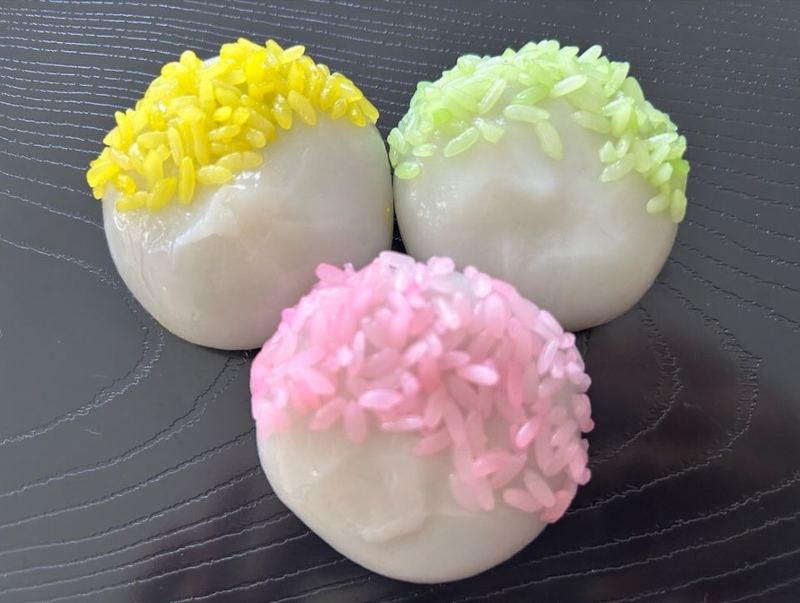
With leather made from rice and rice flour, she wrapped her peas in a pot of beans, and poured some freshly colored rice grains on top of it. You can enjoy the sense of smell and the sense of food on top. At the fall festival, such as the Great Festivals of Tsukayama and the Small Festivals, you can be sold at candy stores, stalls, and on the stalls you can enjoy the freshly steamed things. There are various theories, such as, "Because the name is similar to the moth of a moth," or, "because a traveling monk has cured his stomach when he ate it," and so forth. And there are other theories, such as, "The rice was so valuable in the country's scarce fields, that he wanted to eat only during the festival, and he ate it while he was growing rice, rice, rice, rice and so forth." "The man from Tohoku began to make it with a longing for his home." Also, the opportunity to eat and the shape of food varies from region to region.
When It Is Eaten
The autumn wind poem, eaten at the fall festival in the city, such as the Great Festival and the Festival of Festivals at Tsukayama.
How It Is Eaten
We wrap a little bean pot in leather made from rice and rice flour and we soak it up with the colored rice grains. There's a grain of rice, and there's an Yada. There's a variety of different stores.
Recipe
Ingredients
- 200 g shiratama rice flour (団子の粉)
- 2 g sugar
- 180~200 ml hot water (水でもよい)
- 150 g smooth bean paste
- Mix: 30 g glutinous rice
- Mix: food coloring (赤), to taste
Method
- The rice that colorizes is washed and soaked for a while.
- Color the rice. Each of the three colors is melted into water, and made a color water into it, and then soaked and colored in rice for a while.
- Add sugar and water to the white flour squabble. Water adds a little bit to the process while looking at it, and it often giggles over the ear.
- I'll keep this one divided into ten pieces.
- I divide the fabrics into 10 pieces, wrap them in the palm of my hand, wrap them in a bowl, and roll them around.
- Put a colored rice cube on a rolled dumplings.
- One at a time, put it in a cup.
- I'll steam it with a steamer. I'm going to make a fire.
More About Igamochi
I'm sure you'll be happy. It is written, "Iga," "Iga" or "Ishiaki" or "Ishio" or "Ishio" or "Ishio" or "Ishio."
Origin of Name
As shown below, there are multiple theories and opinions on the origin of names.
It has been pointed out that Iga Iga, the land name of Iga-sama, has been transmitted from Iga. Also, Iga's "Iga" is a holiday of the Peace Age, and Kyoto has made it a popular treat in recent years. "The smell of rice" - trying to transfer the delicious aroma of rice to the bowl, and "the smell of rice" meaning "the smell of rice" is passed to the city of Mie Prefecture deer. The rice on the top side resembles the iga on the bush. I wanted to produce rice with yellow dyes on the top of the rice and with rice fruits.
Moreover, the famous rice plant of the Yamagata City Fountain was originally made from the Meekhu, but the rice crop continued to fail at the beginning, so it was changed to "Saizu Hana."
Processing
Add a mild hot water to the powder and then paste it to the size of a hardness. I'll wrap this stuff around a bowl of rice, put it in shape and put it on top of the top and steam it up. There are ways to resuscitate the powder and add white pepper to it once, then put it on a mill, or put a moldy rice on it and press it in.
The rice on top comes in red, yellow, green, and so on, but in some areas it only uses one color. In other areas, making fabrics from wheat or awa used to give them a pleasant atmosphere by putting in a few precious grains of rice.
Shape and Locality
Also, the relation between the way rice is carried on top and the area is as follows.
Degrees
The localities, other than the shape, are as follows.
The Yamagata Prefecture - found in Hausumi, and covered with rice grains colored only in yellow. It has been written as a rice plant and is a masterpiece of the King's Fountain in Yamagata City. There are two or three flower plants on the leaves of the plant. The rice is as good as the pirogue of Ishikawa Prefecture - like the flavour of the prefectures, so only yellow is enough to make it taste delicious. Aichi Prefecture - known as the Sakura, it goes to the tri-river district. It's made as a cake for the festival. We wrap up the rice-sized rice cans, and we soak them in a color-free mixture of the rice that is colored in three colors - red, yellow, and green. Shimane Prefecture - you can eat mainly as candy for the festival. They were eaten around Ehime Prefecture - the old festival of April. It's always written in writing. Shiga Prefecture - sold year-end. The eastern part of the lake can be built. In addition to being a family member, they can be distributed at a time of the year or run into the river during the time of the tray. The freshness of the rice makes it also called the flower flower. Mie Prefecture - sold year-end. It's also called a "machine" and a "sniff." Kyoto Prefecture - is the model of a birthday cake. Fukui Prefecture - only made on festival day. Hiroshima PrefectureUU - it's made mainly at the festival of Tsunaka Shinto in October and at a small time in November. I wrap the grain in a convex pot, and then I pour in a pink or yellow-green rice. There are books that have been written by the Japanese and that have been sold by someone from Matsuyama during the Meiji period.
Text adapted and translated from the Japanese Wikipedia article いがもち by its contributors, licensed CC BY-SA 4.0.
Dish data: Ministry of Agriculture, Forestry and Fisheries (MAFF), “Uchi no Kyodo Ryori” (Our Regional Cuisines) database, used under the Public Data License (PDL1.0); translated and adapted from the Japanese original.