Rokubee ろくべえ
| Prefecture | Nagasaki (長崎県) |
|---|---|
| Region | Kyushu & Okinawa |
| Japanese name | ろくべえ/六兵衛(ろくべえ) |
| Reading | Rokubee |
| Home area | Islanda City versus Horse City |
| Main ingredients | It's a little bit of a trick. |
History and Origins
Local food from the time of Edo to the island area and against the horse. There are some differences in the way you cook, but in both areas it is a dish made from a piece of chicken and boiled. In the island area in 1792, when Akiyama was hit by a volcanic earthquake, a tsunami swept through the Akira Sea. It attacked many coastal areas, destroyed entire farms, and caused famine. The people around the neighborhood ate the rice that grew up in the poor land. The dish came from Hajimura, now called the Siege Guard, who invented a conical dish that combined the potato with a condensation of the potato as a mixture of powdered, preserved food. This is said to be the beginning of the "Six Guard" in islandhara. On the other hand, we use the "no" food that we make by fertilizing the glue as a raw ingredient. For saving the island people from hunger, the "meriting act" is called.
When It Is Eaten
Although it used to be a common dish of home cooking, families are making fewer these days. However, several restaurants in Nagasaki Prefecture are actively provided as local goods and are ready to eat, whether local or tourist.
How It Is Eaten
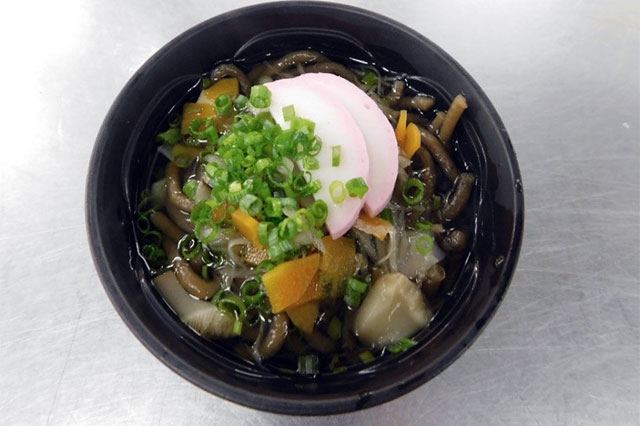
Noodles are made from mountain potatoes, which are connected to the crumbs of raw materials. At first glance, it looks like a thick sea lion, but it's not long like a Soba, and the surface is smooth and smooth inside. It's also remarkable that if you chew on a souped noodles, the sweet taste of sweets spreads over your mouth. We used to be starving, but now we use a modified snack, and we have a variety of flavors that are widely recognized as delicious but delicious local food.
Recipe — Serves 5
Ingredients
- 500 g せんだんご
- 40 g burdock root
- 40 g carrot
- 3 g dried shiitake mushrooms
- 30 g kamaboko (fish cake)
- 5 g green onion
- 150 ml dashi stock
- 3 ml sake
- 5 ml soy sauce
- 2 ml dark soy sauce
- a pinch salt
Method
- I'll break the coral with my hands.
- We pour warm water and then hand it over to the whole area.
- When it's smooth, I'll round the fabric into softballs.
- We boil water in a large bowl, add three corals and quickly boil them.
- It's called the "Screech of the Earth."
- I take a little piece of fabric and push it out on the edge of the razor blade and drop it in a boiling pot.
- When you're ready to boil it again, two or three minutes later, you're ready to cool it down, wash it down, and drain it.
- I'm going to cut them into little pieces.
- Add the citrus juice to the soup, and cook it with rice, carrots, dried mushrooms, and seasonings.
- Put nine juices on the top of the bowl and scatter the cucumbers.
More About Rokubee
The six guards are the Nagasaki Prefecture, the surrounding island of Toshima and the opposite horse. In the island area, it is basically written "Six Guards" in kanji, but on the other side of the horse it is often written "Sweet." On the other horse, old men were called "scrollers."
Overview
It's a soy dish made from sweet potatoes, and it's cooked in a soup that is taken from fish, chicken, and so on. They say that the dark noodles and pluripotent taste and the sweet sweets from the sweet potatoes are characteristic and that this dark color is derived from the pigment found in the sweet potatoes. And when you make noodles, you're like, "Six guard." You can push out a bowl of noodles from a plate with a holed iron and make it bigger. It's also a characteristic of Japan's rare "plumping noodles."
The Six Guards are eaten as native food by the island of Toushima and the horse. Both areas have similar looks and methods. But although both areas are now one state, before Edo, they separated from the other side of the horse. And in these two areas, which are so geographically remote, it is still unknown why similar native foods with the same name exist.
There are slightly different ingredients and recipes, but the best recipe is to round the dough with water or water until it becomes solid. It's also said that long noodles are made by the main raw materials that are sweet potatoes. They are difficult in the process, but can be made by a relatively long noodles when you become a master.
The Six Guards of the island district.
In the island, dried potatoes are ground into flour and used as soy material and mountain potatoes to tie them together. The sweet potatoes were once very important as a main food crop in the island Peninsula and in the nearby prefectures. In autumn, the potato harvests were kept in a reservoir that had been placed under the houses' beds, and kept in a layer, which they were made mainly by eating with rice and rice, but other foods were made from finely cut potatoes that were dried and eaten, not dried, but fresh, and stored throughout the year.
In the past, it was a dry dish with wallasobo (smoothing) leaves and a sauce seasoned with soy sauce, but now it is said that stamen and cloth are often used.
It is said that this name was named after the island area because of the way the six - guard who served as master of Haji village, when famine struck the island during the Edo, when it came to its name.
"Swift" on the horse.
On the other side of the horse, we use a storage diet called "no" that we took out of raw materials a sweet potato corn and dried it. A silkworm is generally rolled and dried, and it is used for cooking until it is used as powder. It's not an old-named "stabbing" but it means to put and eat a dish made of soy sauce in the soup.
I don't use ties on a horse. The daisies are used for anti-horse chickens, sea horses, and Medina.
The freckle on the Japanese market is recognized by the Japanese heritage collection as the registered name, "Hoshishio Koo, I'm not interested in you."
References
The Kyushu Treasure Story of the Good Country Cooking Society, Japan, 2006, Misaki, Japan, 2006. The potato potato is the source of a horse-to-horse dish. I visited the culture I would like to inherit... in the 14th year of my life.
Text adapted and translated from the Japanese Wikipedia article 六兵衛 by its contributors, licensed CC BY-SA 4.0.
Dish data: Ministry of Agriculture, Forestry and Fisheries (MAFF), “Uchi no Kyodo Ryori” (Our Regional Cuisines) database, used under the Public Data License (PDL1.0); translated and adapted from the Japanese original.