47 14 ミヌダル
| Prefecture | Okinawa (沖縄県) |
|---|---|
| Region | Kyushu & Okinawa |
| Japanese name | ミヌダル |
| Home area | All within the province. |
| Main ingredients | Pigloth meat, black Goma. |
History and Origins
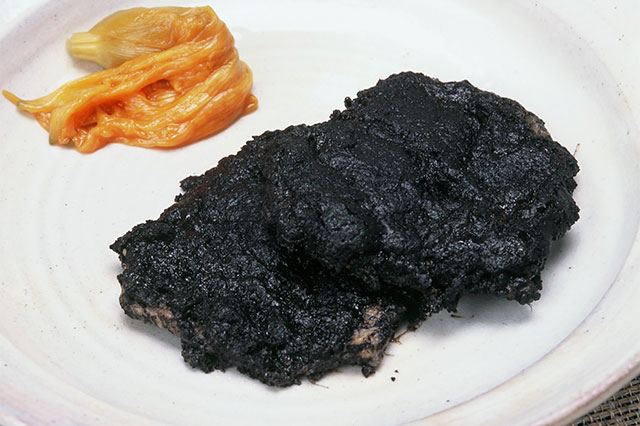
The mindal, which is a small piece of pork roast, is steamed with black goats. It's a black finish, and it's also called "black meat crux." It's a lot of fat by steaming it, so it's a lot easier to taste than it looks. It's more black than a squid ink, and sometimes it's done with a moss. It has long been used as a celebration dish, but even when it is cold, it still tastes good, and it has advantages of steaming back. The gorgeous appetizers used since the days of the dynasty are seven well-dressed prenupted vegetables filled with nine pieces, and the mindal is also used as a part of them.
When It Is Eaten
It's a luxury dish full of gomas, which can be eaten as a delicious dish, a heavy dish, an Toyo way plate, or a celebration dish.
How It Is Eaten
The pig's back roast is cut off from the surrounding fat. Black Gommas are cooked until oil comes out, sugar, oil, and so on, and then add more Gomma. I'll wipe the juice from the pig-tail louse thoroughly and soak it in the goma. The steam is up and the kitchen paper is laid, put on top, and steamed up. It's also possible to add to the goma party a crescendo.
Recipe — Serves 4
Ingredients
- 7) 8 豚背ロース肉
- 100 g black sesame seeds
- 2 tsp sugar
- 4 tbsp mirin
- 4 tbsp soy sauce
Method
- The black goma is a good place to rub until the oil comes out in the roast bowl, and add a little sugar, garlic and soy sauce to make a thick, more mixy gomma.
- I can wipe the juice of the pork roast well enough and add a single goma to the taste of a 30-minute duplicitation.
- I put a pack of paper in a steamer that was steamed up, put two pork pieces in line, and the first two minutes were very hot, and then spent about ten minutes in a medium fire.
Dish data: Ministry of Agriculture, Forestry and Fisheries (MAFF), “Uchi no Kyodo Ryori” (Our Regional Cuisines) database, used under the Public Data License (PDL1.0); translated and adapted from the Japanese original.