Abute Kamo あぶってかも
| Prefecture | Fukuoka (福岡県) |
|---|---|
| Region | Kyushu & Okinawa |
| Japanese name | あぶってかも |
| Home area | Fukuoka City |
| Main ingredients | Iwadai. |
History and Origins
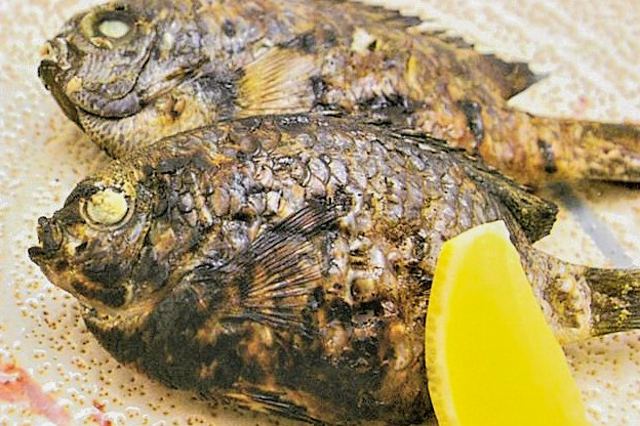
"Clean" is a salt-burned candelabra that is eaten mainly in the Fukuoka City coastal regions, and is characterized by the fragrance of leather and scales and the bitterness of the liver. Although the yellowfish is a small fish about 10 centimeters long, and lives extensively in the Japanese Sea, few areas eat aggressively because of its heavy skeletons and thinness. In some parts of the world, they have not been welcomed so much that when the time comes, they can be prevented from moving the ship. Although it is a fine fishing ground with long-term rich black tide, it was a good place to find a lot of yellowedi in it at the end of the Meiji era. I wiped up the jandi to secure the course of the ship, but I left all the trouble salt in the end, and I burned it later, and it was so good that it went on and ate it, and since then I've been eating it all the time. It is not until the era of the Showa, which has begun to be given to you by your husband and others, that you come to be recognized as a great object. It is said that the name of the dish comes from the taste of a bowl when it is cooked or eaten.
When It Is Eaten
"Maybe" goes to market from about March to late summer. The most fatty season is the first summer before the harridy egg season. You can eat not only table at home but also several restaurants in the state, and you're popular as a bottle of wine.
How It Is Eaten
I'm going to put on a yellow dieon that I've spent the night with salt, without removing the scales or the internal organs. They eat their bones, enjoying the hot scales, skin and the yew food.
Recipe — Serves 4
Ingredients
- 4 スズメダイ
- salt, to taste
Method
- I'll drop the salt on the yellowdi and stay overnight.
- I burned the Elijah overnight in a direct fire.
More About Abute Kamo
It's a native dish of Fukuoka PrefectureZX127X, which is a dish that is cooked with salt on the lynx.
And Fukuoka City can also point to a harrider itself.
Overview
It is believed that in the early summer, a great fishery was caught, and the poor fishermen were forced to wave the salt back and eat it. There are theories of the origin of the word, such as, "Let's burn and bite" and "It's like the taste of a broom."
Also, it is said that this has become a masterpiece since we entered Japan and began to offer fat-burned "suck" for a very high-end man.
The general cooking method is to wash the jandi thoroughly in fresh water, to shake a lot of salt, and to cook light dried foods until they are black without dropping scales. Eat the baked food with all its scales and organs. Sometimes the internal organs, scales and metacarpals are removed.
The ones that were salted after the flood are sold. In fish shops and supermarkets there are times when they sell whole salt in the evening without leaving their guts.
Text adapted and translated from the Japanese Wikipedia article あぶってかも by its contributors, licensed CC BY-SA 4.0.
Dish data: Ministry of Agriculture, Forestry and Fisheries (MAFF), “Uchi no Kyodo Ryori” (Our Regional Cuisines) database, used under the Public Data License (PDL1.0); translated and adapted from the Japanese original.