Akumaki あくまき
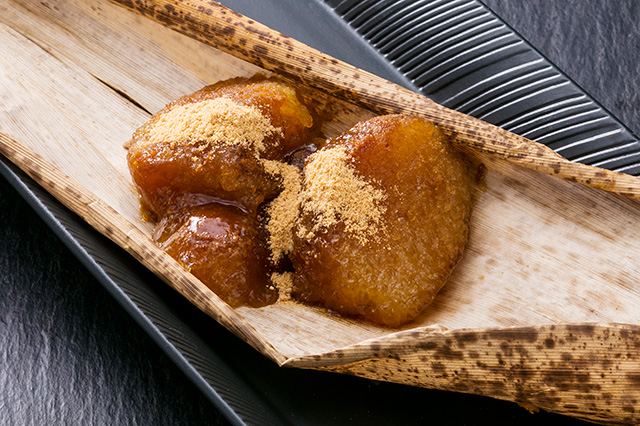
| Prefecture | Kagoshima (鹿児島県) |
|---|---|
| Region | Kyushu & Okinawa |
| Japanese name | あくまき |
| Home area | All within the province. |
| Main ingredients | (Singing rice, lily juice) |
History and Origins
"Freaking" is a unique Kagoshima Prefecture dish that is eaten mainly by the last phrase, sometimes called a "sniff." There's a theory that, in the fight of Kanahara, Saoji Hiichi Hiichi is the first person to bring with him food that he has. The high preservation and the good nature of their stomachs have long been used to make them a target of battle, and the western glory of the country is said to have been eaten in the Western War. It is said that from this background, men can be eaten in the last verse with the hope that they will grow strong and strong. After the "Found Man" has soaked in rice that has been buried in wood and bamboo ashes, it can be wrapped in hides of rice and boiled in the wine for several hours. As the alkaline substances in the lye soften the fibers of rice, they can suppress the germ reproduction and preserve long-term. In Kagoshima Prefecture, where food is corrupt because of the high humidity, it's truly a wise dish.
When It Is Eaten
By mid-April April, you will see a lot in supermarkets and souvenir shops in Kagoshima Prefecture. In the last paragraph, they are eaten by making "wandering" and buying it.
How It Is Eaten
I put rice in the lye overnight, and I had to put it on bamboo leather and wrap it in a bag. If you boil it with water - thind lye for over three hours, or if the rice grain turns into an orange with a smudge, then you take it out of the pot. If you peel off the bamboo and cut it to the size that is easy to eat, you'll have your favorite food, such as citrus, black sugar, white sugar, and so on. It's unusual to hear that you sometimes eat with sugary oil. Because of a strong sense of food, you have a good appetite.
Recipe
Ingredients
- 1(1.5 kg) glutinous rice
- 1(1800 ml) water
- 15 竹皮
- as needed ) きなこ等
Method
- Wash your rice, put it in the lye, put it in the lye, put it in a day and night, raise it, and drain it. The bamboo bark is made into water for two or three days, which is soft and which takes its fur off with a turtle's thumb. To tie them together, it will split three by one centimeter from the base of the bamboo plant.
- Put the rice (about 140 grams) in the middle of the bamboo leather, and wrap the ends of the bamboo layer up and down in the middle, fold them thoroughly.
- It's a very tight string on the left and right, with bamboo string on the left and the middle. I'll cut the extra string.
- I'll put a bunch of water, wrapped in a broom, close the lid, and boil it while I pour water. Three hours in a common pot.
- If the shape of the rice grain is gone, it will be made. They eat with a mixture of mushrooms, powdered black sugar, and black pepper.
More About Akumaki
Akumaki (あくまき; 灰汁巻き) is a Japanese-style confection, or wagashi made in Kagoshima, Miyazaki, and Kumamoto Prefecture during the Boys’ Festival on May 5. It is more widely called chimaki in Japan, and are similar to, and historically originate from, Chinese zongzi, traditionally eaten during the Dragon boat festival.
Preparation and consumption
Akumaki is made by soaking glutinous rice wrapped in bamboo leaves in lye overnight. Because it's slightly bitter, it's typically eaten with blended sugar and toasted soybean flour (kinako), with a little salt or soaked in honey. It has an unusual flavor and is considered an acquired taste.
History
It is said that akumaki began as a long-term provision for samurai during the Battle of Sekigahara (1600) or the Japanese invasions of Korea (1592–1598). Also, Saigō Takamori (1821–1877) took akumaki as a nonperishable commodity to the battlefield during the Satsuma Rebellion (1877). Akumaki became popular in the north of Miyazaki Prefecture and Kumamoto Prefecture due to that rebellion.
Storage and distribution
It can be kept for about one week at normal temperature, for about two weeks in a refrigerator, and can also be frozen. Vacuum-packed akumaki can be found in many places as a souvenir, but it is usually a homemade confection. Recently, since the opening of the Kyushu Shinkansen train line, akumaki has attracted considerable attention as a slow food. Akumaki is sold in hotels of Kagoshima, roadside stations (michi no eki), over the internet and in supermarkets throughout Kagoshima prefecture.
Text adapted from the English Wikipedia article Akumaki by its contributors, licensed CC BY-SA 4.0.
Dish data: Ministry of Agriculture, Forestry and Fisheries (MAFF), “Uchi no Kyodo Ryori” (Our Regional Cuisines) database, used under the Public Data License (PDL1.0); translated and adapted from the Japanese original.