Daikonzushi 大根ずし
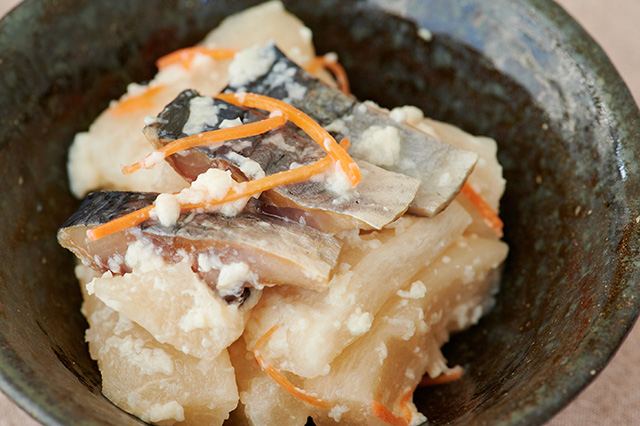
| Prefecture | Ishikawa (石川県) |
|---|---|
| Region | Chubu |
| Japanese name | 大根ずし(だいこんずし) |
| Reading | Daikonzushi |
| Home area | All within the province. |
| Main ingredients | It's not like you're going to have to do it. |
History and Origins
It's a traditional cereal that represents Kaga. A food that is consumed with rice and rice sweeteners. In the context of the Great Roots, the northern preships, which have been in contact from the time of the Qatar period, are greatly affected. The northerly fleet is a commercial fleet carrying rice and fish via the Sea of Japan from Hokkaido to Edo and ZXXQQ149X. To climb the mountain, which was a base for the voyage, many goods from all over the country were carried. Nicin was one of the most abundant and easy to collect even by the common people. It's said that the port town had a warehouse called "The Nixin" that stores large quantities of herring. I'm not sure if it's possible to do that. Winter was used not only for "massive root" but throughout the four seasons for stews and other things. It's a local dish that's established across the wide area of the province. There's a locality in the way you dip it, and in Kanazawa City, you'll put a small piece of herring into a small amount of wine. In snowed areas, it's not a sweet drink that gets sour, but it's a sweet drink. The meat is soft and sweet, and the source of the caga vegetable is good.
When It Is Eaten
For the New Year's Day, which will be provided on Hale's Day, such as New Year's Eve, "The Big Roots" are easy to obtain and the big roots and herring that are made from raw materials, and it can be made daily at home.
How It Is Eaten
Take it out of the tub and eat it with its citrus. Many people shy away from the crude look of things, but many prefer the taste of a fish with large roots and fat, and the acidic flavor of an extract. The big root, shanty flavor, is also a charm. It can even eat bones, so it's good for drinking. If you don't want help from a source, it's often used also by the blue neck. In some areas, they can be swallowed with salt sabbats and pumpkins on the main cutting roots.
Recipe — Serves 4
Ingredients
- 5 daikon radish
- 2.5–3% salt
- weight (for pressing)
- 3–6cm carrot
- a pinch yuzu peel
- 10 dried herring
- rice-rinsing water
- 1/2 all (かば)
- 1 1/2 cups rice
- 1/2–1 cups boiling water
Method
- The main roots are cut to the right, salt is placed on the bottom of the barrel, salt is placed on top of the barrel, salt is placed on top of it, and salt is placed on top of it again and again, with heavy stones, and are soaked in salt for about five days.
- The herring is soaked overnight in rice juices, brought back the scales, washed the water, and dropped the cucumbers, and cut them in the right way.
- Hot rice, hot water mixed together, and a simple heat and kept overnight.
- (a) I'll raise the root and cut the water. (b) Cut carrots, and red peppers, except for seeds, will be cut in half, and so on. I'll mix it with (a, b) and dip it in, and then I'll drop it in. I'll do heavy stones. I'll be in the water in about ten days.
More About Daikonzushi
It wasn't possible for me to use large-scale and worn-out herring. It's traditionally made in Kanazawa City and in the old Isegawa County community of Shizuru in the city of Shirayama. It can be eaten as New Year's food and so on.
Characteristics
The materials, the methods, the appearance and so on, have a lot in common with platypus. It's also classified as a sushi, which is similar to the chrysanthemum of Fukui Prefecture, but the main root has a higher proportion of roots, and the decomposing of the dissemination of the nitrogen into alcohol. It's also made in the Koga of Ishikawa Prefecture and is made from materials cheaper than sushi.
And yet there is a great variety of variety in the Gifu Prefecture region of the Yugoslav. It is thought to be a grown native dish, born separately from the roots of the Ishikawa Prefecture.
Processing
Mainly made from November to January. The deprived herring is wrapped overnight in rice lye and then cut into a few centimeters and then swallowed in wine. The radish will be cut with the skin and cut into two centimeters wide. I'm going to dip herring in half, and then I'm going to dip her in with a bowl of sieve and a handful of carrots, sashimi and peppers.
It's been promoted by the U.S. Also, free amino acid increases rapidly after the 15th day. After completion, we will eat with a slice of a centimeter wide and a bowl of rice.
History
It was built from the modern world in a region centered around Kanzawa. The present Kanazawa CityXA diaries of Tsuruka-san, which lived in present Kanazawa City Fukuoka, have a description of their gift of a "saurus" from the Tsurukans on January 5th, 1826. It is thought that this is a sushi equivalent to the big fish of modern times. In addition to the way merchants, such as the top-pressure master and the hair tie, had the habit of giving their customers their first annual sushi or large-sniffers, they generally gave their relatives and neighbors a lot of credit. Men of rank, such as warriors, were eating mainly sushi or sushi, while the big ones were also eating civilians.
Before World War II, it was built in each household, as well as in the yakuza. Since 1965, an increasing number of manufacturers have made a real breakthrough with sushi. It's either a gift or a sushi, but it's often consumed by each family.
Text adapted and translated from the Japanese Wikipedia article 大根ずし by its contributors, licensed CC BY-SA 4.0.
Dish data: Ministry of Agriculture, Forestry and Fisheries (MAFF), “Uchi no Kyodo Ryori” (Our Regional Cuisines) database, used under the Public Data License (PDL1.0); translated and adapted from the Japanese original.