Ganeage がね揚げ
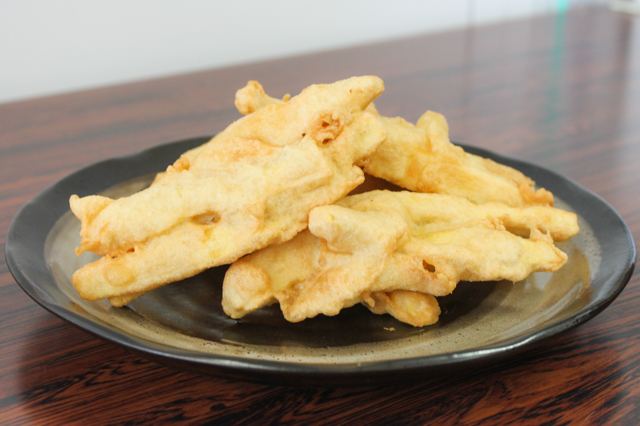
| Prefecture | Kumamoto (熊本県) |
|---|---|
| Region | Kyushu & Okinawa |
| Japanese name | がね揚げ(がねあげ) |
| Reading | Ganeage |
| Home area | Aquiculture |
| Main ingredients | I don't know. I don't know. |
History and Origins
It is said that in the wild areas, fish cannot be used for a Buddhist purpose, so instead of cutting the snacks with a fat beat, they used "snacking" as a vegetable oil and a senility dish. The wildflower dialect for "snake" refers to the crab and is named from the fact that it is seen on the crab's feet. In a similar way, when you have a big party or a big party, it's called "save" and when you have a party, when you have a party, it's called "sucking" in a French matter. Your clothes should have been cut into pieces or slices, but they are characterized by flavoring and sugar and sweetening. The kryptons and kooks in their fried clothes are known to a wide generation.
When It Is Eaten
It's still an essential part of the culinary dish, but it's also part of the ceremony. Young and old, men and women, they are popular and sometimes eat not only their usual meals but also their snacks.
How It Is Eaten
Keep the fried chicken, or use a light salt wave to taste. There are also menus for such things as "Founded Snacks" in the udon. Basically, we use a pinch, but there are recipes for adding carrots.
Recipe — Serves 4
Ingredients
- 600 g sweet potato
- 200 g wheat flour
- Mix: 1 egg (小)
- Mix: 50 g sugar
- Mix: 6 g salt
- Mix: 20 ml アルコール類 (sake)
- Mix: 6 g ginger (千切りまたはみじん切り)
- Mix: 100 g water
- oil for frying, to taste
Method
- The skin of the skin is cut out and cut into a one-inch-angle piece of wood that is placed in the water.
- We wipe the water with a little dust and dust the flour.
- Mix ingredients A well in the bowl and add ingredients to the bowl easily. (Customer is used for perfume)
- If you put together a few threes on the flyback, you'll be served with 170 degrees of oil while you keep looking like a crab's foot. Watch the temperature of the oil so you don't get impatient.
More About Ganeage
The roast is a native dish of the Kumamoto Prefecture garden. It's a sweet potato fried and gravy dish.
It's also called a fresh-sniffing.
Overview
In the wild, there are few rice paddies, and sweet potatoes are an important substitute for rice, and it is used as a staple food, as a staple, as a food, not as a snack, but as a dish, which is one of those sweet potatoes.
Since fish cannot be used in Buddhist affairs, it is a dish that is cooked with vegetable oil, with sweet potatoes cut in fat instead.
It is characterized by adding chopped or chopped peppers to the garment, flavoring it, sugar, and sweeten it.
It's an essential part of a well-being dish, and is eaten at a wedding feast, as well as as as a common meal and snack. Even if you take a ride in the udon and "Found" it's eaten. It's also home cooking, so the fatness of the sweet potatoes and the ingredients they use may vary in each household and may add carrots.
In some legal cases, it's women who cut the sweet potatoes, and the ones who float outside the house are part of the parting company with men. For Hale's day, it was fried not with vegetable oil, but with a sesame oil called "orn"
Kumamoto City, and there's an expert in raising hands.
About the name.
"Citizen" is a wildflower dialect named for "cani" and because the shape of the palm potato that has been fried has been identified as a crab's foot.
"Founding" is a nickname for the celebration seat, and in the Buddhist affair it is called "save".
Text adapted and translated from the Japanese Wikipedia article がね揚げ by its contributors, licensed CC BY-SA 4.0.
Dish data: Ministry of Agriculture, Forestry and Fisheries (MAFF), “Uchi no Kyodo Ryori” (Our Regional Cuisines) database, used under the Public Data License (PDL1.0); translated and adapted from the Japanese original.