Home / Kumamoto / Nankan'agemakizushi
Nankan'agemakizushi 南関あげ巻き寿司
| Prefecture | Kumamoto (熊本県) |
|---|---|
| Region | Kyushu & Okinawa |
| Japanese name | 南関あげ巻き寿司(なんかんあげまきずし) |
| Reading | Nankan'agemakizushi |
| Home area | - South City. |
| Main ingredients | I'm going to show you some of the things that I've done. |
History and Origins
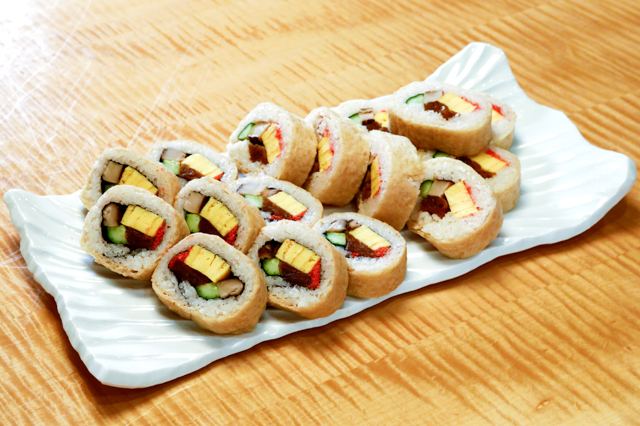
This is the best friend I've ever known in South-City. The South Koreans have one 20 centimeters square and one is distinctive with caricacasak oil. The way you make it is to squeeze tofu, and after you have firmly cut the water, it will be released twice by low temperature and high temperature oil. The water will be almost gone, so if you store it in a cold, dark place where the sun doesn't shine, it'll be stored at the usual temperature of two months. The more you're told to boil, the better the soup will be cooked. In the south, the soup or stew will be put in. Shikoku's beloved Mount Matsuyama has similar oil raisers and it is said that the south-supposed came from Matsuyama. The "Sumishi Nanjo" uses oiled southerly rice to make a delicious sauce of steam, such as oil, steam, sugar, and so on, instead of seaweed. When you cut the soup, open it, and wrap it in a roll, spread out the rice, and then roll it up with what is called a roll of material, such as carrots, eggs, and so on. Unlike seaweed, it's hard to get to dinner, and it requires a lot of force to wrap around it, and it's also made by hand in restaurants and grocery stores. Nanjo drinks a lot of soup, and it makes you feel very nervous.
When It Is Eaten
Besides the celebration, they are also eaten at their daily table. It's beautiful in appearance, and it's a delight to the children, so it often appears in athletic lunches and so forth. The materials that wrap themselves in are different from the builders, but summer also varies according to the seasons, such as summers and winters as spinach.
How It Is Eaten
Put boiling water on the roll and spread the lightly cut south side of the tree and add a thin layer of rice. If you wrap the scroll in the middle, you'll cut it into size that's about two centimeters wide and eat it.
Recipe
Ingredients
- 3) 1 厚焼き玉子
- 60 g kanpyo (dried gourd strips) (味付き)
- 6 dried shiitake mushrooms (水もどし)
- 1 cucumber
- 30 g denbu (sweet fish flakes)
- 1 seaweed
- Sushi rice: 2 × 180 ml rice
- Sushi rice: 70 ml vinegar (vinegar)
- Sushi rice: 10 g sugar
- Sushi rice: 3 g salt
- Mix: 3 aburaage (fried tofu) (大)
- Mix: 50 g sugar
- Mix: 100 ml light soy sauce
- Mix: 100 ml mirin
- Mix: 100 ml sake
- Mix: 500 ml dashi stock (dried shiitake mushrooms)
Method
- I'll put one of the south centrifuges on the bat and put hot water on it. I'll keep it for ten minutes, so I'll take the water down while it's hot.
- Put the soup and seasoning A into the pot, and add the southerly and dry dishes and boil them, and the sauce will taste delicious. Keep it cooked tightly with a lid or paper lid. When you're cooked, it'll spread out (you'll be cold enough to avoid burn while you're warm.)
- Soy sauce is very hard to cook. The rice vinegar is mildly heated, and when the salt melts, it will go down from the fire and fit with the freshly boiled rice.
- The other tools are cut to size. I'll put it in the length of the south wall.
- The rice is spread out around the lightly cut southern core and the rice is spread thinly. Make sure the scroll is in the middle, and roll it from under your hand. The spiraling process of using seaweed involves further spreading the rice in the seaweed, turning it over, wrapping it around on the surface of the seaweed, and putting it into a surface of the seaweed. Cut into eight pieces. It is good to change the variety of the ingredients that wrap in, considering the color, and to make them with "three leaves, tofu, carrots" and so forth. (Laughter)
More About Nankan'agemakizushi
Overview
It's a 20-centimeter-wide oil raise, similar to the one you don't see. Because it is dry, it is excellent for absorbance of lye. And there are two to three months of peak season.
The share of the Nanjo is over 90 percent of the share. The salt mountain food produces 16,000 food a day, and in winter, 20,000 a day. To make a southerly soup with salt mountain foods, cut the tofu to the thickness of 5 millimeters to 6 millimeters thick, add about a tofu, and then release the tofu twice after removing the water. And if you catch it without pressing it, it'll be a regular oil raise.
The Birth
In order to compensate for the reduced population due to the turmoil on the island, someone learned how to make oil when a large number of people from Iwayama moved.
It is said that during the Great Britain period, the southern hemisphere was a little narrower and more dense, but the ones that thind the tofu so that it could be prevented from being long-term and kept in the summer are the roots of the present southern nervous system.
Use
It's a food that should be lost on the everyday table in South China.
Since there is very little water in the south side, compared to the oil raise, it is very good to suck well and taste well.
There are a lot of uses for rice sauce and rice.
- South China. - Yeah.
Nanjo's traditional dish is Kumamoto Prefecture. A stew made of soy sauce, oil, wine, and sugar.
South Korean sushi.
Nanjo and sushi are native dishes from Kumamoto Prefecture. It's a sushi, not a seaweed, but a sushi wrapped in a south-core.
The Southern Sequoia is 20 centimeters tall, as shown above, but this size is about the same as the entire type of seaweed. This led to the idea that in the 40th century, the South Korean Research Group, which will work on the study and tradition of native cooking in South China, will replace the sea cucumber in the '40s.
Since the rice is dry, it can be boiled in soup after the oil is removed.
Outer site
- The official site of Nanjo.
Text adapted and translated from the Japanese Wikipedia article 南関あげ by its contributors, licensed CC BY-SA 4.0.
Dish data: Ministry of Agriculture, Forestry and Fisheries (MAFF), “Uchi no Kyodo Ryori” (Our Regional Cuisines) database, used under the Public Data License (PDL1.0); translated and adapted from the Japanese original.