Hamonoyakimono はもの焼き物
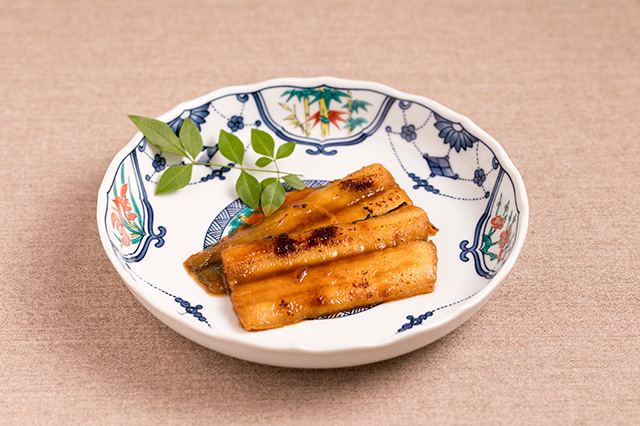
| Prefecture | Kyoto (京都府) |
|---|---|
| Region | Kinki |
| Japanese name | はもの焼き物(はものやきもの) |
| Reading | Hamonoyakimono |
| Home area | Kyoto City, Central and Post-City |
| Main ingredients | Hamo |
History and Origins
Hamo is an essential fish for cooking in Tokyo. They live in seas that are affected by the warm currents, and in the sea after sea, there are about several tons of water a year. However, many of the hammocks eaten at Kyoto are eaten by the Indo and Masters. The hamo looks like a wild elephant, and a large individual can grow to nearly two meters long. Big things are said to be over ten years old. She hides in the sand and in the rocks during the day, and works at night and likes fish and shrimps and crabs and so on. There are sharp teeth in the mouth, and it's very aggressive. Even after being washed up, they may be moving around and chewing hard. Contrary to what you may see, meat is a beautiful white taste. The hamo has a lot of skeletons, and it's hard to cook. Still, it is said that the basis of the Kyoto for food was the fact that a strong potato could carry it alive from far away to Kyoto. A small-boneed haemo can use its own technique of "bone cutting" in cooking. A bone cut requires skilled skill, so that it can be called "Kyoto cooks have learned to cut themselves." It's not certain when we started eating, but in Edo's late season, there are more than 100 species of hammon dishes. And "Burn" is also one of the regular dishes.
When It Is Eaten
Humo comes in season from first summer to summer and fall. Since cooking is difficult, home cooking is usually less expensive, and eating at a restaurant is more common. The traditional festival of July 1st to 31st, which is an important domestic and non-citizen cultural heritage of the country, is also known as the Festival, and it is served as an event food.
How It Is Eaten
Put it on a oil-based tip and roast it or cook it into salt before eating it. Not only do you have no rice but you also have a good taste for wine. The hamo is thin, so since it is cooked with a heavy fire, it makes it palascized and tender, you need to be careful.
Recipe — Serves 2
Ingredients
- 1() pike conger
- 6 tbsp(4:5:1) sauce
Method
- Cut to the length of the frying pan to match its size, and hit the body with four convexs to prevent the skin from contract and rounding. When you hit a nail, you let it through with your skin so it doesn't have to be attached.
- I'll reduce myself a little bit and then I'll cook the skin back and cook it with 80 percent of your body and 20 percent of your skin.
- If you stick a tip on a hamo that has been baked in procedure two, then you can cook it in fried pan and repeat it two times.
Dish data: Ministry of Agriculture, Forestry and Fisheries (MAFF), “Uchi no Kyodo Ryori” (Our Regional Cuisines) database, used under the Public Data License (PDL1.0); translated and adapted from the Japanese original.