Hitashimame ひたし豆
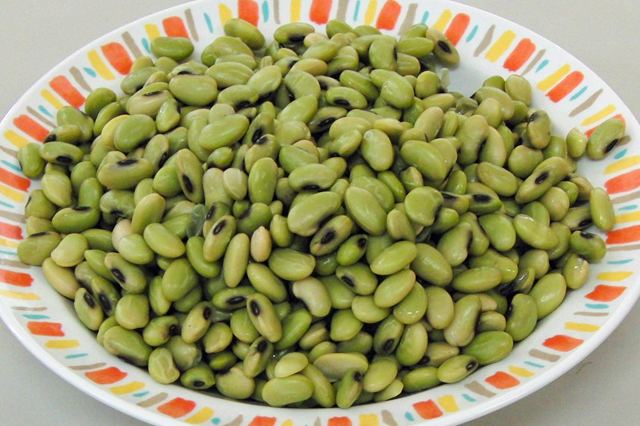
| Prefecture | Nagano (長野県) |
|---|---|
| Region | Chubu |
| Japanese name | ひたし豆(ひたしまめ) |
| Reading | Hitashimame |
| Home area | North-Tree, Toto-Tree. |
| Main ingredients | Blue beans. |
History and Origins
The soil in the west of the mountains is devoted to producing soybeans, and it has been growing in wheat and beans for a long time. A good bean with a pleasant aroma and a sweet flavor, and a bean that was grown in the Nishiyama area, is appropriately named "Saiyama's Giant Bean." Also, in the crypt region, flower beans are a special product, and they grow the "Huto Tobazu" that is considered to be a suitable breeding ground for more than 800 meters above sea level. Highland flower beans have a black and purple color and are also known as purple. It's a large grain that tastes good and is made to boil beans and sweets. The "Snap Bean" is a local dish that is eaten in Nagano Prefecture and Tokyo, including Niigata Prefecture and ZXXX080X and ZXX0Q0Q027X, and is also used for the new month's cooking. It's boiled blue beans and soaked in the soft, salted juice. In Nagano Prefecture, you can make a saddle bean. The green bean is a kind of green bean with the look of a horse on its back, so it's now called a saddle bean. There are also places where they are called "Nazu beans" because it tastes like a glue. This unique flavor, the dusted flavor of the beans and the rich taste, is so clear that the beans themselves are so delicious that they are eaten with a simple taste of boiling. It's getting harder to get and produce fewer and harder these days.
When It Is Eaten
It's been eaten daily and eaten as a tea request. The ones that put the number of children in "Sweet Bean" are used as "numbers of peas" in Japanese.
How It Is Eaten
Besides eating it as it is, sometimes it's made of soy sauce, soy sauce, soy sauce.
Recipe
Ingredients
- 2 cups green soybeans (佐久地域では青ばつとよぶ)
- 3 cups dashi stock
- 3 tbsp soy sauce
- 2 tbsp mirin
- 1/2 tbsp salt
Method
- A blue pea is put in plenty of water overnight. Winter's two nights.
- It's just as good as the teeth remain, so I have to open them up and quickly put them in the cool water and get a mild heat.
- Soap, soy sauce, soy sauce, soy sauce, soy sauce, soy sauce, and salt can be added and tasted.
- Put the water in the beans, boil it, and stop the fire and cool it.
- In the Sasalong region, you can eat it with New Year's food. For New Year's food, many families have to have their number of children, and if you have a number of children, it's good to have a number of children in it. For example, pour plenty of thin salt water in advance, and remove salt until you have almost no salt. Cut the water, cut it slightly larger than the beans, and mix it with four. It's stored in the refrigerator and will taste better after two or three hours.
Dish data: Ministry of Agriculture, Forestry and Fisheries (MAFF), “Uchi no Kyodo Ryori” (Our Regional Cuisines) database, used under the Public Data License (PDL1.0); translated and adapted from the Japanese original.