Ishigakimochi 石垣もち
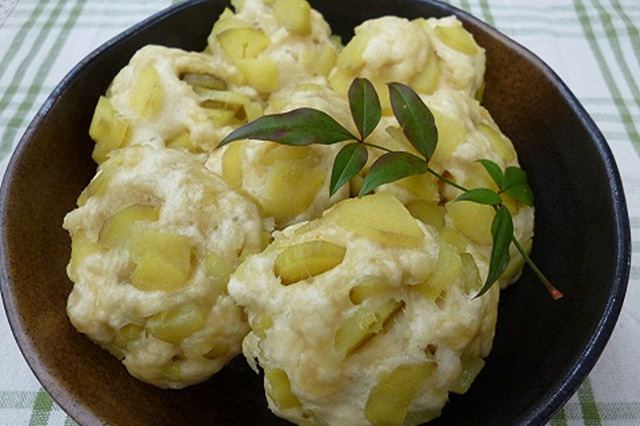
| Prefecture | Oita (大分県) |
|---|---|
| Region | Kyushu & Okinawa |
| Japanese name | 石垣もち(いしがきもち) |
| Reading | Ishigakimochi |
| Home area | All within the province. |
| Main ingredients | It's just wheat flour. |
History and Origins
One of the dieting cultures rooted in Oita Prefecture is the eating culture. Once, Oita Prefecture was not suitable for rice construction, but once the waterways were fixed, grain growing was good. They say that in the 20th century, they were proud of the construction of over 40,000 ha. That's the background, and local food and local sweets with flour as a common food for the common people pass through the district. The "Sake-Bing" from the eating culture is the one built for the ancients to eat during the farming season. There are also theories that names come from the belief that they look like stone walls, and that they are the origin of a rocky district. As it was easy to get the materials and make them easy to get, it gradually spread throughout Oita Prefecture. I'll cut in potatoes so I'll "magnify" and "muck in potatoes" and so on, and so on. It's a simple material made of flour and claws, characterized by a piece of ground with a bite.
When It Is Eaten
From winter to spring, I was eaten by the farm boy between the years, and the simple sweetness healed my tired body. They are still eaten in various places as snacks.
How It Is Eaten
Put flour and water in a small cut into the nail, and if you roll it to the right size, it is common to steam it and eat it with a steamer. However, there are times when you can add baking powder to give off a mild sense of food, except that in some areas, the amount of thin matter and flour is different. Instead of a nice one, there are ovens that use pumpkins, carrots, sweet cones, and so on. Since it's not possible to mix the paste with the paste after it's done, it's easier to mix it together from the beginning.
Recipe — Serves 6
Ingredients
- 500 g wheat flour (all-purpose flour)
- 650 g さつまいも 正味
- 75 g sugar
- 12 g salt
- 10 g baking powder
- 125 ml water
Method
- Cut the skin out of the skin, and cut it to the size of two-inch thick two-millimeters. If you have a clean, light skin, you will have a better color without having to peel it.
- I'll dip it in the water, take out the pot, and cut off the water when it's out.
- I'll put sugar on it and put some water on it until it comes out of the poppy.
- The flour mixed with baking powder is mixed into the paste and mixed with the dough into the paste.
- I often rub my hands with salted water, little by little. The amount of water will soften. Don't let them all in at once.
- If the fabric gets out of hand, I'll round it by hand.
- Place it in a steamer that is covered with steam, and a steaming machine that is hot and steamed for about 15 minutes until the pan is cooked.
Dish data: Ministry of Agriculture, Forestry and Fisheries (MAFF), “Uchi no Kyodo Ryori” (Our Regional Cuisines) database, used under the Public Data License (PDL1.0); translated and adapted from the Japanese original.