Jiriyaki じり焼き
| Prefecture | Oita (大分県) |
|---|---|
| Region | Kyushu & Okinawa |
| Japanese name | じり焼き(じりやき) |
| Reading | Jiriyaki |
| Home area | Toshino City. |
| Main ingredients | And it's not just flour. |
History and Origins
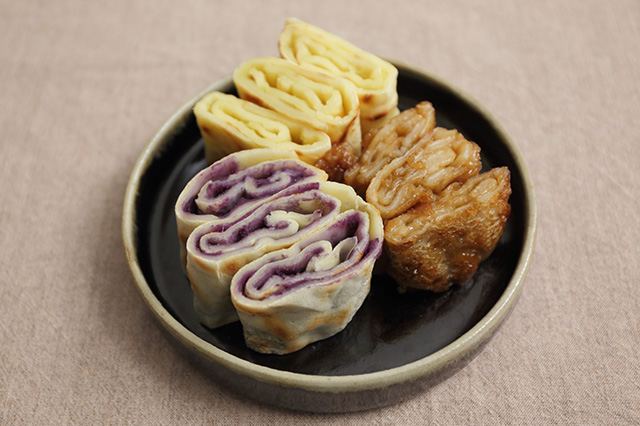
The Oita Prefecture, known for its high consumption of chicken, is also deeply rooted in the eating culture of flour. Oita Prefecture has been developed, and many lands were not suitable for making rice, but it took a long time to make waterways in various places. In time, grain growing by farming began to flourish. Most of the wheat that has been harvested is ground into dust. The earth-sucking "sow" and other things are still known to a wide range of generations. The "Cook-Book" that goes to Sugino City is also a product of the eating culture. We roast the ground powder as thin as crepes and then wrap it around a finely ground black sugar pumpkin and eat it. Because of the simple taste that is easy and loved by everyone, it is widely absorbed in XOita Prefecture, as well as in Kanno City. In the origin of the name, there is a lot of dialect that comes from the word "symbol" and the idea that it comes from the word "symbol" and the idea that it's coming from the meaning of "sit." It is also characteristic that there are various names for various regions, including Ida's "Kakiki" and "Kaki" and "Kaki" as well.
When It Is Eaten
In the past, children and adults were regularly eaten as an offering during farm work. In times when black sugar was precious, some families ate "sew-coasted" instead of "steaked" (sew-sniffed fabric with "sniff") and "stone-scrolled") and "streaked dough mixed with glue). Although we have fewer opportunities to eat than we used to, it's not uncommon for parents to make for their children today.
How It Is Eaten
In the past, the fabrics were made from ground dust, water and salt. Now they are added to the eggs and ready to finish. You can also enjoy the ovens by adding rice flour to a soft dough or by rolling sugar in the sweetly ground sauce and eating it. In recent years, there are recipes for jam, marmalade, raw cream, and so on.
Recipe — Serves 4
Ingredients
- 150 g local wheat flour
- a pinch ( a little ) salt
- 340 g water
- as needed brown sugar
- as needed oil
- 150 g wheat flour
- a pinch salt
- 340 g water
- 10 g sugar
- 1 egg
- 3 g baking powder
- a pinch milk
Method
- It melts with salt and water in the ground.
- The amount of water is 2.2 times the weight of the flour. It melts to the point where it flows.
- As old-fashioned procedure #3 . . . . . . . . . . . .
- The old-fashioned procedure 4 is baked until the surface begins to dry.
- In the old days, procedure 5 is to put in black sugar and roll it around from the edge.
- We cut it to the right length.
- Add flour, sugar, baking powder, milk, and water and stir well.
- Put it in a pan, thin.
- Modern procedure 3 is baked until the surface begins to dry.
- I'm going to wrap it around the edge with a little jam or a little purple potato paste.
- Modern procedure 5, cut to the right length.
Dish data: Ministry of Agriculture, Forestry and Fisheries (MAFF), “Uchi no Kyodo Ryori” (Our Regional Cuisines) database, used under the Public Data License (PDL1.0); translated and adapted from the Japanese original.