Atamaryōri 頭料理
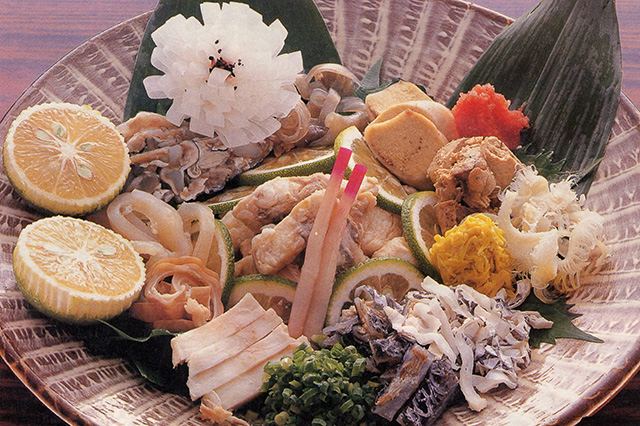
| Prefecture | Oita (大分県) |
|---|---|
| Region | Kyushu & Okinawa |
| Japanese name | 頭料理(あたまりょうり) |
| Reading | Atamaryōri |
| Home area | Takeda City |
| Main ingredients | Big fish. |
History and Origins
It's located in the southwest of Oita Prefecture, and it's surrounded by Mounts of Unsurrection, Instituto Mounts, and Takeda City, surrounded by Mamy Mountain. After Mr. Gaga entered the castle during the time of the war, Mr. Nakakawa was transferred to the time of the unity of his subjects, Hideki. After building Ashita-Change Town in Takeda, it will develop as a commercial center. In time, many of the late landscapes were lost by the Southwest, but in the center of the city, old scenes, such as the house house street and others, still remain. During the Edo, when traffic infrastructure was not in order, in this area where the ocean is remote in the interior, there were few opportunities to eat sea fish and rarely when fresh fish were available. It was "head food" that was created to use rare fish and fish in vain. Head cooking is used in a variety of ways, including fish, including Ella, Ago, and the entrails. It's also useful for parts that are left outside of the head and that normally would be abandoned. These can be steamed gently and poured onto a large plate. We use such large fish as Ara, Que, Nibe, and Hata. I took full advantage of the big fish and enjoyed myself with my family and guests.
When It Is Eaten
They were eaten in Hale. Also, when you cook easily damaged fish, you save them for a while, and visitors from New Year's can act on it. Although "head cooking" is now less common in the average household, it used to be that when you were old enough, you would bring up a board on your side, and the landscape would be windy.
How It Is Eaten
It's easy to use salt to cool the water. If you put it on a large plate, you'll get three cups of vinegar and a few other flavors, such as steaming down the table. A taste of freshness will be picked up by a seasoning of acid.
Recipe — Serves 12
Ingredients
- 10 kg(–60 kg) ニベ
- as needed seasonal vegetables (きゅうりなど)
- as needed kabosu citrus
- as needed vinegar
Method
- Take the fish scales and separate the body from the head.
- We'll take the knife from under Ella until we get to the chest bire. Cut off the head, bone, ella, thorax.
- I'll remove the ella pig and put on the upper jaw and lower jaw. Take the meat off.
- I'll drop Ella's blood, stick and so on and clean it with salt.
- The dirt from the stomach, liver, intestines, and ovum is cleaned with a knife and the salt is pressed.
- I take the hire from the fin.
- I'll find plenty of water in a large pot, and I'll boil it. (Salt in salt)
- I cut the flesh of the hire, ho, scoundrel, and stir the salt into boiling water. (Sniffles in boiling water, cooks in a pot, and floats immediately into cool water)
- The liver, stomach, stomach, and intestines are strong, and every half hour, they are dragged to cool water and then released.
- Masako albino wraps her skin in the bamboo and spends 60 minutes to shake it.
- I'll bring the leather, top, bottom, ago, down, ago, and Ela, to the cool water, and I'll drop the tiny scales of skin and skull in there before they cool down. (Singing)
- Cut each of the things processed to size easily eaten.
- A large plate is served with seasonal vegetables.
- I eat with a mixture of the flavored red peppers, peppers, and three cups of vinegar or two. The vinegar is good for the wax.
More About Atamaryōri
Head food is a local dish that can be eaten around Oita PrefectureIA.
Overview
It's thought to be a dish produced as the wisdom of life in the time of the third generation, Nakangawa. The "George's Book" of Book of the Year (in 1865) in the former years of Meiji's year 2 and 1866 lists head cooking as a contribution to the New Year's Azore course held in the city of Tsukoku in the city of Okagi.
Since Takeda was surrounded by mountains on all sides, and was far from the sea, there were fewer opportunities to eat sea fish, and fish carried by sea animals from the Mola and the Shogun were valuable food. Under such circumstances, it is a dish that was produced to use valuable seafood without waste. In particular, it's a dish that is eaten with three cups of vinegar and cavos, as well as a mixture of salt, or salt, or salt, or salt, or salt, or salt, for each part of the body, which is usually less eaten than fish. Small fish hurt quickly, so large white fish such as Nibe, Ara, Hata and Cue are used.
It was eaten mainly on the hale, and it was served as a celebration table in modern times on New Year's Eve, New Year's Eve, and later in the year, it brought out a board to its side, and the landscape was a windy poem.
There are fewer food and drink stores to handle head food, but there are a few stores to offer.
In 2022, the Ministry of Culture approved a 100-year hood.
Text adapted and translated from the Japanese Wikipedia article 頭料理 by its contributors, licensed CC BY-SA 4.0.
Dish data: Ministry of Agriculture, Forestry and Fisheries (MAFF), “Uchi no Kyodo Ryori” (Our Regional Cuisines) database, used under the Public Data License (PDL1.0); translated and adapted from the Japanese original.