Gomadashi ごまだし
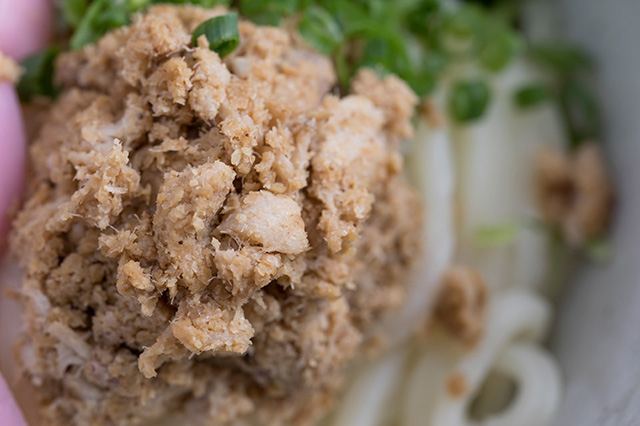
| Prefecture | Oita (大分県) |
|---|---|
| Region | Kyushu & Okinawa |
| Japanese name | ごまだし |
| Home area | I'm sure you'll be fine. |
| Main ingredients | Fish, fish. |
History and Origins
The largest Kyushu (Santa Yoichi, who boasts the largest area) is known as a fishing town blessed with abundant sea life. About 70 percent of the water production in the province is produced by Susaka, and among other things, the growth industry centered on the Bian and the Hennan is responsible for most of the state's output. Also, the fishing industry makes it possible for fishing nets, undersea nets, fishing nets, fishing nets, single fishing and even diving. There are a wide range of species of fish that can be washed up, such as ducks, car shrimps, and raw fish. The eagle is highly regarded as the special product "Santa Ico" The daily dish of " stills" in Satoshi City is a traditional flavor made from eso esto esto (the fish of esosocy) throughout the year. We can mix the esos and silicas that will be boiled throughout the year. It is not certain where the birth came from, but it is also said that to handle a large catch of fish, it is to save the fisherman's wife from the trouble of producing juice. "Stretch" is used for various dishes, but local food is generally eaten to match to the rice. In recent years, since the eso has become difficult to catch, it has become possible to make an aspi, abas, an eagle, etc.
When It Is Eaten
I was eaten on a daily basis because putting in "snaps" would easily produce a tasty dish. It's easy to get access to local supermarkets and resales. There are also many restaurants that handle "silence" and can be eaten with fast food sensation.
How It Is Eaten
I made the baked eso, and I made it with soy sauce, soy sauce, soy sauce. Because of the high antioxidants, it's saving. As a way to eat it, you're very popular with just putting "snaps" on the table. In addition, you can enjoy the various ranges, such as filling your tea or putting it in the soup. You can use not only eso, but also azi and sabbatical.
Recipe — Serves 4
Ingredients
- 100 g [ still] Eso (ほぐし身)
- 100 g(1 cups) toasted sesame seeds
- as needed soy sauce
- 4 heads udon noodles
- as needed small green onion
Method
- Cooking eso, loosening, and removing skin and skeletons from the table.
- I still make it.
- I'll put the sesame oil in.
- Soy sauce and water off.
- You can put a little salt in it, boil hot water and make the flavor.
More About Gomadashi
It is common to boil in hot water and to eat as "susten" along with citrus, and this "snap" has been chosen for native food at rural villages.
Overview
It is the most common way to eat a bowl of sieves, a bowl of rice, a bowl of mustard, a bowl of hot water, and a bowl of "silica". When you eat, I'll have a good taste of rice and hot water and rice. It can also be used as a topping or flavoring for dishes that are made of such as noodles and tea. You can make a product, as well as tofu and boiled vegetables. Goma has a antioxidants effect, so it preserves. If you put it in a bottle in a wide opening, you can save it in summer for a week and winter for a month.
Since it was made in your home, the tastes vary according to each family. When used as a raw dish, the amount of rice and water can be reduced according to each person's preference, and there is a thinness and richness in the individual as well. "Stretch" is used for various dishes, but local food is generally eaten to match to the rice. At the dining room, there are some menus that are made from "wet rice," but the flavors are different in each store.
You are the only dish that has been prepared by the Shogun, but it is also a family dish. There are now few humble shops in the city, and many are offered at dining and liquor stores.
History
The origin of the birth is not determined. It is said that the fisherman's wife was born to deal with large quantities of fish, or to save him from the trouble of producing juice.
So that they will say, "Your Majesty, even the Lord of the Sun," he is well-spoiled land and is also known for his fresh sushi. It wasn't originally a food for tourists, but it was one of the native foods that was first created in the first place in the home of a sea captain whose goods were abundant, and when eso was harvested in large quantities. It's a convenient flavor that is preserved and cooked and ready to be eaten soon, but in recent years it's been a time when too much conservation technology has made it easier to handle fish, and it's a challenge to loosen them, and it's less easy to make "really" in the home. Instead of eso, they can also be made like azi, sabbat, or an eagle.
In recent years, more products have been sold in the city in the form of bottled products, so that using them has made it easy for people to enjoy the rye.
How?
We often use ethos, lassos, lassos, ma'ams, ma'ams and so on as the main raw materials. After removing the head and the entrails, the fish burn and leave the bones and skin alone. It's ideal to burn with charcoal. Besides the fish above, they can be called lyrics. The main ingredients of the fish are boiled and crushed rice and sauerkraut. These ingredients are gradually mixed together to complete, but the procedure varies according to the store and the family.
There are many shops and homes where flavors such as sugar and Japanese wine are added to the flavors of sesame oil, and there are also shops and homes where the taste and color are not very strong, as well as hard, liquid, paste, and dumplings.
It's a typical shop.
I was introduced to "Sniffing Food" cartoons and also introduced to the "Snack Market" TV information show. In the cafeteria - TV Information Program 'We Know' - in the fifth place in the "Auto Topic Runner" - the method of using the saucers was introduced. Besides rice, I also offer you rice and rice and other things. Toki-chan, the liquor shop in the city of Satoshi. The rice is still popular with two different kinds of rices, and the Count still drinks after drinking.
It's still a song about you.
You still sing the Ch'enongs, the Nintendo's song.
It's an old-fashioned recipe.
You're not ready to be peppered with natto.
Text adapted and translated from the Japanese Wikipedia article ごまだし by its contributors, licensed CC BY-SA 4.0.
Dish data: Ministry of Agriculture, Forestry and Fisheries (MAFF), “Uchi no Kyodo Ryori” (Our Regional Cuisines) database, used under the Public Data License (PDL1.0); translated and adapted from the Japanese original.