Kujirajiru くじら汁
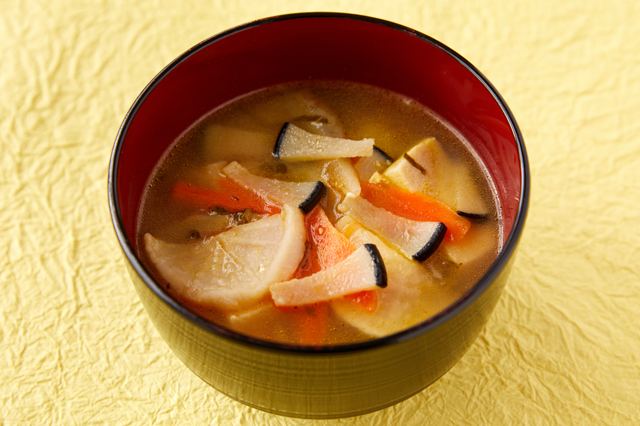
| Prefecture | Aomori (青森県) |
|---|---|
| Region | Tohoku |
| Japanese name | くじら汁(くじらじる) |
| Reading | Kujirajiru |
| Home area | Lower-Santa, Edo. |
| Main ingredients | (The salted fat of whales) |
History and Origins
Since there once was a whale base in Yado City, a nearby food culture developed. To the extent that they said, "A whale can live seven years," the whale was a delightful food that brought profits locally. Tastes vary from part to part, but using them as "Fool" is the base part of the spine called "white." It's a fat pile, so I repeatedly pour it over and over again and cook it after I drop the extra fat. It is hoped that New Year will be followed by a huge whale, even by New Year's celebration. "Let the New Year be a big one."
When It Is Eaten
It's a celebration for old age and New Year's. Sometimes it's boiled with a baked bowl. Even in modern times, at the end of the year's market and at supermarkets, people have been salted for soup. I put a few vegetables and tofu in a large pot and eat from New Year's. The oil came from the whale and would be delicious as the days go by.
How It Is Eaten
It is important to cut off the excess fat by roasting (the whale's basalt) from the hot water. If you hold on to this, you'll be completely degreeted, and you'll have a dusty sense of food. It'll also serve the condensed flavor and make the whole juice taste good. It's typical to wear something with potatoes in roots such as radish, carrots, rice and so on.
Recipe — Serves 5
Ingredients
- 100 g クジラの塩漬け (脂身)
- 150 g carrot
- 100 g burdock root
- 10 daikon radish
- 3 frozen tofu
- 5 potato
- 高菜の塩漬け (green onion), to taste
- miso, to taste
- soy sauce, to taste
Method
- Carrots, mushrooms, mushrooms, and eggs are in the water. I'll cut the potatoes.
- Cold roots, frozen tofu, can be boiled and cooked well. The frozen tofu is cut into about three millimeters thick.
- Whale salting is about half a millimeter long, or cut short, and quickly wash and release salt.
- He heats a large pot, puts three whales in it, roasts them, and oils them out.
- Carrots, rice, potatoes, fried potatoes, cold roots in order, and cold roots in order to water them when they are dry.
- When the potatoes are cooked, I'll put in a taste bowl and add frozen tofu and soak them in.
- Add a carved vegetable paddies and add a little soy sauce to your taste.
More About Kujirajiru
Whale juice is Japanese native food. It's a soup made from whale meat.
It used to be popular food everywhere in Japan.
Edo
The whale juice has become the winter word in the haiku.
During the Edo, whale juice was eaten, but there was no frozen storage technology, and whale meat used by locals is different.
Since Kyushu was able to capture whales from the state of Chihuahua, so some raw whale - meat soup was eaten. Kyoto, leathered whale meat, or salted meat is used. Iwahara's "The Lord of the World" by Iseshima, Iwahara's "The Lord of Japan" is a performance of Kyoto, but there will be a "Sweet Snatcher's Snack." I use a salt diet of fat layers of black skin.
Edo
The Edo, which was done on December 13th in the old calendar, was followed by the practice of playing whale juice, while the head was being raised, and the use of whale meat was so large that it was called "one day for five fish in the Edo" and so much whale meat. It was also considered to have been one and sixteen sentences, and it was also a common food of the same price.
Hokkaido
In Hokkaido, whale juice is eaten in the south of the country. It's called a weak soup.
It's an essential dish for New Year's Day, and every year, as New Year approaches, you learn to boil whale meat fat in large pans and winter vegetables and salted mountain vegetables and to eat New Year's Day. The vegetables do not boil down because they are reheated and eaten repeatedly. The flavoring is common in soy sauce.
The south side of the road was the rise of the sea fishing for herring from the late Edo to the Mexical Age, but the whale that chased her to shore was called a lucky animal. It is said that whale juice can be eaten in New Year's because of a prayer for a fish fish fish that begins in early spring. We can also eat it in the year or New Year's Eve with the promise "Be a big whale!" in the form of a big whale.
Aomori Prefecture
In Aomori Prefecture, whale juice is eaten in the northern Peninsula and in the city of Edo.
Yado City has a whale base and a culture of whales.
The skin of the whale, called "white," is the base part of the whale meat, and the lump of fat is poured in, or it is boiled, and it is fried, and it is made into a lot of juices, such as dacun, carrots, and yams. For New Year's Day, it's sometimes made of baked horn and steamed. A New Year's celebration is also a gift to the big whales, as they say in their big game, "Be big."
Japanese whalers have been banned in 1988, and commercial whales have not been used until the year 2019 again, and the younger generation, particularly, has lost their culture in whale food, including whale juice. Although it was once eaten on a daily basis, whale meat has been reduced in access to it, and it is not made at home except in New Year's.
Yamagata Prefecture
In Yamagata Prefecture, salt juice is eaten all over the province. Tastes are often used to mask the smell, but sometimes they are salt or oil.
The whale-skined fat-salted smudge was prized in the mountain area as a source of stored animal protein. It's a dish cooked with summer vegetables and salt sticks, such as fresh potatoes, eggs, and seya ingen, to prepare for hot summers.
In the village area, it's called lye, and in the top part of the country, it's called lye, or lye, because of the hand-scrolling of the rice of the mountain.
Niigata Prefecture
In Niigata Prefecture, whale juice is eaten in the junior and junior regions.
The Niga is a land based on the influence of the North Bank and the culture of many Japanese countries, but whale juice is one of them. The meat of the whales caught in Western Japan was salted and transported by the northerly ships to the new lagoon. The fat of whale meat, which contains so much unsaturated fats, was eaten as a stamina diet in the freshlands especially during the hot summer months. It is characteristic to add local bollus, which is eaten mainly by the taste-driven diet, but sometimes it is eaten by the soy sauce. The salted whale meat was also eaten by being carried to mountains away from the sea because it was suitable for preservation.
In the Niigata City area, there are a lot of eggplants, and in the Central region, yugaos are often used together, and they are eaten often in summer. In Agaga, and other sub-clinical regions, the yaws of the mountains are often used, and they are eaten well in spring.
As with other families, home-made opportunities are reduced, and they are introduced to the school food menu from the point of knowing Japanese traditional diets, as well as served in restaurants and liquor stores.
Fukushima Prefecture
At Iseshima, during the Edo, salted whale meat was brought in from the Japanese Sea, and it was highly prized as a food for saving.
After the new harvest, coral is made, and you can also eat whale juice with which you can consume fat. Also, if you can provide us with salt, fat and a reasonable supply, we can eat summer-veet prevention.
Text adapted and translated from the Japanese Wikipedia article 鯨汁 by its contributors, licensed CC BY-SA 4.0.
Dish data: Ministry of Agriculture, Forestry and Fisheries (MAFF), “Uchi no Kyodo Ryori” (Our Regional Cuisines) database, used under the Public Data License (PDL1.0); translated and adapted from the Japanese original.