Home / Yamagata / Kukitachihoshinonimono
Kukitachihoshinonimono くきたち干しの煮物
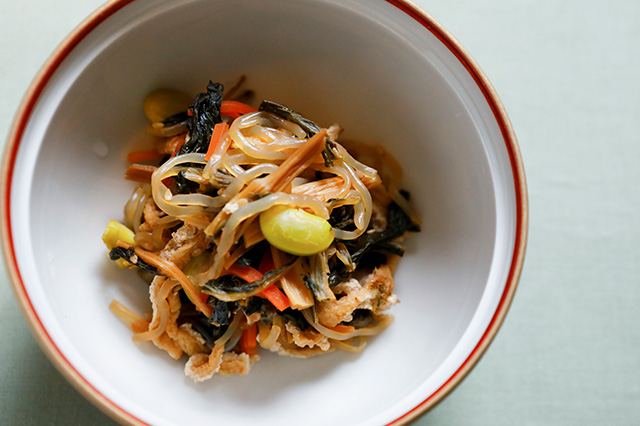
| Prefecture | Yamagata (山形県) |
|---|---|
| Region | Tohoku |
| Japanese name | くきたち干しの煮物(くきたちほしのにもの) |
| Reading | Kukitachihoshinonimono |
| Home area | (USE OF U.S.A. |
| Main ingredients | I'm going to have to do something about it. |
History and Origins
The "swallow-snake stew" is a native dish made of abrana vegetable. They have a strong life force and can be harvested one after the other because after they have picked the core, the side branching comes up. We'll boil the seeds in spring, and then we'll have four to five days sun dry, and then we'll finish up the dry and we'll call this "screw dry." Keeping a little trouble when we dry is the trick of making a delicious dried dish. Keep this in bags and other bags, although in the past we stored it for wintertime when leafy vegetables would be no longer available, it is still eaten as a delicious food. Some vegetables, called berries, have different leaf shapes, all pointing to Abrana's vegetables and calling them by the same name. Any type of leaf can be dried out.
When It Is Eaten
It is often winter to eat as a stew, but the harvest of the ingredients is in spring itself. In the direct sales shop, quick and easy droughts are sold. Once upon a time it was the farmer's custom to prepare dry for winter when the harvest of the cucumbers was finished. It's not unusual for people who still grow vegetables and other domestic animals.
How It Is Eaten
Put a bowl full of dry, dry water and put it on fire. When it is boiling, put it back in the water for the night. If you cut it to about three centimeters, I'll roast it and boil it. If you put the steam oil in for the finishing touches, the flavor will be added and it will taste delicious. Basically, I eat as rice. There's no rule for cooking with ingredients and you can combine them with the vegetables of the season. For dry or dry dishes, I often use peas together. After wet the soybeans a little with wet frickins, we ground each one with a wooden rod, which is an excellent food that can be used for cooking without having to be soaked overnight like normal beans. We cook together, and the flavor of the beans will also come out, so it is often used when boiling the pepper or the pepper.
Recipe — Serves 4
Ingredients
- 20 g(150 g) 干しくきたち
- 20 g crushed soybeans
- 1 aburaage (fried tofu pouch)
- 80 g konnyaku noodles
- 40 g carrot
- 1 tbsp 1/2 soy sauce
- 1 tsp mirin
- 1 tbsp 1/2 oil
- 1 tsp sesame oil
- 5 g( to taste ) niboshi (dried sardines)
- water (ひたひた程度の分量)
Method
- Wash the soap, put it in a pot, fill it with plenty of water, put it on fire, boil it. When the water gets cold enough to hold it in, it relaxes and starts to fight lightly, and then turns on it for the night.
- So wash the backseats, cut them into about three centimeters, and narrow down the moisture. I'll put the beans in a small amount of water.
- Oiling is poured in hot water to cut oil and cut into pieces. Even if the thread is loose, I cut it in the right length. Carrots will be cut into three-centimeter strips. I'll take the head and the entrail and cut it in half.
- Heat the oil in the pot, and roast the carrots and thread. Put water in the pan, dip beans, oil, boil, and heat, and put it on the fire. If the cucumbers and carrots are soft, add flavors, reduce the fire, and cook them until the water runs out.
- The last thing you can do is to put in some sesame oil and pick up some flavor.
Dish data: Ministry of Agriculture, Forestry and Fisheries (MAFF), “Uchi no Kyodo Ryori” (Our Regional Cuisines) database, used under the Public Data License (PDL1.0); translated and adapted from the Japanese original.