Home / Kyoto / Mibunanokarashiae
Mibunanokarashiae 壬生菜のからし和え
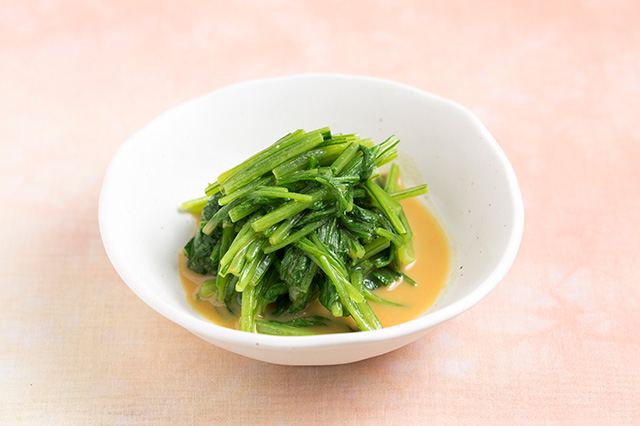
| Prefecture | Kyoto (京都府) |
|---|---|
| Region | Kinki |
| Japanese name | 壬生菜のからし和え(みぶなのからしあえ) |
| Reading | Mibunanokarashiae |
| Home area | Kyoto City |
| Main ingredients | Soybeans and bitterako. |
History and Origins
"Don't be afraid" is a traditional Japanese vegetable that originated in the area of Kyoto City. In the 1800's, it is reported that a variety of citrus plants was born by natural mixing. Although it's not clear when it came to being distinguished from herbana, the information left in the original cultural year 1804 says, "There's a citrus plant that grows in a plant." Unlike herbs, they have no cracks in the leaves and are characterized by round spoons. Compared with vegetables, as compared with fresh flavors, there are a lot of bitter and bitter flavors. Although it is grown within Kyoto City, the main source of the country is Yoshiyumi City, Nan City. The striped soil is also grown for making goods, but the annual growth at the Villar House is also used. It's been harvested about five times a year. Kyoto Prefecture has determined that vegetables grown in the government from old age are "Kinya traditional vegetables" and are working on Bursham. In the branding process, there are defined things that were introduced before Miyagi, and within the government, there are mushrooms and sea horses, and so on. The rice plant is used in a wide range of dishes, including rice, shallows, salads, soups, and so forth.
When It Is Eaten
The rice plant, used mainly as a "1,000-packed" raw material in the large stock, will be marketed around December. It peaks in January and is sold until about March, but growing in small plants like vegetable plants has been established in recent years. Since the first year of growing vegetables, it's easy to get them all year round as a brand representing Kyong-yeon vegetable. The mustard is made at home as one of the main dishes of the soy sauce.
How It Is Eaten
The boiled vegetable is cut to about an inch [1 cm] and eaten after it is mixed with flavors such as peppers and citrus sauces. Because the length of the citrus plant changes the flavor, and the flavors vary, so recipes vary in each household.
Recipe — Serves 6
Ingredients
- 300 g 壬生菜
- Mix: 1 tbsp soy sauce
- Mix: 1 tsp 辛子
- Mix: a pinch mirin
Method
- The citrus plant boils salt in boiling water.
- Cut to about two centimeters.
- Cut the water and cool it down so we can have a good A.
Dish data: Ministry of Agriculture, Forestry and Fisheries (MAFF), “Uchi no Kyodo Ryori” (Our Regional Cuisines) database, used under the Public Data License (PDL1.0); translated and adapted from the Japanese original.