Minazuki 水無月
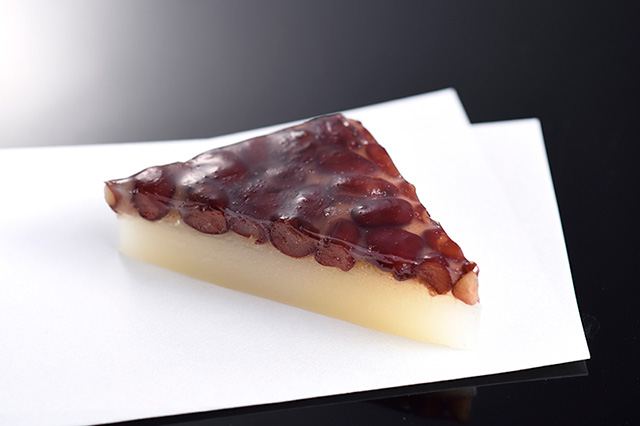
| Prefecture | Kyoto (京都府) |
|---|---|
| Region | Kinki |
| Japanese name | 水無月(みなづき) |
| Reading | Minazuki |
| Home area | The whole area. |
| Main ingredients | Hey, little bean. |
History and Origins
The "Nin without water" is also the traditional local sweet that has been eaten all over the country. The beans are served on white wax and cut into triangles. Peacetimes, the people in the temple were talking about the ice that they had stored in the ice chambers of the northern western bush. Ice was a luxury at the time, and there was little opportunity for the common people to say it. From there it is reported that he began to eat the "Nins without Water," which is the figure of the ice. At Kyoto, on June 30th, there will be a god in various shrines who cleanses the "Sin's Decontamination" for half a year from January to June. It's the "Noon of Water" that is eaten in the hope of paying for sin and not dying." The triangles resemble hot ice, and the red of the beans means that they are innocent. Kyoto Prefecture specifies "Nursing No Water" as an artistic food based on a royal culture, tea culture, which is grown in Kyoto. In the case given, they set the criteria for everything that they do by hand and their wooden molds as hand-sharp.
When It Is Eaten
The god who prays for a disease-free disaster on June 30th, the second of the year, is rooted as an animal food at the "Small-Small-Small-Small" meal. By June, "Noons of Water" will line the shelves of Japanese candy stores, supermarkets, and so forth.
How It Is Eaten
The wax dough is poured into a sponge to be steamed, and large-sized peas and sweet nattos are arranged together, and then resuscitated and eaten. It is common to buy ready products. If you keep it a little cool before you eat, you will enjoy the sweet flavor. In recent years not only white and white, but also variations with modern ovens, such as brown, black sugar, and indentation, are sold.
Recipe
Ingredients
- 90 g wheat flour (cake flour)
- 10 g rice flour
- 80 g sugar
- 100 g sweetened beans
- 300 ml water
- 1000 ml) milk
Method
- (1) Cut only one side of the milk pack and make a sink. I'll keep the plate of the milk pack from leaking with long gum tape. (2) If you use sugary sweet natto, wash it and drop it. (3) In the bowl of flour, rice flour, and sugar, add a little water so that you don't get distracted, and then paste it well.)
- (1) Lay down the one made with (1) and scatter the sweet beans at the bottom, and let the zygote flow slowly.
- We wrap the mold and heat it for six minutes at 600W range. Depending on the number of watts in the microwave range, heat time will be reduced.
- It'll be naturally cool for a while. It'll cool in the refrigerator about 30 minutes before eating.
- With scissors and so on, you cut milk packes in order to be easy to extract, take out no water, cut them into triangles.
More About Minazuki
(Laughter)
The name of the old June in Japan. Today, it is often used as a substitute for the new June. For the past half year's stain, we will eat for the next six months of undisease-free life. It's like having a pea bowl spread over a chocolo, and it's often cut into triangles and sold. The Japanese Imperial Navy's destroyer. - The first and the divine form of destroyer. - The sixth ship of the moon-like starship. A single person at Toshimoto. See the song "Sunless Moon." I'm going to have to go to Rariana's album. See the albums.
Text adapted and translated from the Japanese Wikipedia article 水無月 by its contributors, licensed CC BY-SA 4.0.
Dish data: Ministry of Agriculture, Forestry and Fisheries (MAFF), “Uchi no Kyodo Ryori” (Our Regional Cuisines) database, used under the Public Data License (PDL1.0); translated and adapted from the Japanese original.