Home / Ishikawa / Namakonosunomono
Namakonosunomono なまこの酢の物
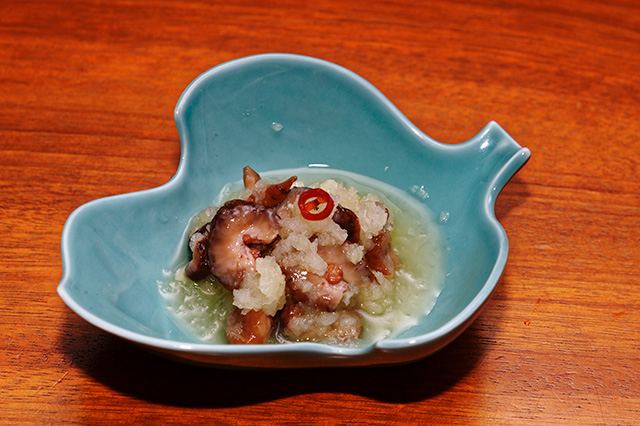
| Prefecture | Ishikawa (石川県) |
|---|---|
| Region | Chubu |
| Japanese name | なまこの酢の物(なまこのすのもの) |
| Reading | Namakonosunomono |
| Home area | Around the Seven-Tree City. |
| Main ingredients | Great root |
History and Origins
I'm going to set up as the winter taste of Tsukishima. The history of Japan is said to date back to about the eighth century. (The brief note of a clay document out of Hijigi Hijigi Hijijigigigi) says that he carried six Japanese rice plants to the capital. It is said that "the festival of the climb" is composed during the middle of peace and the morning court ceremony is instituted. The Seven-Tree City on the Bay of Sevenths is known as this special location. The seven-bets, surrounded by mountains, are soft and tasty because the waves are soft. There was fishing by small bottom net, and in the late '40s and '60s, he boasted over 1,000 tons of fish. Today it has fallen to 300 tons, but most of the catch in the entire county is made up of seven-year-old fish. It is made by hand, it is made into such products as cicadas and this salted enema. It is transferred abroad. The "The Unsullied' item" is known as the regular dish with the Japanese mushrooms and is also popular as a wine dish. The "screw" that dried this eggs is a rare delicacy. In the spring, the dry fig, exposed to the cold wind like a sponge, is a local wind poem.
When It Is Eaten
The fishing in the province can continue until November and April. When it comes to climbing, the kites will be fried. The color of the fish is different from the color of the fish, and is chosen for the high-end foods and local consumption. Locally, they eat mushrooms in a variety of cooking methods, but among other things, the "silver of vinegar" is rooted as a regular dish.
How It Is Eaten
Wash the surface well, cut off the entrails and mix them with vinegar. The scent of the gums and the strong pox is characteristic. In addition to using salt, it's good to remove the skin stains, wash them quickly, cut the underside of the belly, and wash the parts of the internal organs thoroughly.
Recipe — Serves 4
Ingredients
- 100 g なまこ
- 150 g daikon radish
- (A) 1 tsp sugar
- (A) 1 tbsp vinegar
- (A) 1 tsp miso
- (A) 5cm long green onion
Method
- Cut (from the center to the abdomen) and double it, and remove the entrails and cut the hard part of the mouth). We wash the sand clean with water. It's not thin, but it's raised to water.
- Put the root down and drain the water.
- I'll mix the root of the true two together.
- A flavors add to the taste and you can cut three and long sleeves.
Dish data: Ministry of Agriculture, Forestry and Fisheries (MAFF), “Uchi no Kyodo Ryori” (Our Regional Cuisines) database, used under the Public Data License (PDL1.0); translated and adapted from the Japanese original.