Omizuke おみ漬
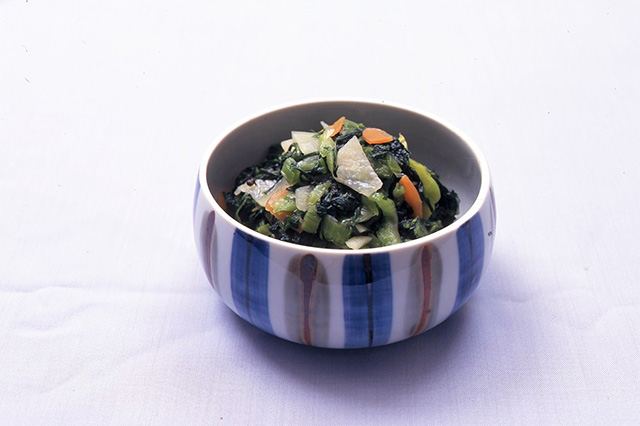
| Prefecture | Yamagata (山形県) |
|---|---|
| Region | Tohoku |
| Japanese name | おみ漬(おみづけ) |
| Reading | Omizuke |
| Home area | Villages, Tops, and Lands |
| Main ingredients | (Laughter) |
History and Origins
Yamagata Prefecture. The "Ouji" is a vegetable with a type of vegetable, and is one that represents Yamagata Prefecture. Abeaki is a species that is said to have come from China's main plant in the year 1910, and Yamagata Prefecture in the year 1841. The result was that the quality was better than the traditional vegetable vegetables, such as the vegetable garden, and so it turned out to be better than that of the vegetable garden. From the beginning it became possible to harvest, entered the Shoichi, and the cultivated area expanded from the village area to the periphery. Mountain greens are about 500 grams per share, are between 70 and 80 centimeters in size, and are large. Since the "Azu" has often eaten the meaty stems and has sometimes discarded leaves, it is too expensive to spare, thanks to the fact that the coconut has been carved into pieces by a merchant from the Kougawa, and that the name comes from another word that is said to have become "you" because of the struggle with carved vegetables. This is how the "Sui" has developed as a wisdom to use all the extra vegetables. Not only the variety of vegetables we use, but also the variety of vegetables we have, we have also carved them into pieces, everything that was missing.
When It Is Eaten
Mountain greens are harvested between late October and mid- November. It's big and has a stock of between 70 and 80 centimeters. You're also being eaten in New Year's. Many families make "obe" that is easier to make during the season of the Yamabea vegetable.
How It Is Eaten
Centered on mountain greens, we carved vegetables from the time of the year, such as radishes, carrots, and so on, after we have salted them for a while. Eating with rice, of course, is a common dish that can be used for various uses, including the cuttings, tea, and chahan utensils. These days, you may be able to make some vegetables between the mountains and be eaten before the winter cereal, which represents the mountains, comes out.
Recipe
Ingredients
- 1 kg leafy greens
- 200 g daikon radish
- 80 g carrot
- 150 g きくいも
- 100 g shiso buds (塩漬け)
- 45 g(3%) salt
- 20 g( to taste ) 黄菊 (edible chrysanthemum)
- 30 g( to taste ) ginger
- Mix: 50 g(3 tbsp) soy sauce
- Mix: 10 g coarse sugar
- Mix: 35 g mirin
Method
- Wash the green vegetables, cut the wide area by half. Cut the width by seven millimeters. Ota, carrots are peeled, cut, washed well, and cut with leather.
- A cut vegetable is salted and mixed well. It is packed overnight with heavy stones about twice its weight. And I'll expose the fruit to water and let it be salted lightly.
- The next day, I'll throw away the juice that comes out, wash it clean with water, narrow it down, and drink it firmly.
- The jazuki removes the flower valves from the stove, puts some vinegar in the hot water, and boils it down and drains the water. The ginger will peel and cut the skin into pieces.
- I put A in a pot and boil it once and cool it.
- It's a dish that is soaked and washed and mixed with fruit, citrus, ginger, and five flavored juices mixed over the whole. I'll make sure that the ingredients are soaked in the juice by light heavy stones. (If the water is in there, just remove the stone and cover it.)
- I'll be able to eat it in three days. Since the salt isn't strong, you should keep it in the refrigerator and eat it in about two weeks.
Dish data: Ministry of Agriculture, Forestry and Fisheries (MAFF), “Uchi no Kyodo Ryori” (Our Regional Cuisines) database, used under the Public Data License (PDL1.0); translated and adapted from the Japanese original.