Home / Yamagata / Yukinanofusubezuke
Yukinanofusubezuke 雪菜のふすべ漬け
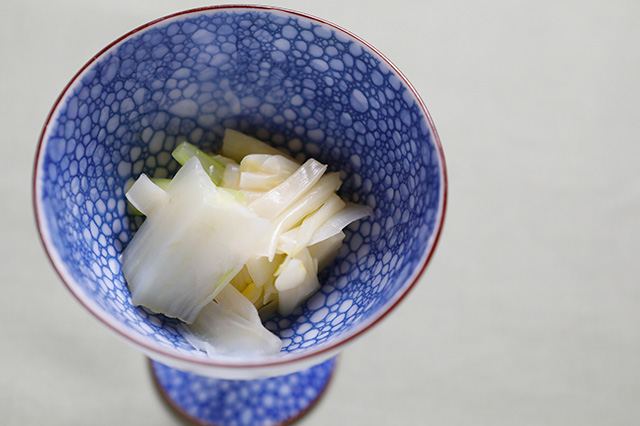
| Prefecture | Yamagata (山形県) |
|---|---|
| Region | Tohoku |
| Japanese name | 雪菜のふすべ漬け(ゆきなのふすべづけ) |
| Reading | Yukinanofusubezuke |
| Home area | Placed area |
| Main ingredients | It's snow-beet and salt. |
History and Origins
The "Smoking of Snowbeams" is a dish made from one of the brandy vegetables in our area, "Snowbets." (The name comes from the Japanese word meaning "to boil down to water.") Snowbeams are soft white vegetables that grow in rare snows throughout the country and are reported to have been encouraged by Lord Osama Tsukayama to grow them in order to secure fresh vegetables in the snow country. It's a vegetable that you can make because of the natural selection of haiku and haiku that you've been exposed to since you left the country. It's a snowy land. Previously called a "Home-Hand-Brow," it was named after Snowbeam in the year 530 because of the improvements and the promotion of cultivation. At present, Yukiko is grown in the U.S. City of Japan. Snowbeams eat the "soons" that grew in the snow. The method of raising them was sown in late August and early September, and in early November, they harvest all the seeds grown from 60 to 80 centimeters of grass. Since snowbeams are vulnerable to frost poisoning, about 12 to 13 shares of them are wrapped in pieces and wrapped around them with rice and mud, they wait for snow to cover them. In the snow that has fallen, the temperature and humidity will be preserved, and the leaves will grow in nutrients, and the leaves will grow in them. The amount of food you eat will be anywhere between 20 and 25 percent when you go to bed.
When It Is Eaten
Snowplants grow in the cold of winter. In the United States, around the Yuzawa district, from New Year's Eve to New Year's, when the cold winter comes, we will be at the market until about mid- March, depending on the setting and the snow conditions. It's also used for salads, but it's the most delicious way to "smooth" it.
How It Is Eaten
"I'm sorry." "I'm sorry." Fresh snows taste a little bitter, but by boiling hot water, you can extract a particular taste. The ingredients are simple only for snowbeam and salt, but it requires a trick to keep the water running. If you do it three times in hot water for three to five seconds, add salt and place it in a thick plastic bag for three days. In a day or two, the taste ingredient will be produced by sleeping for three days. This particular taste component is called the Isotheanate. Because of its excitability, if you keep touching the air, it will disappear, so if you pull it out of the sealed state, it's better to eat quickly. It fits into rice bowls and wine bowls.
Recipe
Ingredients
- 400 g snowbea
- 8 g(2%) salt
Method
- Clean the cabbage clean, remove the blue or the damaged part, and cut it to three centimeters long. The root thick part divides by itself to make it easier to eat.
- I'll prepare a wide pan and a bowl of the same size as a bowl, not to mention the size of it. We boil plenty of water in the pot and prepare cool water for the bowl.
- I'll put the cut snowplant in, put it in hot water for three seconds, and then pull it up immediately. When you have a lot of volume, you'll keep the number of seconds a little longer. The hot water pot will do this work with the fire on.
- If you don't cut the hot water, you're going to turn up and down, and then you're going to put it in hot water for three seconds without doing it again and immediately pull it up. I'm going to put it back in hot water again. The texture of your teeth is important. It's the point to keep a bit stiff, and to keep it before you can get a bit dry.
- To make the whole thing even, I'm going to put on a lid without four snow vegetables in the process, and I'm going to steam it for one and a half minutes with extra heat.
- Soon, in the cool water of the bowl, cool it down, change water, cool it under the running water, and finally drain it.
- Add salt to the fried snowplant and mix the whole thing.
- Put it in a container, double the weight of a snowbeam, and cover your mouth with a thick polyfilic film. When there's no pantry, I prepare as thick a plastic bag as I can, put in a snowplant and shut my mouth tightly and place heavy weight on it. When the water comes up, double the weight and put it in a cool place like a refrigerator.
- It's been soaked up and the third day is bitter and I'm ready to eat. Since the flavor flies after time, you should eat in a week.
Dish data: Ministry of Agriculture, Forestry and Fisheries (MAFF), “Uchi no Kyodo Ryori” (Our Regional Cuisines) database, used under the Public Data License (PDL1.0); translated and adapted from the Japanese original.