Sasazushi 笹ずし
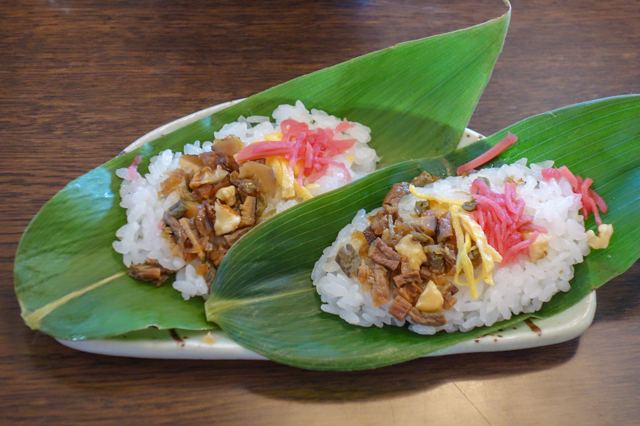
| Prefecture | Nagano (長野県) |
|---|---|
| Region | Chubu |
| Japanese name | 笹ずし(ささずし) |
| Reading | Sasazushi |
| Home area | Iseyama. |
| Main ingredients | The leaves of rice, rice and rice. |
History and Origins
It's a local dish that runs across the XNiigata Prefecture area. In a 12-year struggle between Ursa and Nakashima, a military route was important. It's also said that it was the beginning of the first time that I was run over by the forces of Tsunobuji, and there are other theories. It is also said that the leaves of the plant were poisonous, and that they had a permafrost effect, and that Osama was carrying a stamensai as a food preserver during battle. From the background of that history, the Japanese Japanese are called "Sushi" in Iyama City. On vinegar rice, the center of the mountain is the spring of the mountains, and the top of the rice is covered with rich silk eggs and red peppers. Materials are being worked on by local and family workers. Some families mix rice in vinegar rice, while others use it in a variety of flavors. In the past, families made it when there were celebrations, festivals, etc. It was a simple dish for Hale's day. It was named Nagano Prefecture in 19 years of age. There is also the theory that the villages of Toshishio have begun a journey by using a bowl instead of a vessel and with rice and rice in order to make rice.
When It Is Eaten
In any case, they are eaten through the year using seasonal food. There is a custom in Iseyama City that makes a lot of money when there are celebrations, festivals and other events.
How It Is Eaten
Even if you don't use chopsticks, you can easily grab and eat with your hands. The way you eat is by holding the cucumber in your hand, slide it down, and eating from a distance.
Recipe — Serves 4
Ingredients
- 3 cups rice
- 1/3 cups(1) glutinous rice
- 31/3 cups water
- 25 bamboo leaves
- Vinegar: 1/2 cups vinegar
- Vinegar: 1/2 tsp salt
- Vinegar: 3 tbsp sugar
- Mix: 100 g miso-pickled daikon
- Mix: 2–3 dried shiitake mushrooms
- Mix: 2 tbsp oil
- Mix: 100 g zenmai (royal fern)
- Mix: 5 g shaved bonito flakes
- Mix: 1 tsp sugar
- Mix: 30 g pickled red ginger
- Mix: 20 g walnuts
- Mix: 1 egg
- Mix: as needed sugar
- Mix: a pinch salt
- Mix: a pinch oil
Method
- Mix rice with rice and rice, store it an hour ago, and cook it in quantity. If I cook it, I'll steam it for ten minutes, and I'll stir it up while it's hot, and then I'll shake it with vinegar and cut it off.
- Eggs are tasted with sugar, salt, ground with baked eggs and cut into short pieces or roasted eggs.
- I'll cut the seasoning into thin pieces about five millimeters. The water is cut to the length of one and a half centimeters, and then lightly cut and cut. The dried grain will be boiled, and the stone will be removed and cut into thin pieces.
- Hot oil in the pan, and then dry it quickly. Add it to the cooking, stir it, paste it, and sugar to make it taste better until the water runs out.
- Cut off the root of the leaves a little bit, and the tip is cut diagonally and wiped thoroughly with the right size.
- Put a glass of water on your hand and pick up a small handful of rice, spread it out in an ellipse shape on your table, and put the middle of it.
- Put four on top, two and red, but you can color the stain better. Press the bow with your palm and push lightly.
- I'll put the leaves on top of the bowl and hold them with my hands lightly. There are ways to make a wind wind with a single square box with a layer of wood and a layer of wood.
Dish data: Ministry of Agriculture, Forestry and Fisheries (MAFF), “Uchi no Kyodo Ryori” (Our Regional Cuisines) database, used under the Public Data License (PDL1.0); translated and adapted from the Japanese original.