Gojiru 呉汁
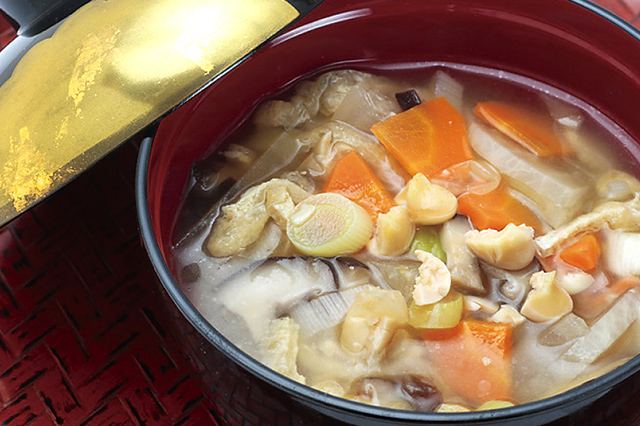
| Prefecture | Gunma (群馬県) |
|---|---|
| Region | Kanto |
| Japanese name | 呉汁(ごじる) |
| Reading | Gojiru |
| Home area | Omorisho City |
| Main ingredients | Soybeans, taste buds, early vegetables. |
History and Origins
On the horse that grows in abundance of crops, it produces a lot of delicious beans. As a county, they have established a "The Council of the Great Giants" meeting, and they instruct in the cultivation of soybeans, and they try to improve the quality of the peas in a new species, such as producing "The Smile of the Rural." The traditional dish of horse horses where good beans are harvested has been eaten since the time of the "Sing" - the juice that has been ground on the beans. By calling the soy sauce "snake," it has become called "me." Soybeans are called "the meat of the field," and they are rich in nutrients. The meat and fish were valuable in times when food was scarce. Also, the soup was known as a native dish with a good nutrition to add a good amount of early vegetables.
When It Is Eaten
During the fall and winter season when new beans are harvested, fresh beans are ground and we enjoy the season with the vegetables. The juice that enjoys the flavor of vegetables and the taste of soybeans has been eaten as a warm dish, especially during cold weather. It's one of the ones worked so that you could taste the flavor of your season. By the way, in some areas, we may use the branch beans before they become soybeans, and in that case we will have green - green juice.
How It Is Eaten
I cut vegetables such as carrots, radish, rice, and so on to the size that I can easily eat, but I cook them and paste them and add some of the beans and seasonings. It is common to stand on a table as a soup, but you can put fat noodles in them like a duck and eat them like a staple food. I hear that school meals in the province sometimes include putting beans in instead of beans and finishing them easily.
Recipe — Serves 4
Ingredients
- 150 g soybeans
- 80 g daikon radish
- 40 g carrot
- 2 fresh shiitake mushrooms
- 40 g burdock root
- 6cm long green onion
- 1 aburaage (fried tofu pouch)
- 4 cups dashi stock
- 2 tbsp miso
Method
- I'm going to have to take some steamed peas and a good amount of water to make a blender.
- Carrots are tall and cut into slices. I will cut the raw meat in half and cut it into slices. Oiling is oiled and cut into short books. I'll keep the long sleeves cut.
- Add two to the soup and cook it. When you get soft, add one crushed pea and cook more.
- When enough fire is done, you can taste it and taste it.
More About Gojiru
The lye is a grounded bean. (See the tofu that is in the state of the tofu (before it is filtered into a cob milk).) It's also true that a paste that is soaked in water and crushed and crushed is citrus, and the paste that is put in the sauce is lye.
On the other hand, in dyeing crafts, sooty protein is used to enhance dye fabrics, and so forth.
Native food.
It's a native dish that runs across Japan. From autumn to winter, when large beans are harvested in the fall, all the other ingredients that are not in the soup are from carrots, radishes, soo, soy sauces, tofu, fried, oil, and so on, and so on. With the abundance of crushed beans and vegetables, yuzu has been known throughout Japan as a native food for winters. It's sometimes eaten in a reward class.
The citrus juice with crushed branch beans is called a citrus or a citrus lye.
Origins
The origin of lye is not known. It's the theory that yu (u) means crushed peas and that it's an introduction from sound, and that it has nothing to do with China's dynasty or Hiroshima Prefecture. There is a theory that it's a delicious dish with boiling salt and raw pork added white to the sauce, with a thin skin and crushed branch beans, and with a delicious, citrus-breasted dish.
The juices from all over the place.
Miyagi Prefecture
Soy harvest season and body heat are eaten in winter. They are usually eaten as household food.
You dip soybeans in water, and then you grind up the succulent ones, and then you make a citrus. You can put "u" in the soup with vegetables.
Toyama Prefecture
I sometimes use the sauce with the sauce.
Fukui Prefecture
It's not only one of the best dishes conducted in a reward class, it's also served at weddings and legal matters.
Dishwork
In dyeing crafts, it is used to enhance dye fabrics, to make designs easier to paint, and to suppress textures. If you have handicraft dyeing, if you have it on cloth, it will make it as easy to paint as it is on paper, and it will be good and easy to keep it in check. But concentrations and number of paints are often used based on habits and experiences.
In Gifu Prefecture, county sequester Gifu Prefecture, vital culture, lye is used to produce lye.
Text adapted and translated from the Japanese Wikipedia article 呉汁 by its contributors, licensed CC BY-SA 4.0.
Dish data: Ministry of Agriculture, Forestry and Fisheries (MAFF), “Uchi no Kyodo Ryori” (Our Regional Cuisines) database, used under the Public Data License (PDL1.0); translated and adapted from the Japanese original.