Shumai シューマイ
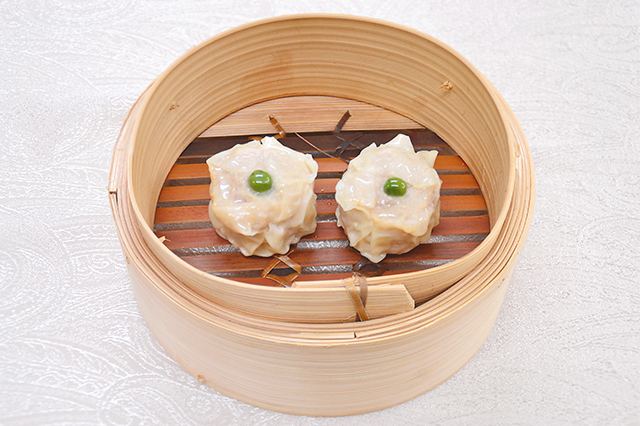
| Prefecture | Kanagawa (神奈川県) |
|---|---|
| Region | Kanto |
| Japanese name | シューマイ |
| Home area | Yokohama City, Kanagawa Prefecture |
| Main ingredients | It's called the "Snack of the Snack." |
History and Origins
Yokohama City is the largest city in Japan that uses the shumi. While Yokohama City is more than twice as much as 2,248 yen (excluding frozen foods and meals in restaurants throughout the country) for the average annual consumption of $1,093 yen (excluding foods). Then the city of Kisaki will be followed by 1,951 yen. As a factor, the existence of the Tokyo Chinese China Street, the Chichii Shii or the Mecca of Chinese food, known as Yokohama's best - sellers, is a big factor. Sakiyaki was founded at the first Yokohama station in 2008. With the tip of a sauerkrama offered as an introduction in the Tokyo City area, he used dry, sail-stuffed snails for equipment, developed a delicious "swing" cool but he started selling it for the train passengers in the year 1. In time, Chichiichi Shima became known throughout the country as a souvenir to Yokohama. In addition, since Yokohama also has a strong image of Chinatown as a tourist spot, it can be thought that the Shumai itself was set up as a masterpiece of Yokohama. Even more, the shop in Sasai, located on every train station within Kanagawa Prefecture, is now a familiar landscape for the locals. the Ministry of Internal Affairs and Communications Family Survey.
When It Is Eaten
It is readily available in supermarkets and conveniences, whether as a citrus or as a tool, and can be eaten throughout the year, regardless of the season. In addition to being known nationally as home food, there are restaurants around the center that handle Chinese food. There are also many stores that pour on Swmei in Yokohama China. Also, in Kanagawa Prefecture, there is a side to it as a regional masterpiece, so it's also handled by tourist corners and souvenir shops.
How It Is Eaten
A well-dressed pig meat, add flavors such as sesame oil and oisster sauce, and onions and other ingredients, and mix them together to make a tannet. I'll wrap it up and steam it up and finish it. By the way, if you add green pieces to your shoe, it's usually placed on top of the board.
Recipe
Ingredients
- Mix: 200 g 豚モモ粗びき肉
- Mix: 30 g egg
- Mix: 3 g salt
- Mix: 10 g sugar
- Mix: a pinch pepper
- Mix: 6 g oyster sauce
- Mix: 3 ml soy sauce
- Mix: 5 g sesame oil
- Mix: 40 g タマネギみじん切り
- Mix: 10 g potato starch
- 10 green peas
- 10 シューマイの皮
Method
- Put a sieve in the bowl and paste it until the meat fibers are crushed.
- Add the citrus to the paste and mix it until the whole thing has a taste.
- Add a sieve to the paste and mix it. By putting the seasoning fee in order, we can draw out the elasticity and flavor of meat. And adding oyster sauce will enhance the smell and moss. The ground beef is always used on the day's end, and it uses 100% pork.
- I'm going to put a three-scissor sauerkraut in the center of the shoe-skin.
- If you put your wrapped shoe around it and place your packing sheet on top of it, then you'll be steamed with a boiling steamer for about seven minutes. If you stop the fire, you'll be steamed for one minute. By boiling the juice for a minute, you can make a nice, yew-sai without letting it out.
More About Shumai
Shumai (simplified Chinese: 烧卖; traditional Chinese: 燒賣; pinyin: shāomài; Cantonese Yale: sīu-máai; Pe̍h-ōe-jī: sio-māi; Wugniu: sau ma) is a type of traditional Chinese dumpling meat made of ground pork. In Cantonese cuisine, it is usually served as a dim sum snack, and is served with an additional serving of soy sauce. In addition to accompanying the Chinese diaspora, variations of shumai can be found in Japan, Southeast Asia, and South America. Variations include the Hawaiian pork hash and the Indonesian siomay. In Australia, it developed into dim sim.
Popular Chinese varieties
Cantonese siumaai
This is the most well-known variety outside of Asia and is from the southern provinces of Guangdong and Guangxi. As prepared in Cantonese cuisine, siumaai is also referred to as "pork and mushroom dumpling". Its standard filling consists primarily of ground pork, small whole or chopped shrimp, Chinese black mushroom, green onion (also called scallion) and ginger with seasonings of Chinese rice wine (e.g. Shaoxing rice wine), soy sauce, sesame oil and chicken stock. Bamboo shoots, water chestnuts and pepper can also be added. The outer covering is made of a thin sheet of lye water dough, which is either yellow or white. The center is usually garnished with an orange dot, made of crab roe or diced carrot, although a green dot made with a pea may be used. The decorative presentations vary.
A fish paste variety of siumaai is sold as a popular street food in Hong Kong, usually alongside curry fishballs. It is most often eaten with a sweet soy sauce and/or chili oil.
Pig liver shiumai (豬潤燒賣) is a variety of shiumai sold at traditional tea houses such as Luk Yu (陸羽茶室) and Lin Heung Tea House (蓮香樓).
The Hong Kong Siumaipedia was written to document the Cantonese variety.
Hohhot shaomai
Hohhot shaomai is a regional variety in Hohhot, Inner Mongolia.
The wrapping is a very thin, round sheet of unleavened dough, with a pleated border. There is only one kind of filling, which mainly consists of chopped or minced mutton, scallion and ginger. Hohhot shaomai features this extensive use of scallion and ginger, creating a dense combined scent, and a slightly spicy taste. The filling is put in the center of the wrapping and the border of the wrapping is loosely gathered above, forming a "neck" and a flower-shaped top. It is then cooked by steaming or pan-frying. Hohhot shaomai is served in the unit of "liang", which means either eight steamed ones served in a steamer tier, or eight fried ones served in a dish. "Liang" is equal to 50 grams, is traditionally used as an indication of the total weight of the wrapping. Hohhot shaomai is commonly served with vinegar and tea, due to its greasiness.
Hunan juhua shaomai
Called the chrysanthemum shaomai (菊花燒賣), this variety is made in Changsha (長沙), Hunan province (湖南). This shaomai is named for its opening resembling the chrysanthemum flower petal shape. It is spicy with pepper and the wrapper is translucent. The filling largely consists of glutinous rice, pork hash, shrimp, shiitake mushrooms, bamboo shoots and onion.
Jiangnan shaomai
Shaomai common in the Jiangnan region (stretching from Shanghai to Nanjing) has a filling similar to zongzi from the region, containing marinated pork pieces in glutinous rice, soy sauce and Shaoxing wine, steamed with pork fat. It is larger than the Cantonese version.
The Shanghai variation also contains shiitake mushrooms and onion. The mince, mushrooms and onion are stir-fried before being prepared as the filling.
Another type of Shaomai prepared in the region contains minced pork and bamboo shoot pieces. Xiasha Shaomai is a famous traditional snack from the Xiasha Old Street in Nanhui, Pudong, Shanghai, and Fengjing Shaomai is a traditional, intangible cultural heritage snack from Fengjing Ancient Town in Jinshan, Shanghai; the former uses spring bamboo shoots and the latter uses winter bamboo shoots. This type of Shaomai is also common in Jiaxing and Hangzhou.
Uyghur shaomai
In northwest China, the Uyghur people of Xinjiang adapted shaomai into two regional varieties. The southern Xinjiang recipes differ slightly from the northern version in terms of ingredients and method. The filling of the northern version consists of mutton or beef, along with green onion and radish, whereas the southern filling primarily uses glutinous rice with smaller amounts of mutton or beef. Minced meat from sheep ribs containing some fat is ideal.
Jiangxi Yifeng shaomai
Called the Yifeng shaomai in the southeastern Jiangxi province, this version's distinct flavour comes from a blend of pork mince, bread flour, sesame seed powder, ground pepper and sugar. It is particularly popular in the area of Yifeng Tanshan Tianbao where it is one of the foods eaten during the Chinese New Year celebration.
Variants from other countries
Japanese shūmai
Shūmai in Japan usually use pork and minced onion as the main ingredients and are often topped with a green pea. While the meat filling in Chinese shaomai is usually minced, the meat filling in Japanese shumai is ground to a paste.
Hawaiian pork hash
Pork hash in Hawaii consists primarily of ground pork, sometimes with minced shrimp added. Lye is sometimes used to treat the pork to add a bouncy texture. Ginger, Chinese rice wine, soy sauce, sesame oil, and white pepper are common seasonings to the farce. Water chestnuts and carrots are sometimes added. The outer covering is made of a thin yellow or white dough. Pork hash in Hawaii is fairly large, often the size of a large chicken egg. It is often served with soy sauce mixed with hot mustard.
Indonesian siomay
Siomay or siomai (sometimes called somay) in Indonesia is pronounced the same way as its sisters and is usually a wonton wrapper, stuffed with filling and steamed. It is also served with steamed potatoes, tofu, hard-boiled eggs, steamed bitter gourd and cabbages, all sliced and topped with peanut sauce and kecap manis (sweet soy sauce). Because the population of Indonesia is largely Muslim, Indonesian siomay rarely uses pork. Instead, it is often made from various fish, most commonly wahoo or mackerel tuna, other variants that uses shrimp or chicken is also popular in Indonesia. This variant is less common in Western countries.
Philippine siomai
Siomai ([ˈʃomaɪ]; Filipino: siyomay) in the Philippines is often ground pork, beef, shrimp, and the like. It is combined with extenders like garlic, green peas, carrots and among others which is then wrapped in wonton wrappers. It is commonly steamed, with a popular variant being fried, resulting in a crisp exterior. It is normally dipped in soy sauce with the juice of calamansi, a Philippine lime, and a chili-garlic oil is sometimes added to the sauce.
A recent variant on siomai is wrapped in sheets of laver after the wonton wrappers, which are marketed as "Japanese".
Thai khanom jeeb
Khanom jeeb or written as Khanom chip (Thai: ขนมจีบ; pronounced [kʰā.nǒm.t͡ɕìːp]) is a Thai version of shumai. Khanom jeeb is a Thai term that means "pleated snack", is a staple at Chinese restaurants and dim sum carts. However, there is another type of khanom jeeb that is considered to be a traditional Thai khanom jeeb, which is different from Chinese khanom jeeb. Thai khamon jeeb is mentioned in Kap He Chom Khrueang Khao Wan, a royal poem work of King Rama II from the early Rattanakosin period, more than 200 years ago. Thai khanom jeebs are wrapped in white flour similar to har gow and pleated to form a bird-like shape, hence they are also called "khanom jeeb nok" (ขนมจีบนก; pronounced [kʰā.nǒm.t͡ɕìːp nók]; lit. 'bird-shaped steamed dumplings') and they are not eaten with the sour soy sauce used for Chinese khanom jeebs. They are also eaten with lettuce and chili peppers, just like sakhu sai mu.
For Chinese khamom jeebs or shumei, in some southern provinces such as Phuket or Trang, the dipping sauce is different from other regions, namely, it is a reddish-brown and sweet sauce. Eating khanom jeebs with this dipping sauce is part of eating dim sum and is a common breakfast culture of Trang locals.
Vietnamese xíu mại
Xíu mại in Vietnam has minced pork, onion, scallion and shredded bread as the main ingredients and is cooked in tomato sauce. It is usually served in a roll of bánh mì for breakfast. Because the recipe omits dough wrappings, it is more akin to a meatball rather than shumai.
History
As described by historical materials, shaomai was served in tea houses as a secondary product. The name shaomai (捎賣; 捎卖), means the product was "sold as a sideline", with tea. It is considered to have been brought to Beijing and Tianjin by merchants from Shanxi, causing its later wide spread. The name was later transformed into modern forms like "燒麥; 烧麦", "稍美" and "燒賣; 烧卖", changing the characters while keeping the original shaomai pronunciation. The product was initially in the form of meat and vegetables wrapped in thin sheets, and was sold weighing only the wrapper, a tradition which is still kept in Hohhot. In 2021, "the craft of making Shaomai at Lao Suiyuan" was awarded as a non-material cultural heritage project in Hohhot.
Serving
In Hohhot (Inner Mongolia), shaomai is commonly served as a staple food, especially for breakfast. It is considered a local specialty in regions around Hohhot. Steamed shaomai are served in bamboo steamer tiers, and fried shaomai are served in dishes.
Within the dim sum tradition of southern China, shaomai is one of the most standard dishes. It is generally served alongside har gow, another variety of steamed dumpling containing shrimp, cooked pork fat, bamboo shoots and scallions; collectively these are known as har gow-siu mai (蝦餃燒賣).
In Guangzhou, siu mai (燒賣) and har gow (蝦餃), along with char siu bao (叉燒包), and egg tarts (蛋撻), are considered the classic dishes of Cantonese dim sum cuisine. They are collectively referred to as the "Four Heavenly Kings" of the cuisine. (Chinese: 四大天王; pinyin: sì dà tiān wáng; Cantonese Yale: sei daaih tīn wòhng).
In food stalls in Indonesia, siomai (or "siomay" in local dialect) are eaten together with steamed vegetables and tofu, and served with spicy peanut sauce.
In Philippine food stalls and fast food restaurants, siomai is eaten with dip, toothpicks to facilitate handling, or with rice (using a spoon and fork).
Text adapted from the English Wikipedia article Shumai by its contributors, licensed CC BY-SA 4.0.
Dish data: Ministry of Agriculture, Forestry and Fisheries (MAFF), “Uchi no Kyodo Ryori” (Our Regional Cuisines) database, used under the Public Data License (PDL1.0); translated and adapted from the Japanese original.