46 11 ヒカド
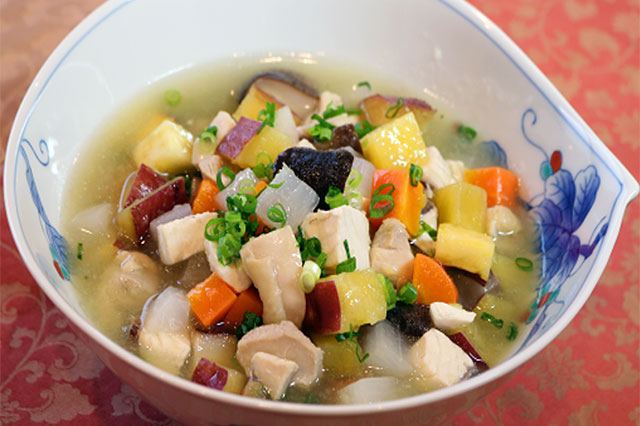
| Prefecture | Nagasaki (長崎県) |
|---|---|
| Region | Kyushu & Okinawa |
| Japanese name | ヒカド |
| Home area | Nagasaki City |
| Main ingredients | I'm going to start with a little bit of meat. |
History and Origins
Native food passed on to Nagasaki since the early 1600s. The Portuguese missionaries and traders who once worked in Nagasaki used to eat stews from beef and pork during cold weather. The taste will gradually spread among the local people and establish its own recipes with vegetables, chickens, fish and other local vegetables. The present "hikad" is said to have originated. The name "hikad" comes from the word Picado, which means to carve fine meat, such as Portuguese. In mid-Edo, cookbooks have been introduced as one of the southern wild dishes.
When It Is Eaten
Locally, like stew, it is often eaten as a warm dish during the cold months of autumn and winter. Not only is it served as a home dish, but so is the dish from the main course for Nagasaki.
How It Is Eaten
Cut fine pieces of vegetable root, carrots, chicken, and so forth. Finally, add a toasted tofu and boil it up, and then you can make it. The sweets of the potato are the things that blend in with various tools and make easy taste. It's characteristic that the way to make a suit is tofu.
Recipe — Serves 4
Ingredients
- 80 g yellowtail
- Mix: a pinch salt
- Mix: a pinch sake
- 80 g chicken
- 80 g daikon radish
- 40 g carrot
- 80 g sweet potato
- 4 g dried shiitake mushrooms (乾燥時)
- 60 g sweet potato (grated (daikon etc.))
- 10 g small green onion
- 3 1/2 cups だし汁と椎茸の戻し汁
- Seasonings: 1/5 tsp salt
- Seasonings: 1 tsp light soy sauce
- Seasonings: 1 tbsp sake
Method
- Bligh is cut into two and a half inches, salt, and a little wine (a little too much) and put it on the bottom.
- The chicken is cut into two-inch corners.
- Big root, carrots are 1cm of carrots, and potatoes are cut into 1.5cm with leather.
- The ground potato is peeled and exposed to 15 minutes of water and then removed from the pot.
- The dry vertebrae is returned with water and then takes a stone and cuts it into an inch-long angle.
- I'll cut the little kittens into little pieces.
- Bri will go all the way.
- Add some chicken, radish, carrots, and mushrooms and boil them.
- When it's boiling, take a pot and add a ton of potatoes cut into an inch angle.
- Add a brush, add a taste with a flavored sauce, add a pinched potato, and when it is ready, put a fire, and scatter a little bit of rice on the bowl.
More About 46 11
Hikad is a native dish of Nagasaki PrefectureNagasaki City. It's a stewed dish with (such as chicken) and fish burri).
Overview
Vegetables such as dicon, carrots and sea cucumbers, as well as meat and fish, are carved into pieces, and they are boiled and seasoned with soy sauce. It's a good thing that you put the ground potato in the last place, boil it, and put it in a boil.
We can often eat it during the cold months of autumn and winter. It's also made as a home dish, and in such cases as a masturbator, it's provided as part of a Chinese dish.
Nagasaki Prefecture is actively adopted as a food menu.
History
It's a local dish that has been passed on to Nagasaki since the early 1600s. Portuguese missionaries and traders who once worked in Nagasaki were making and eating stews of beef and pork, but they were created with what was established as their own local dish of vegetables, meat and fish.
Cooking books published during the Edo were introduced as southern rooks, and ducks, carbohydrates, squid and shrimps were used. It's not a recipe passed on to the old house in Nagasaki. Sometimes I use tuna.
Name
Portuguese: picado means "cut fine meat" and this changed.
Text adapted and translated from the Japanese Wikipedia article ヒカド by its contributors, licensed CC BY-SA 4.0.
Dish data: Ministry of Agriculture, Forestry and Fisheries (MAFF), “Uchi no Kyodo Ryori” (Our Regional Cuisines) database, used under the Public Data License (PDL1.0); translated and adapted from the Japanese original.