Taishūsoba 対州そば
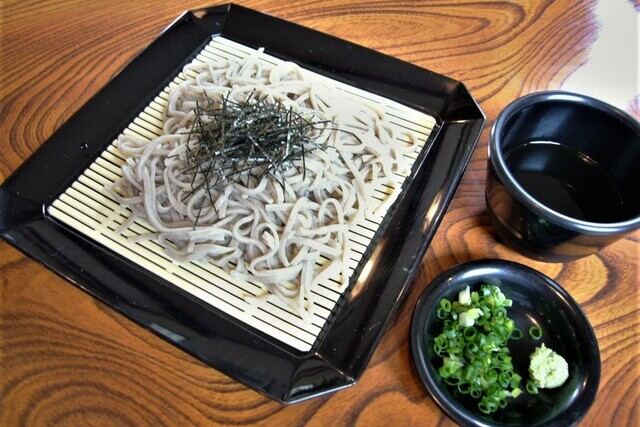
| Prefecture | Nagasaki (長崎県) |
|---|---|
| Region | Kyushu & Okinawa |
| Japanese name | 対州そば(たいしゅうそば) |
| Reading | Taishūsoba |
| Home area | Fighter. |
| Main ingredients | On the other side of the border |
History and Origins
"Obvious to the states" is an old-fashioned breed that is grown by the opposite horse. The anti-barren in the name points to the former opposing powers. It is said that the original species near the coast of China was adopted as roots in the surrounding Himalayas, and it was transmitted to the opposite horse through the Korean Peninsula during the Korean period. Since the opposite horse is a separate island, we rarely meet with a different species, and still have leaves left behind the original species. In 2018, " other states" were registered with the "geographical display system" of the country's "geographical display system" designed to preserve local agricultural and food names. This was the first Nagasaki Prefecture, and it was also the first time near Japan.
When It Is Eaten
Since there has been little rice on the horse for many years, the growth on the side of the mountain has been made to thrive. It's a common ingredient on the island, and it's still often eaten in the home. And since it's a famous name, there are many restaurants on the island that provide "Ok-O-Wa"
How It Is Eaten
"Obvious to the state" is a small species. If you hit it, it will have a strong corn, which will make you your own noodle that can feel a real pain. Besides eating with "roars" or "roo" and "roo" with the "bao" of the horse, you can also have them with you in the "noodle" menu.
Recipe — Serves 1
Ingredients
- 1 heads on the other side of the border
- 120 ml mentsuyu (noodle soup base)
- Condiments: shredded nori, to taste
- Condiments: chopped green onion, to taste
Method
- (about two minutes of slatting around) Wash in cold water and wash.
- I'll put my side around the vessel and add a flavor.
More About Taishūsoba
I'm not sure if it's true. Nagasaki Prefecture to horse fair.
Fabric
It is said that the native land of Soba is a mountain valley between the Chinese and the Shizun. It's not certain when Soba will be in Japan, but at least in the late part of the string period there will be traces of using it. As for the route that led to Japan, there is a theory that it spread from the Korean Peninsula to the other side of the horse.
It's hard to tell when soba growing was done on the horse, but if the flat ground is against rice rice, then it's old enough to grow soba. It was grown with a low potential for interbreeding with other genus species called the Sequoia.
I'm sorry.
Records show that until the 1930s, it was grown in a kind of burning field with a slope of a mountain called a tree garden.
It's always an essential part of the anti-horse diet. The annual diet, of course, is on crescendo, district festivals, winter solstices, and is still used by some homes.
During the Edo, there were a number of citadels in the castle, but when 1794 was out of business at the end of the Japanese War, the horse-sharp shop will disappear from the horse. Although this has sometimes been called the "other side of the vision," people have been revived in recent years by the efforts of their associates and have become popular with tourists. Although high yields of exotic species were brought in, there were times when the cross-valuation councils were able to select the seeds at the General Nagasaki Prefecture Development Development Center, and plant them as a species and then re-surgitate them. In 2006, I changed 100% on the side of the state.
On April 9, 2018, the geographical view protection system continues to be registered with certain agricultural crops, such as water products.
In 2018, the growth area was 85 hexals and produced 40 tons a year.
Characteristics
Compared to other species, the seed is a small seed. It's characteristic of the flavored, strongly scented. Some sources say it smells like nuts.
Soba berries contain a lot of luncolavonic sugar. There's a lot of protein and vitamin E in there. There are reports of lutin's antioxidants, anti-intestinals and blood flow improvement. Soba leaves contain more lutin than really, but when the rat was given leaves near the state, it showed a loss of serum fats and triglycerides in the liver, and cholesterol in the liver fat.
Use
It is characteristic to hit with only silica and not with ties.
A special local dish is served as a dish of native food. "Kyoki" is a bowl of chicken or fish, or peas, or peas, and a bowl of vegetables with plenty of vegetables. It's the anti-horse local food served when people gather together, but at the end of this "soi" they eat with a bowl of citrus or citrus juice.
The islands and horses on the border have a lot of tourists from Korea, but on the other side of the state, there was a limit to the market, not to the taste of Koreans. So we develop soft cream, ice cream, coffee beans and gurlet crepes with dough, and we sell them for tourists.
Text adapted and translated from the Japanese Wikipedia article 対州そば by its contributors, licensed CC BY-SA 4.0.
Dish data: Ministry of Agriculture, Forestry and Fisheries (MAFF), “Uchi no Kyodo Ryori” (Our Regional Cuisines) database, used under the Public Data License (PDL1.0); translated and adapted from the Japanese original.